AQA · A-Level · Psychology
Course version: 7182-2025 · Exams from 2027
Gender: Gender incongruence: biological and social/cultural explanations.
Gender incongruence is the mismatch between biological sex and experienced gender identity, distinct from gender dysphoria.
Checked against the AQA 7182-2025 specification (opens in a new tab) on .
- Point 6 of 6
- 2 key terms
Study notes
From the checked teaching notes for this specification point.
The idea
Gender incongruence is the mismatch between biological sex and experienced gender identity, distinct from gender dysphoria. Biological explanations focus on atypical brain development, such as variations in the bed nucleus of the stria terminalis (BSTc), or genetic factors indicated by twin studies showing higher concordance for monozygotic twins. However, sexual dimorphism in the BSTc emerges in adulthood, challenging claims of prenatal development. Social and cultural explanations emphasise environmental influences. Psychoanalytic theories suggest incongruence arises from extreme separation anxiety, while learning theories point to the reinforcement of cross-gender behaviours. Cultural variations highlight the role of societal norms.
What earns the marks
- Define gender incongruence as the mismatch between assigned biological sex and experienced gender identity, distinguishing it from gender dysphoria.
- Explain biological factors, including brain structure anomalies (like the BSTc) and genetic vulnerability supported by twin studies.
- Describe social and cultural explanations, such as operant conditioning of cross-gender behaviour or psychoanalytic perspectives on extreme separation anxiety.
- Evaluate the explanations by discussing the reductionism of biological theories versus the difficulty of empirically testing social and psychoanalytic theories.
Common mistakes and how to put them right
Conflating gender incongruence with gender dysphoria.
Put it right: Define gender incongruence as the mismatch between sex and gender identity, and gender dysphoria as the psychological distress that may result from this mismatch.
Claiming biological explanations are definitive.
Put it right: Acknowledge that brain differences like the BSTc could be an effect of hormone therapy or emerge in adulthood, rather than being the prenatal cause of incongruence.
Ignoring the interactionist approach.
Put it right: Avoid presenting biological and social explanations as mutually exclusive, as both likely contribute to gender incongruence.
Exam tips
- Prepare to discuss the nature-nurture debate, using biological explanations for nature and social/cultural explanations for nurture.
- Use specific anatomical terms like the bed nucleus of the stria terminalis (BSTc) when detailing biological explanations to access higher mark bands.
- Critique the methodology of twin studies in this area, noting that small sample sizes limit the generalisability of genetic explanations.
Try the lesson
The start of the Gender: Gender incongruence: biological and social/cultural explanations. lesson, made from checked teaching notes for this specification point.
Have a go first
According to the brain sex theory of gender incongruence, which biological factor is proposed to explain why an individual might experience a mismatch between their biological sex and gender identity?
Listen
Gender incongruence is the mismatch between biological sex and experienced gender identity, distinct from gender dysphoria. Biological explanations focus on atypical brain development, such as variations in the bed nucleus of the stria terminalis (BSTc), or genetic factors indicated by twin studies showing higher concordance for monozygotic twins. However, sexual dimorphism in the BSTc emerges in adulthood, challenging claims of prenatal development. Social and cultural explanations emphasise environmental influences. Psychoanalytic theories suggest incongruence arises from extreme separation anxiety, while learning theories point to the reinforcement of cross-gender behaviours. Cultural variations highlight the role of societal norms. A strong answer earns marks for these points. Define gender incongruence as the mismatch between assigned biological sex and experienced gender identity, distinguishing it from gender dysphoria. Explain biological factors, including brain structure anomalies (like the BSTc) and genetic vulnerability supported by twin studies. Describe social and cultural explanations, such as operant conditioning of cross-gender behaviour or psychoanalytic perspectives on extreme separation anxiety. Evaluate the explanations by discussing the reductionism of biological theories versus the difficulty of empirically testing social and psychoanalytic theories. A common slip: Conflating gender incongruence with gender dysphoria. Instead, Define gender incongruence as the mismatch between sex and gender identity, and gender dysphoria as the psychological distress that may result from this mismatch. Exam tip: Prepare to discuss the nature-nurture debate, using biological explanations for nature and social/cultural explanations for nurture.
See it
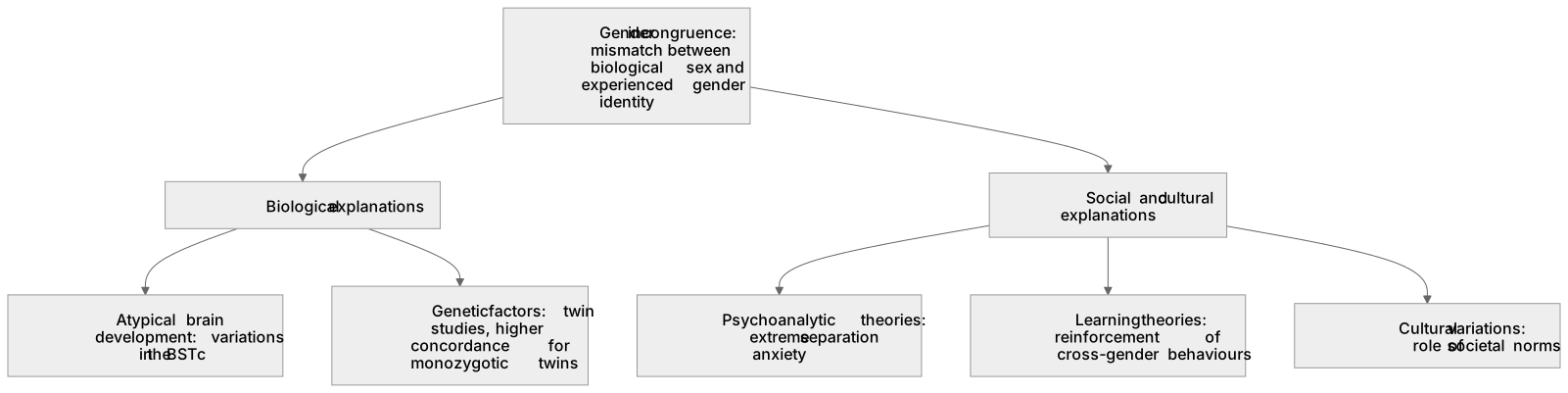
Key words
Say what each word means before you turn the card.
Nature versus nurture
Try answering aloud or in your head before turning the card.
Reductionism
Try answering aloud or in your head before turning the card.
See every definition
- Nature versus nurture
- The debate contrasting biological explanations, which focus on atypical brain development or genetic factors, with social and cultural explanations, which emphasise environmental influences.
- Reductionism
- A criticism of biological theories that explains gender incongruence in terms of brain structure anomalies or genetic vulnerability alone.
Label the diagram
Some boxes have lost their names. Pick the right name for each number.
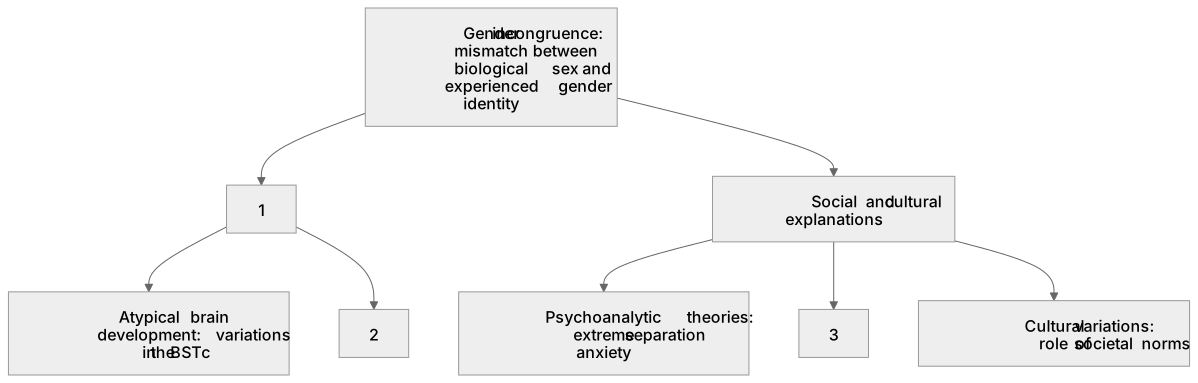
1Box 1
2Box 2
3Box 3
There is more to this lesson
The full lesson goes on to check your understanding and help you earn the marks. Create a free account to carry on, with your progress saved.
A week of Premium from your first lesson · Then the free plan continues · No card, no charge
Test your understanding of Gender: Gender incongruence: biological and social/cultural explanations.
Active recall beats re-reading. Take an instant quiz now to test what you’ve learned and lock it into long-term memory.
A week of Premium from your first lesson · Then the free plan continues · No card, no charge