AQA · A-Level · Psychology
Course version: 7182-2025 · Exams from 2027
Understand the difference between primary and secondary data (to include:…
Full specification wording
Handling data: Understand the difference between primary and secondary data (to include: stating whether data collected by a researcher dealing directly with participants is primary or secondary data)
The distinction is about who gathered the information and for what purpose, not about whether it is numbers or words.
Checked against the AQA 7182-2025 specification (opens in a new tab) on .
- Point 17 of 17
- 3 key terms
Study notes
From the checked teaching notes for this specification point.
The idea
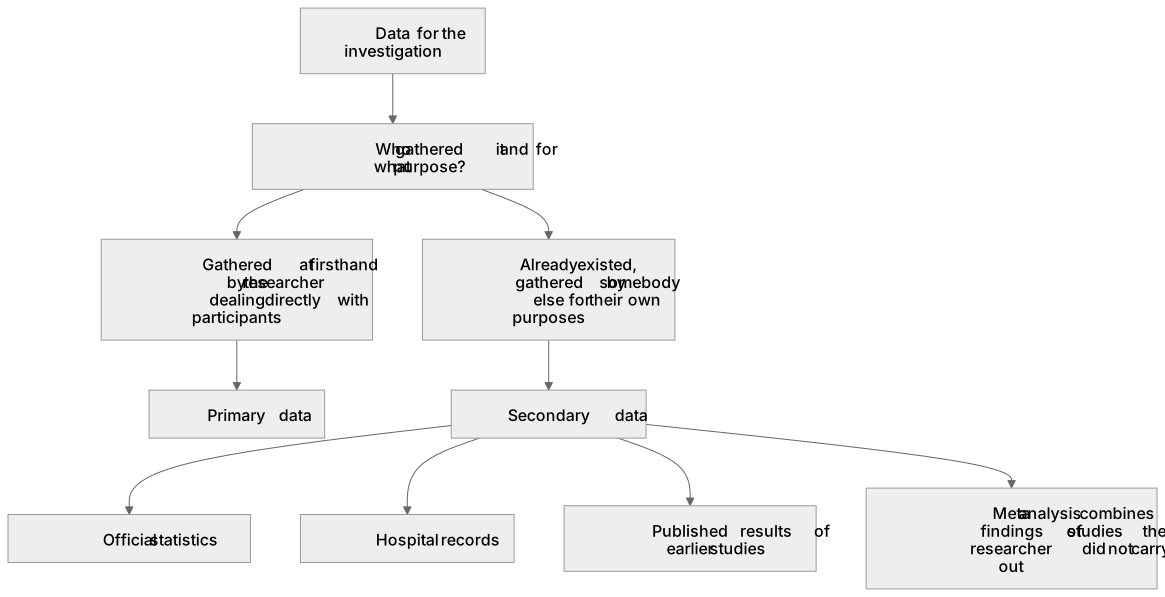
The distinction is about who gathered the information and for what purpose, not about whether it is numbers or words. Information a researcher obtains at first hand, from people they tested, questioned or observed for the investigation now being reported, belongs to the first category. Information that already existed because somebody else gathered it for their own purposes, and is then reused, belongs to the second: official statistics, hospital records, the published results of earlier studies. First hand collection fits the aim exactly and the conditions stay under the researcher's control, but it costs time and money. Reused information is quick and cheap and may cover far more people, yet it was never designed for this hypothesis and its quality cannot be checked directly. A meta analysis rests entirely on it.
What earns the marks
- Applying the definition to the study described, so information gathered by the researcher dealing directly with participants is primary while information taken from an existing source is secondary.
- Explaining primary data as collected at first hand for the current aim, so the measures, the sample and the conditions are exactly what this investigation required.
- Explaining secondary data as already in existence, gathered by somebody else for a different purpose, such as government statistics, medical records or the findings of previous research.
- Giving one strength and one limitation in context, for example that secondary data allow a large sample at little cost but may be outdated or measured in a way that does not match the hypothesis.
- Recognising a meta analysis as a use of secondary data, since it combines the findings of studies the researcher did not carry out.
Common mistakes and how to put them right
Deciding on the basis of the data type, so numbers are called primary and words secondary, when either type of data can be either.
Assuming that anything the researcher analyses themselves must be primary, when figures lifted from published tables or official records stay secondary however carefully they are analysed.
Listing strengths and limitations with no reference to the study, so a three mark explain item reads as a memorised paragraph and is capped.
Confusing secondary data with a secondary source in the sense of a textbook, and writing about background reading instead of about data.
Exam tips
- Name whether the data are primary or secondary, then explain a relevant strength or limitation in the context of the study.
- Anchor every evaluation point to the investigation in front of you, saying that these particular records were gathered for a different purpose rather than that secondary data are outdated in general.
- Watch for stems that mix the two, where a researcher runs an observation and then compares the totals with published figures, and name each set of data separately.
- If asked to suggest how a researcher could investigate something cheaply, secondary data is often the expected answer, so say where the data would come from.
Try the lesson
The start of the Handling data: Understand the difference between primary and secondary data (to include: stating whether data collected by a researcher dealing directly with participants is primary or secondary data) lesson, made from checked teaching notes for this specification point.
Have a go first
A researcher conducts an interview with participants to gather information about their sleep habits. Which type of data is the researcher collecting?
Listen
The distinction is about who gathered the information and for what purpose, not about whether it is numbers or words. Information a researcher obtains at first hand, from people they tested, questioned or observed for the investigation now being reported, belongs to the first category. Information that already existed because somebody else gathered it for their own purposes, and is then reused, belongs to the second: official statistics, hospital records, the published results of earlier studies. First hand collection fits the aim exactly and the conditions stay under the researcher's control, but it costs time and money. Reused information is quick and cheap and may cover far more people, yet it was never designed for this hypothesis and its quality cannot be checked directly. A meta analysis rests entirely on it. A strong answer earns marks for these points. Applying the definition to the study described, so information gathered by the researcher dealing directly with participants is primary while information taken from an existing source is secondary. Explaining primary data as collected at first hand for the current aim, so the measures, the sample and the conditions are exactly what this investigation required. Explaining secondary data as already in existence, gathered by somebody else for a different purpose, such as government statistics, medical records or the findings of previous research. Giving one strength and one limitation in context, for example that secondary data allow a large sample at little cost but may be outdated or measured in a way that does not match the hypothesis. Exam tip: Name whether the data are primary or secondary, then explain a relevant strength or limitation in the context of the study.
See it
Key words
Say what each word means before you turn the card.
primary data
Try answering aloud or in your head before turning the card.
secondary data
Try answering aloud or in your head before turning the card.
meta analysis
Try answering aloud or in your head before turning the card.
See every definition
- primary data
- Information a researcher obtains at first hand, from people they tested, questioned or observed for the investigation now being reported.
- secondary data
- Information that already existed because somebody else gathered it for their own purposes, and is then reused, such as official statistics, hospital records or published results of earlier studies.
- meta analysis
- A use of secondary data that rests entirely on it, combining the findings of studies the researcher did not carry out.
Label the diagram
Some boxes have lost their names. Pick the right name for each number.
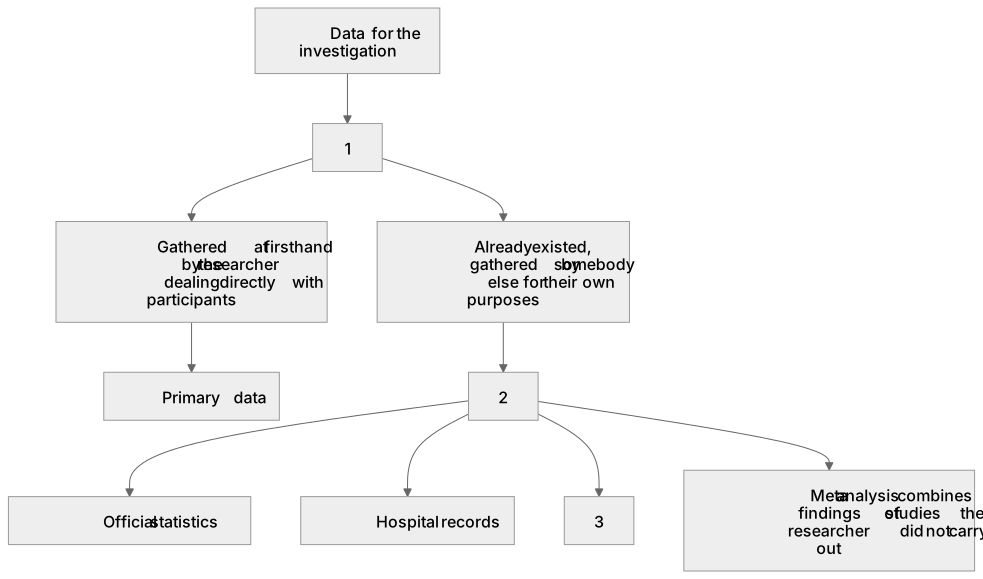
1Box 1
2Box 2
3Box 3
There is more to this lesson
The full lesson goes on to check your understanding and help you earn the marks. Create a free account to carry on, with your progress saved.
A week of Premium from your first lesson · Then the free plan continues · No card, no charge
Test your understanding of Handling data: Understand the difference between primary and secondary data (to include: stating whether data collected by a researcher dealing directly with participants is primary or secondary data)
Active recall beats re-reading. Take an instant quiz now to test what you’ve learned and lock it into long-term memory.
A week of Premium from your first lesson · Then the free plan continues · No card, no charge