AQA · A-Level · Psychology
Course version: 7182-2025 · Exams from 2027
Scientific processes: The role of peer review in the scientific process.
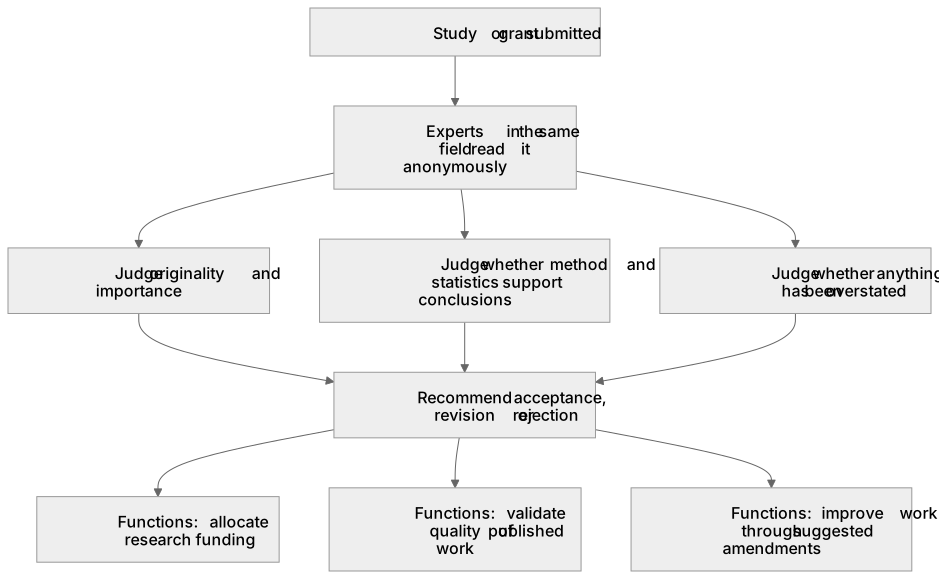
Before a study appears in a journal, or a grant is awarded, other experts in the same field read it anonymously and recommend acceptance, revision or rejection.
Checked against the AQA 7182-2025 specification (opens in a new tab) on .
- Point 12 of 17
- 3 key terms
Study notes
From the checked teaching notes for this specification point.
The idea
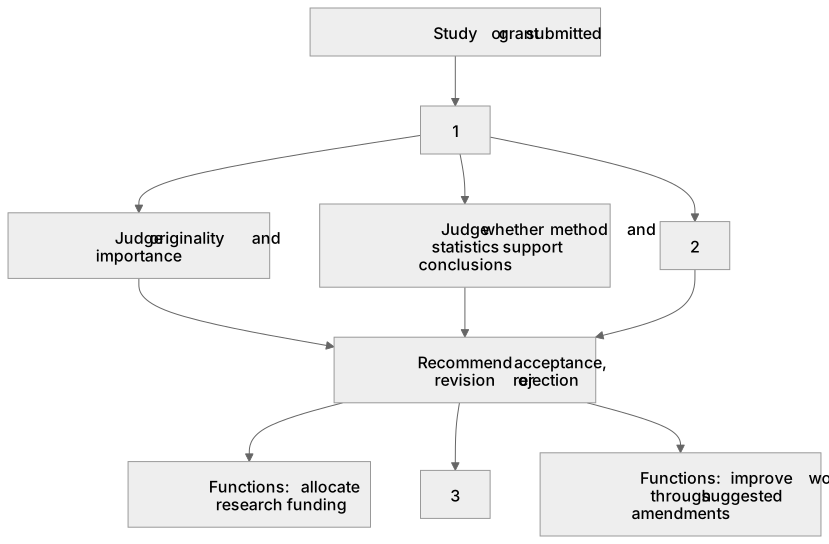
Before a study appears in a journal, or a grant is awarded, other experts in the same field read it anonymously and recommend acceptance, revision or rejection. They judge originality and importance, whether the method and the statistics really support the conclusions, and whether anything has been overstated. Three functions are worth naming: allocating research funding, validating the quality of what gets published, and improving the work through suggested amendments. The evaluation is the more valuable half. Anonymity can shelter a reviewer settling a rivalry; journals prefer positive, novel results, so replications and null findings go unpublished, which is the file drawer problem; and established reviewers may suppress work that threatens the theory their own careers rest on, slowing any paradigm shift.
What earns the marks
- Describes the process as independent assessment by experts in the same field before publication or funding.
- States the criteria assessed: originality, significance, methodological quality and whether conclusions follow from the data.
- Names the functions of allocating funding, validating research quality and improving the manuscript.
- Evaluates using anonymity and the possibility of bias or rivalry.
- Evaluates using publication bias towards positive findings and the burying of replications and null results.
Common mistakes and how to put them right
Describing it as checking that the results are correct, when reviewers cannot see the raw data or rerun the study.
Saying reviewers are chosen from other disciplines to stay neutral.
Put it right: They are experts in the same field.
Offering only the vague criticism that reviewers can be biased, without naming rivalry, publication bias or the file drawer problem.
Ignoring the funding role and treating peer review as only a publication gate.
Exam tips
- An evaluation question wants both the purpose and the flaws, so plan two of each before writing.
- Link it to features of science, particularly objectivity and replicability, to lift an answer into the top band.
- Use the file drawer problem by name; the specific term is what distinguishes a top-band point from 'some studies are not published'.
Try the lesson
The start of the Scientific processes: The role of peer review in the scientific process. lesson, made from checked teaching notes for this specification point.
Have a go first
What is the main role of peer review in the scientific process?
Listen
Before a study appears in a journal, or a grant is awarded, other experts in the same field read it anonymously and recommend acceptance, revision or rejection. They judge originality and importance, whether the method and the statistics really support the conclusions, and whether anything has been overstated. Three functions are worth naming: allocating research funding, validating the quality of what gets published, and improving the work through suggested amendments. The evaluation is the more valuable half. Anonymity can shelter a reviewer settling a rivalry; journals prefer positive, novel results, so replications and null findings go unpublished, which is the file drawer problem; and established reviewers may suppress work that threatens the theory their own careers rest on, slowing any paradigm shift. A strong answer earns marks for these points. Describes the process as independent assessment by experts in the same field before publication or funding. States the criteria assessed: originality, significance, methodological quality and whether conclusions follow from the data. Names the functions of allocating funding, validating research quality and improving the manuscript. Evaluates using anonymity and the possibility of bias or rivalry. Exam tip: An evaluation question wants both the purpose and the flaws, so plan two of each before writing.
See it
Key words
Say what each word means before you turn the card.
Allocation of funding
Try answering aloud or in your head before turning the card.
Validation of research quality
Try answering aloud or in your head before turning the card.
Publication bias and the file drawer problem
Try answering aloud or in your head before turning the card.
See every definition
- Allocation of funding
- One function of peer review, where experts judge a study before a grant is awarded.
- Validation of research quality
- One function of peer review, judging whether the method and statistics really support the conclusions before a study appears in a journal.
- Publication bias and the file drawer problem
- Journals prefer positive, novel results, so replications and null findings go unpublished.
Label the diagram
Some boxes have lost their names. Pick the right name for each number.
1Box 1
2Box 2
3Box 3
There is more to this lesson
The full lesson goes on to check your understanding and help you earn the marks. Create a free account to carry on, with your progress saved.
A week of Premium from your first lesson · Then the free plan continues · No card, no charge
Test your understanding of Scientific processes: The role of peer review in the scientific process.
Active recall beats re-reading. Take an instant quiz now to test what you’ve learned and lock it into long-term memory.
A week of Premium from your first lesson · Then the free plan continues · No card, no charge