AQA · A-Level · Psychology
Course version: 7182-2025 · Exams from 2027
Managing and coping with stress: drug therapy, stress inoculation therapy…
Full specification wording
Stress: Managing and coping with stress: drug therapy, stress inoculation therapy and biofeedback. Gender differences in coping with stress. The role of social support in coping with stress; types of social support, including instrumental, emotional and esteem support.
Stress management uses biological and psychological methods.
Checked against the AQA 7182-2025 specification (opens in a new tab) on .
- Point 6 of 6
- 4 key terms
Study notes
From the checked teaching notes for this specification point.
The idea
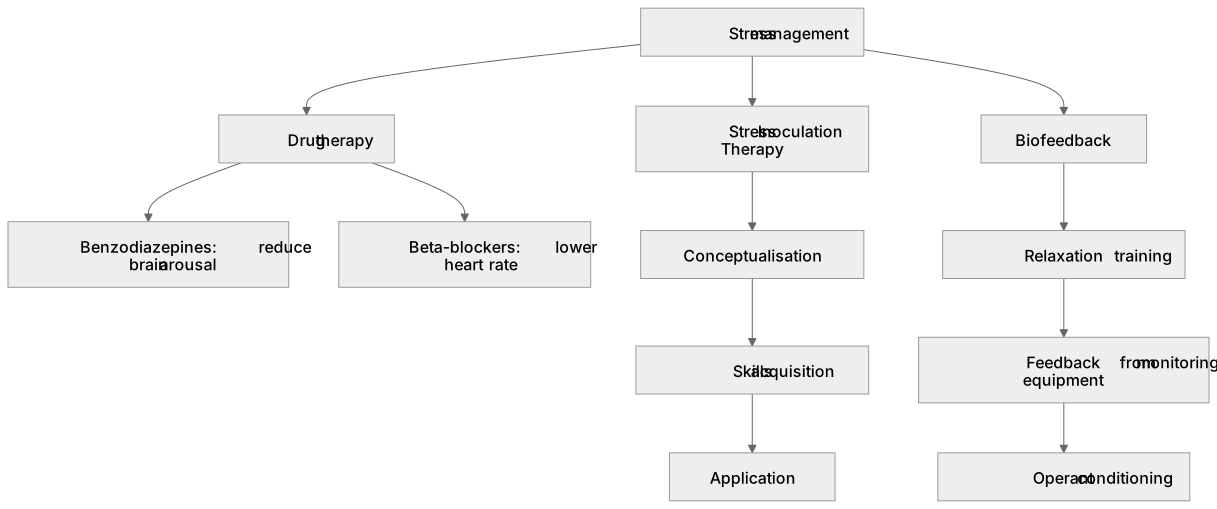
Stress management uses biological and psychological methods. Drug therapies like benzodiazepines reduce brain arousal, while beta-blockers lower heart rate. Stress Inoculation Therapy (SIT) is a cognitive approach where patients conceptualise stressors, learn coping skills, and apply them. Biofeedback uses operant conditioning, allowing individuals to monitor and control physiological states like muscle tension using technological signals. Coping shows gender differences: males typically use 'fight or flight', whereas females often use oxytocin-driven 'tend and befriend' strategies. Social support mitigates stress via instrumental (practical help), emotional (empathy), and esteem support (boosting confidence).
What earns the marks
- Explain how drug therapies manage stress, distinguishing between central effects of benzodiazepines and peripheral effects of beta-blockers.
- Outline the three phases of Stress Inoculation Therapy (SIT): conceptualisation, skills acquisition, and application.
- Describe the process of biofeedback, including relaxation training, feedback from monitoring equipment, and operant conditioning.
- Discuss gender differences in coping, contrasting the male 'fight or flight' response with the female 'tend and befriend' response.
- Differentiate between instrumental, emotional, and esteem support, providing a clear example for each type.
Common mistakes and how to put them right
Confusing emotional and esteem support.
Put it right: Emotional support involves empathy and listening, whereas esteem support specifically aims to increase a person's sense of self-worth and competence.
Describing biofeedback merely as relaxation.
Put it right by emphasising the use of monitoring technology and operant conditioning to gain voluntary control over involuntary physiological processes.
Assuming gender differences in coping are purely social.
Put it right: Ensure you mention the biological basis, such as the role of oxytocin in the female 'tend and befriend' response.
Exam tips
- When evaluating stress management techniques, compare drug therapy with SIT or biofeedback in terms of side effects, cost, and long-term effectiveness.
- Use concrete examples when defining types of social support, such as giving someone a lift to the hospital for instrumental support.
- Be prepared to apply your knowledge of coping strategies to a novel scenario by identifying which type of social support or therapy is being used in the stem.
Try the lesson
The start of the Stress: Managing and coping with stress: drug therapy, stress inoculation therapy and biofeedback. Gender differences in coping with stress. The role of social support in coping with stress; types of social support, including instrumental, emotional and esteem support. lesson, made from checked teaching notes for this specification point.
Have a go first
A student is feeling overwhelmed by their upcoming exams. Their friend offers to help them create a revision timetable and lends them a textbook. Which type of social support is the friend primarily providing?
Listen
Stress management uses biological and psychological methods. Drug therapies like benzodiazepines reduce brain arousal, while beta-blockers lower heart rate. Stress Inoculation Therapy (SIT) is a cognitive approach where patients conceptualise stressors, learn coping skills, and apply them. Biofeedback uses operant conditioning, allowing individuals to monitor and control physiological states like muscle tension using technological signals. Coping shows gender differences: males typically use 'fight or flight', whereas females often use oxytocin-driven 'tend and befriend' strategies. Social support mitigates stress via instrumental (practical help), emotional (empathy), and esteem support (boosting confidence). A strong answer earns marks for these points. Explain how drug therapies manage stress, distinguishing between central effects of benzodiazepines and peripheral effects of beta-blockers. Outline the three phases of Stress Inoculation Therapy (SIT): conceptualisation, skills acquisition, and application. Describe the process of biofeedback, including relaxation training, feedback from monitoring equipment, and operant conditioning. Discuss gender differences in coping, contrasting the male 'fight or flight' response with the female 'tend and befriend' response. A common slip: Describing biofeedback merely as relaxation. Instead, emphasising the use of monitoring technology and operant conditioning to gain voluntary control over involuntary physiological processes. Exam tip: When evaluating stress management techniques, compare drug therapy with SIT or biofeedback in terms of side effects, cost, and long-term effectiveness.
See it
Key words
Say what each word means before you turn the card.
Stress Inoculation Therapy (SIT)
Try answering aloud or in your head before turning the card.
Biofeedback
Try answering aloud or in your head before turning the card.
Instrumental support
Try answering aloud or in your head before turning the card.
Esteem support
Try answering aloud or in your head before turning the card.
See every definition
- Stress Inoculation Therapy (SIT)
- A cognitive approach where patients conceptualise stressors, learn coping skills, and apply them.
- Biofeedback
- Uses operant conditioning, allowing individuals to monitor and control physiological states like muscle tension using technological signals.
- Instrumental support
- Practical help given as a type of social support that mitigates stress.
- Esteem support
- A type of social support that boosts confidence and mitigates stress.
Label the diagram
Some boxes have lost their names. Pick the right name for each number.
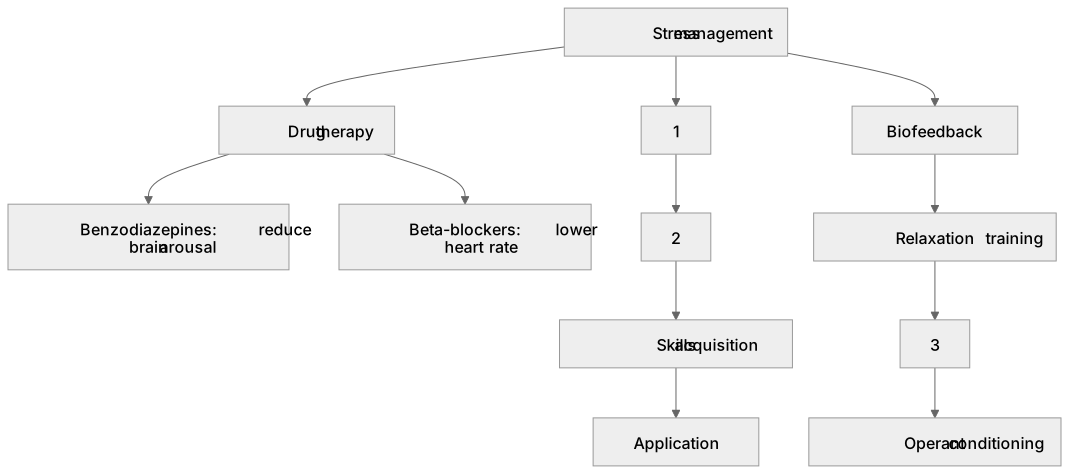
1Box 1
2Box 2
3Box 3
There is more to this lesson
The full lesson goes on to check your understanding and help you earn the marks. Create a free account to carry on, with your progress saved.
A week of Premium from your first lesson · Then the free plan continues · No card, no charge
Test your understanding of Stress: Managing and coping with stress: drug therapy, stress inoculation therapy and biofeedback. Gender differences in coping with stress. The role of social support in coping with stress; types of social support, including instrumental, emotional and esteem support.
Active recall beats re-reading. Take an instant quiz now to test what you’ve learned and lock it into long-term memory.
A week of Premium from your first lesson · Then the free plan continues · No card, no charge