AQA · A-Level · Psychology
Course version: 7182-2025 · Exams from 2027
The physiology of stress, including general adaptation syndrome, the…
Full specification wording
Stress: The physiology of stress, including general adaptation syndrome, the hypothalamic pituitary- adrenal system, the sympathomedullary pathway and the role of cortisol.
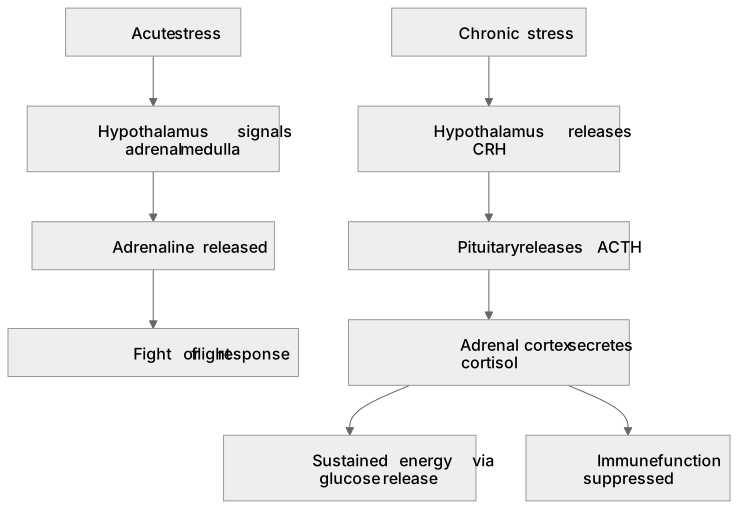
Acute stress triggers the sympathomedullary (SAM) pathway: the hypothalamus signals the adrenal medulla to release adrenaline, initiating the 'fight or flight' response like increased heart rate.
Checked against the AQA 7182-2025 specification (opens in a new tab) on .
- Point 1 of 6
- 4 key terms
Study notes
From the checked teaching notes for this specification point.
The idea
Acute stress triggers the sympathomedullary (SAM) pathway: the hypothalamus signals the adrenal medulla to release adrenaline, initiating the 'fight or flight' response like increased heart rate. Chronic stress activates the hypothalamic-pituitary-adrenal (HPA) system: the hypothalamus releases CRH, prompting the pituitary to release ACTH, which stimulates the adrenal cortex to secrete cortisol. Cortisol provides sustained energy via glucose release but suppresses immunity. Selye’s General Adaptation Syndrome (GAS) models these physiological changes across three stages: alarm reaction (SAM activation), resistance (HPA activation), and exhaustion (depleted resources causing illness).
What earns the marks
- Outline the SAM pathway for acute stress, detailing the roles of the hypothalamus, sympathetic nervous system, and adrenal medulla.
- Describe the HPA axis for chronic stress, specifying the sequence of CRH, ACTH, and cortisol release from the adrenal cortex.
- Explain the dual role of cortisol in providing sustained energy for the stress response while simultaneously suppressing immune function.
- Detail the three stages of Selye's General Adaptation Syndrome (GAS): alarm reaction, resistance, and exhaustion.
Common mistakes and how to put them right
Confusing the adrenal medulla and adrenal cortex.
Put it right: The medulla is involved in the SAM pathway releasing adrenaline, whereas the cortex is part of the HPA axis releasing cortisol.
Stating that the SAM pathway is for chronic stress.
Put it right by specifying that SAM handles acute or immediate stress while HPA manages chronic or long-term stress.
Claiming exhaustion in GAS is just feeling tired.
Put it right: Clarify that exhaustion refers to the depletion of physiological resources, leading to stress-related illnesses.
Exam tips
- Use the acronyms SAM and HPA to structure your answers, but always write out the full terms at least once to demonstrate clear understanding.
- When evaluating GAS, use evidence from animal studies but explicitly mention the limitation of extrapolating these physiological findings to humans.
- Clearly distinguish between the physiological effects of adrenaline, such as increased heart rate, and cortisol, such as glucose release and immune suppression.
Try the lesson
The start of the Stress: The physiology of stress, including general adaptation syndrome, the hypothalamic pituitary- adrenal system, the sympathomedullary pathway and the role of cortisol. lesson, made from checked teaching notes for this specification point.
Have a go first
Which of the following correctly describes the sequence of activation in the sympathomedullary (SAM) pathway during an acute stress response?
Listen
Acute stress triggers the sympathomedullary (SAM) pathway: the hypothalamus signals the adrenal medulla to release adrenaline, initiating the 'fight or flight' response like increased heart rate. Chronic stress activates the hypothalamic-pituitary-adrenal (HPA) system: the hypothalamus releases CRH, prompting the pituitary to release ACTH, which stimulates the adrenal cortex to secrete cortisol. Cortisol provides sustained energy via glucose release but suppresses immunity. Selye’s General Adaptation Syndrome (GAS) models these physiological changes across three stages: alarm reaction (SAM activation), resistance (HPA activation), and exhaustion (depleted resources causing illness). A strong answer earns marks for these points. Outline the SAM pathway for acute stress, detailing the roles of the hypothalamus, sympathetic nervous system, and adrenal medulla. Describe the HPA axis for chronic stress, specifying the sequence of CRH, ACTH, and cortisol release from the adrenal cortex. Explain the dual role of cortisol in providing sustained energy for the stress response while simultaneously suppressing immune function. Detail the three stages of Selye's General Adaptation Syndrome (GAS): alarm reaction, resistance, and exhaustion. A common slip: Stating that the SAM pathway is for chronic stress. Instead, specifying that SAM handles acute or immediate stress while HPA manages chronic or long-term stress. Exam tip: Use the acronyms SAM and HPA to structure your answers, but always write out the full terms at least once to demonstrate clear understanding.
See it
Key words
Say what each word means before you turn the card.
General Adaptation Syndrome
Try answering aloud or in your head before turning the card.
Hypothalamic-pituitary-adrenal system
Try answering aloud or in your head before turning the card.
Sympathomedullary pathway
Try answering aloud or in your head before turning the card.
Cortisol
Try answering aloud or in your head before turning the card.
See every definition
- General Adaptation Syndrome
- Models physiological changes across three stages: alarm reaction, resistance, and exhaustion.
- Hypothalamic-pituitary-adrenal system
- Chronic stress activates this system, in which the hypothalamus releases CRH, prompting the pituitary to release ACTH, which stimulates the adrenal cortex to secrete cortisol.
- Sympathomedullary pathway
- Acute stress triggers this pathway, in which the hypothalamus signals the adrenal medulla to release adrenaline, initiating the 'fight or flight' response.
- Cortisol
- Provides sustained energy via glucose release but suppresses immunity.
Label the diagram
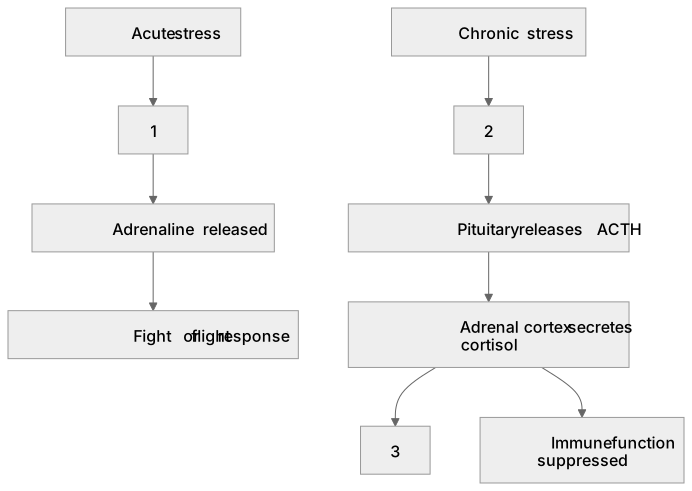
Some boxes have lost their names. Pick the right name for each number.
1Box 1
2Box 2
3Box 3
There is more to this lesson
The full lesson goes on to check your understanding and help you earn the marks. Create a free account to carry on, with your progress saved.
A week of Premium from your first lesson · Then the free plan continues · No card, no charge
Test your understanding of Stress: The physiology of stress, including general adaptation syndrome, the hypothalamic pituitary- adrenal system, the sympathomedullary pathway and the role of cortisol.
Active recall beats re-reading. Take an instant quiz now to test what you’ve learned and lock it into long-term memory.
A week of Premium from your first lesson · Then the free plan continues · No card, no charge