Pearson Edexcel · GCSE · Psychology
Course version: 1PS0 · Version from Sept 2017
Understand the effects of learning on development using Carol Dweck’s…
Full specification wording
Development: 1.1.3 Understand the effects of learning on development using Carol Dweck’s mindset theory, including strengths and weaknesses of the theory: a. fixed mindset b. growth mindset c. ability and effort
Carol Dweck’s mindset theory explores how individuals perceive their intelligence, affecting their development.
Checked against the Pearson Edexcel 1PS0 specification (opens in a new tab) on .
- Point 3 of 4
- 4 key terms
Study notes
From the checked teaching notes for this specification point.
The idea
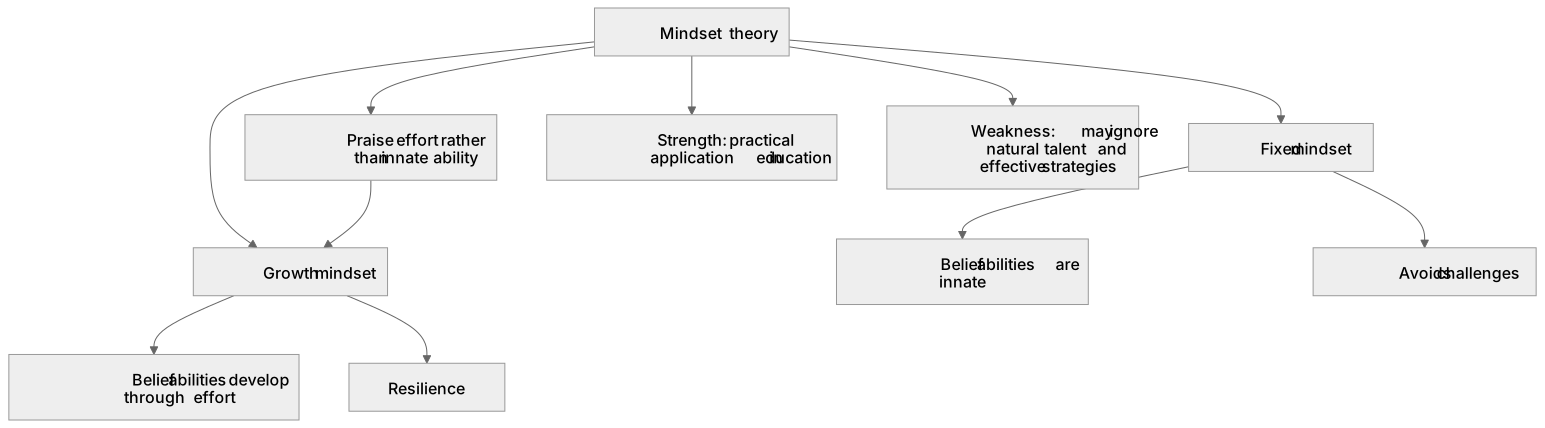
Carol Dweck’s mindset theory explores how individuals perceive their intelligence, affecting their development. A fixed mindset is the belief that abilities are innate, leading individuals to avoid challenges. Conversely, a growth mindset is the belief that abilities can be developed through effort, encouraging resilience. Dweck emphasises praising effort rather than innate ability to foster a growth mindset. Strengths include its practical application in education, showing that teaching students about brain plasticity improves motivation. However, weaknesses include the risk of ignoring the role of natural talent and the fact that praising effort alone might not lead to success if the learning strategies used are ineffective.
What earns the marks
- Identifying a fixed mindset as the belief that intelligence is static and cannot be changed.
- Explaining that a growth mindset involves the belief that intelligence can be developed through hard work and effort.
- Evaluating the theory by stating a strength, such as its positive impact on educational practices and student motivation.
- Evaluating the theory by stating a weakness, such as the overemphasis on effort which may ignore the importance of effective learning strategies.
Common mistakes and how to put them right
Confusing fixed and growth mindsets.
Put it right: Remember that a fixed mindset means unchangeable, while a growth mindset implies development over time.
Assuming that praising intelligence is beneficial.
Put it right: Understand that Dweck advocates praising effort to encourage a growth mindset.
Believing that a growth mindset guarantees success.
Put it right: Recognise that effort must be paired with effective strategies and resources.
Exam tips
- Use concrete examples of praise, such as 'you worked really hard on that', to illustrate how to foster a growth mindset.
- When evaluating the theory, ensure you provide both a strength and a weakness to achieve full marks in extended response questions.
- Clearly distinguish between ability as an innate talent and effort as hard work when explaining the components of the theory.
Try the lesson
The start of the Development: 1.1.3 Understand the effects of learning on development using Carol Dweck’s mindset theory, including strengths and weaknesses of the theory: a. fixed mindset b. growth mindset c. ability and effort lesson, made from checked teaching notes for this specification point.
Have a go first
According to Carol Dweck's mindset theory, which of the following best describes a person with a fixed mindset?
Listen
Carol Dweck’s mindset theory explores how individuals perceive their intelligence, affecting their development. A fixed mindset is the belief that abilities are innate, leading individuals to avoid challenges. Conversely, a growth mindset is the belief that abilities can be developed through effort, encouraging resilience. Dweck emphasises praising effort rather than innate ability to foster a growth mindset. Strengths include its practical application in education, showing that teaching students about brain plasticity improves motivation. However, weaknesses include the risk of ignoring the role of natural talent and the fact that praising effort alone might not lead to success if the learning strategies used are ineffective. A strong answer earns marks for these points. Identifying a fixed mindset as the belief that intelligence is static and cannot be changed. Explaining that a growth mindset involves the belief that intelligence can be developed through hard work and effort. Evaluating the theory by stating a strength, such as its positive impact on educational practices and student motivation. Evaluating the theory by stating a weakness, such as the overemphasis on effort which may ignore the importance of effective learning strategies. A common slip: Confusing fixed and growth mindsets. Instead, remember that a fixed mindset means unchangeable, while a growth mindset implies development over time. Exam tip: Use concrete examples of praise, such as 'you worked really hard on that', to illustrate how to foster a growth mindset.
See it
Key words
Say what each word means before you turn the card.
Fixed mindset
Try answering aloud or in your head before turning the card.
Growth mindset
Try answering aloud or in your head before turning the card.
Ability
Try answering aloud or in your head before turning the card.
Effort
Try answering aloud or in your head before turning the card.
See every definition
- Fixed mindset
- The belief that intelligence is static and cannot be changed, leading individuals to avoid challenges.
- Growth mindset
- The belief that intelligence can be developed through hard work and effort, encouraging resilience.
- Ability
- An innate talent, which is distinguished from effort as hard work when explaining the components of the theory.
- Effort
- Hard work, which Dweck emphasises praising rather than innate ability to foster a growth mindset.
Label the diagram
Some boxes have lost their names. Pick the right name for each number.
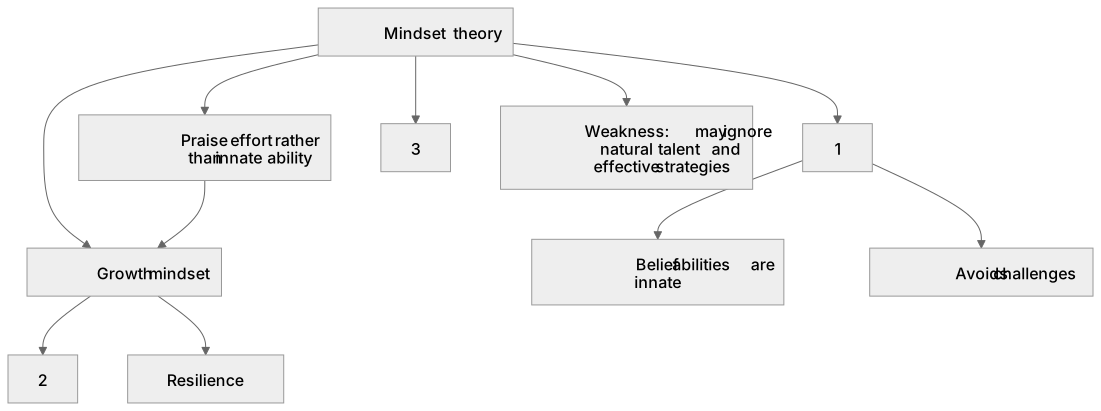
1Box 1
2Box 2
3Box 3
There is more to this lesson
The full lesson goes on to check your understanding and help you earn the marks. Create a free account to carry on, with your progress saved.
A week of Premium from your first lesson · Then the free plan continues · No card, no charge
Test your understanding of Development: 1.1.3 Understand the effects of learning on development using Carol Dweck’s mindset theory, including strengths and weaknesses of the theory: a. fixed mindset b. growth mindset c. ability and effort
Active recall beats re-reading. Take an instant quiz now to test what you’ve learned and lock it into long-term memory.
A week of Premium from your first lesson · Then the free plan continues · No card, no charge