Pearson Edexcel · GCSE · Psychology
Course version: 1PS0 · Version from Sept 2017
Understand the functions, features and benefits of sleep, including: a.…
Full specification wording
Sleep and dreaming: 9.1.1 Understand the functions, features and benefits of sleep, including: a. the four sleep stages b. REM c. the sleep cycle
Sleep is essential for physical restoration, memory consolidation, and brain development.
Checked against the Pearson Edexcel 1PS0 specification (opens in a new tab) on .
- Point 1 of 5
Study notes
From the checked teaching notes for this specification point.
The idea
Sleep is essential for physical restoration, memory consolidation, and brain development. The sleep cycle lasts approximately 90 minutes and repeats several times a night, consisting of non-REM (NREM) and REM sleep. NREM includes four stages: Stage 1 is light sleep; Stage 2 involves slightly deeper sleep with a drop in body temperature; Stages 3 and 4 are deep, slow-wave sleep crucial for physical repair. REM (Rapid Eye Movement) sleep follows, characterised by brain activity similar to wakefulness, rapid eye movements, temporary muscle paralysis, and vivid dreaming. REM is vital for cognitive functions and emotional regulation. Understanding these features highlights the comprehensive benefits of completing multiple full sleep cycles.
What earns the marks
- Identify the four stages of NREM sleep and their key physiological characteristics.
- Describe the features of REM sleep, including rapid eye movements and muscle paralysis.
- Explain the typical duration and progression of a 90-minute sleep cycle.
- Outline the benefits of sleep, such as physical repair during deep sleep and memory consolidation during REM.
Common mistakes and how to put them right
Confusing REM sleep with deep sleep.
Put it right: REM sleep features high brain activity similar to wakefulness, whereas deep sleep occurs in NREM Stages 3 and 4.
Believing the sleep cycle only happens once per night.
Put it right: A typical sleep cycle lasts about 90 minutes and repeats multiple times throughout the night.
Assuming dreaming only occurs in REM sleep.
Put it right: While the most vivid dreams occur during REM, dreaming can also happen during NREM stages.
Exam tips
- Learn the specific physiological changes associated with each stage, such as slow-wave brain activity in Stages 3 and 4.
- Be able to distinguish between the restorative functions of NREM sleep and the cognitive benefits of REM sleep.
- Use a diagrammatic representation of the 90-minute sleep cycle to help memorise the sequence of stages.
Try the lesson
The start of the Sleep and dreaming: 9.1.1 Understand the functions, features and benefits of sleep, including: a. the four sleep stages b. REM c. the sleep cycle lesson, made from checked teaching notes for this specification point.
Have a go first
What does the abbreviation REM stand for in the context of sleep stages?
Listen
Sleep is essential for physical restoration, memory consolidation, and brain development. The sleep cycle lasts approximately 90 minutes and repeats several times a night, consisting of non-REM (NREM) and REM sleep. NREM includes four stages: Stage 1 is light sleep; Stage 2 involves slightly deeper sleep with a drop in body temperature; Stages 3 and 4 are deep, slow-wave sleep crucial for physical repair. REM (Rapid Eye Movement) sleep follows, characterised by brain activity similar to wakefulness, rapid eye movements, temporary muscle paralysis, and vivid dreaming. REM is vital for cognitive functions and emotional regulation. Understanding these features highlights the comprehensive benefits of completing multiple full sleep cycles. A strong answer earns marks for these points. Identify the four stages of NREM sleep and their key physiological characteristics. Describe the features of REM sleep, including rapid eye movements and muscle paralysis. Explain the typical duration and progression of a 90-minute sleep cycle. Outline the benefits of sleep, such as physical repair during deep sleep and memory consolidation during REM. A common slip: Confusing REM sleep with deep sleep. Instead, REM sleep features high brain activity similar to wakefulness, whereas deep sleep occurs in NREM Stages 3 and 4. Exam tip: Learn the specific physiological changes associated with each stage, such as slow-wave brain activity in Stages 3 and 4.
See it
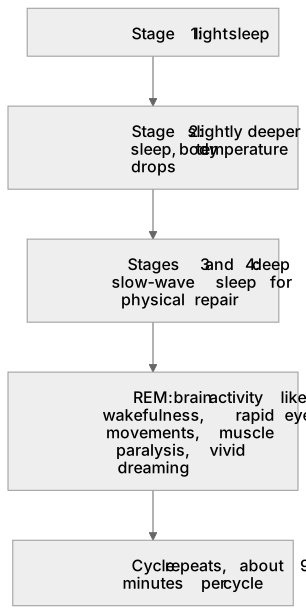
Put it in order
Put these steps in the order they happen.
- 1. Stage 2: slightly deeper sleep, body temperature drops
- 2. Stages 3 and 4: deep slow-wave sleep for physical repair
- 3. Stage 1: light sleep
- 4. Cycle repeats, about 90 minutes per cycle
- 5. REM: brain activity like wakefulness, rapid eye movements, muscle paralysis, vivid dreaming
Label the diagram
Some boxes have lost their names. Pick the right name for each number.
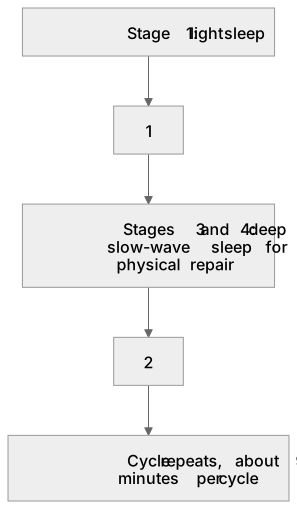
1Box 1
2Box 2
There is more to this lesson
The full lesson goes on to check your understanding and help you earn the marks. Create a free account to carry on, with your progress saved.
A week of Premium from your first lesson · Then the free plan continues · No card, no charge
Test your understanding of Sleep and dreaming: 9.1.1 Understand the functions, features and benefits of sleep, including: a. the four sleep stages b. REM c. the sleep cycle
Active recall beats re-reading. Take an instant quiz now to test what you’ve learned and lock it into long-term memory.
A week of Premium from your first lesson · Then the free plan continues · No card, no charge