AQA · GCSE · Religious Studies
Course version: 8062 · Version from Sept 2018
Buddhism - 3.1.1.2 Practices: patience
Patience (Khanti) is a vital practice in Buddhism, particularly emphasised in Mahayana traditions as the third of the Six Perfections (Paramitas).
Checked against the AQA 8062 specification (opens in a new tab) on .
- Point 26 of 29
- 4 key terms
Study notes
From the checked teaching notes for this specification point.
The idea
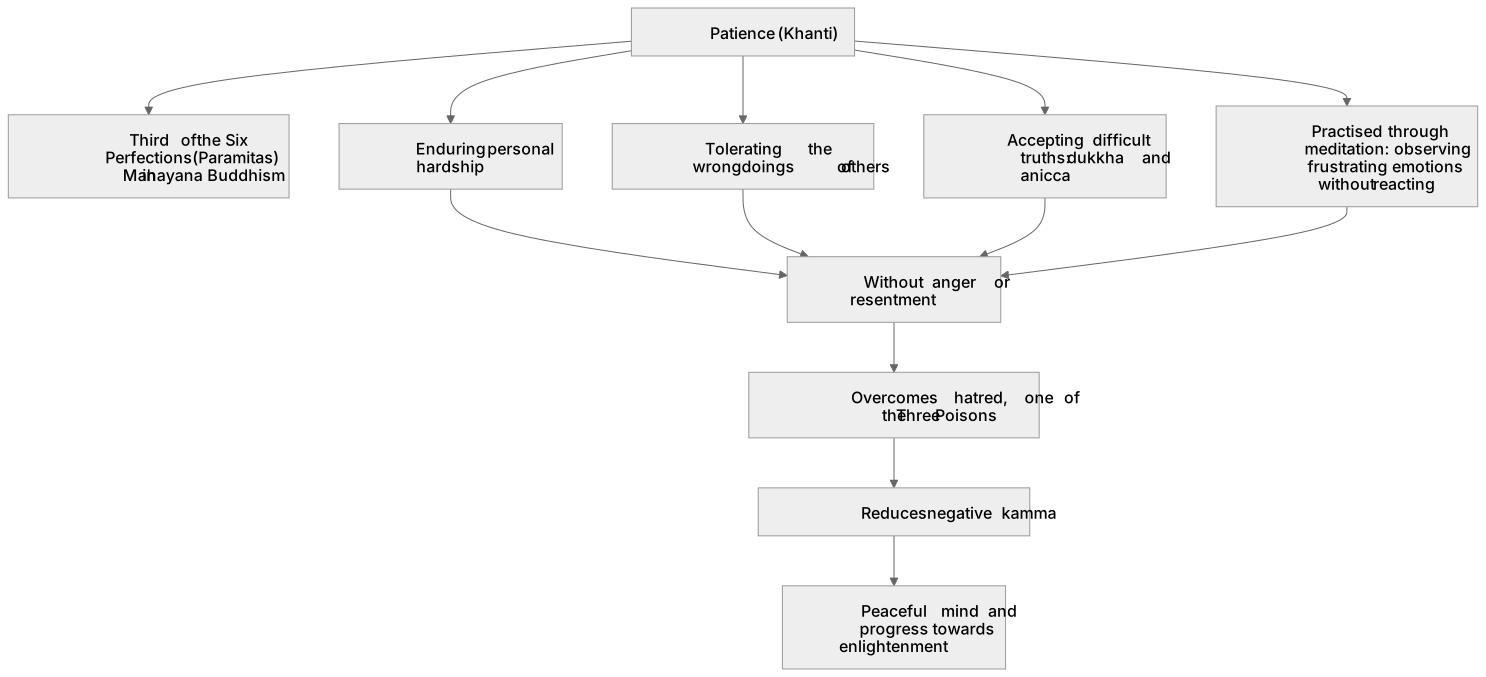
Patience (Khanti) is a vital practice in Buddhism, particularly emphasised in Mahayana traditions as the third of the Six Perfections (Paramitas). It involves cultivating the ability to endure personal hardship, tolerate the wrongdoings of others, and accept the difficult truths of existence, such as suffering (dukkha) and impermanence (anicca), without giving rise to anger or resentment. A Buddhist might practice patience through meditation, learning to observe frustrating emotions without reacting to them. By developing patience, a Bodhisattva overcomes hatred and anger, which are considered powerful poisons that create negative kamma. This practice is essential for maintaining a peaceful mind and progressing towards enlightenment.
What earns the marks
- Identify patience (Khanti) as the third of the Six Perfections (Paramitas) in Mahayana Buddhism.
- Explain that patience involves enduring suffering and the harm caused by others without responding with anger or hatred.
- Describe how patience helps Buddhists accept fundamental teachings like impermanence (anicca) and suffering (dukkha).
- Link the practice of patience to the reduction of negative kamma and the overcoming of the Three Poisons, specifically hatred.
Common mistakes and how to put them right
Viewing patience merely as waiting for something without complaining.
Put it right: Explain patience as an active spiritual practice of enduring suffering and overcoming anger, not just passive waiting.
Confusing patience with other Perfections like energy or meditation.
Put it right: Specifically define patience (Khanti) as the endurance of hardship and tolerance of others, distinct from the other Paramitas.
Assuming patience means accepting abuse without taking action.
Put it right: Clarify that patience means not reacting with hatred or anger, but a Buddhist can still take compassionate action to stop harm.
Exam tips
- Connect the practice of patience to the overcoming of hatred, one of the Three Poisons, to show depth of understanding.
- Use the context of the Six Perfections to explain how Mahayana Buddhists develop patience on the Bodhisattva path.
- Provide a concrete example, such as remaining calm during an argument, to illustrate how patience is applied in daily life.
Try the lesson
The start of the Buddhism - 3.1.1.2 Practices: patience lesson, made from checked teaching notes for this specification point.
Have a go first
In the context of the Six Perfections, what does the practice of patience (kshanti) mean for a Buddhist?
Listen
Patience (Khanti) is a vital practice in Buddhism, particularly emphasised in Mahayana traditions as the third of the Six Perfections (Paramitas). It involves cultivating the ability to endure personal hardship, tolerate the wrongdoings of others, and accept the difficult truths of existence, such as suffering (dukkha) and impermanence (anicca), without giving rise to anger or resentment. A Buddhist might practice patience through meditation, learning to observe frustrating emotions without reacting to them. By developing patience, a Bodhisattva overcomes hatred and anger, which are considered powerful poisons that create negative kamma. This practice is essential for maintaining a peaceful mind and progressing towards enlightenment. A strong answer earns marks for these points. Identify patience (Khanti) as the third of the Six Perfections (Paramitas) in Mahayana Buddhism. Explain that patience involves enduring suffering and the harm caused by others without responding with anger or hatred. Describe how patience helps Buddhists accept fundamental teachings like impermanence (anicca) and suffering (dukkha). Link the practice of patience to the reduction of negative kamma and the overcoming of the Three Poisons, specifically hatred. A common slip: Viewing patience merely as waiting for something without complaining. Instead, Explain patience as an active spiritual practice of enduring suffering and overcoming anger, not just passive waiting. Exam tip: Connect the practice of patience to the overcoming of hatred, one of the Three Poisons, to show depth of understanding.
See it
Key words
Say what each word means before you turn the card.
The Six Perfections (Paramitas)
Try answering aloud or in your head before turning the card.
The Three Poisons (Hatred)
Try answering aloud or in your head before turning the card.
Dukkha (Suffering)
Try answering aloud or in your head before turning the card.
The Bodhisattva Path
Try answering aloud or in your head before turning the card.
See every definition
- The Six Perfections (Paramitas)
- In Mahayana traditions, patience is emphasised as the third of these, which a Bodhisattva develops on the Bodhisattva path.
- The Three Poisons (Hatred)
- Hatred and anger are considered powerful poisons that create negative kamma, and patience overcomes them.
- Dukkha (Suffering)
- A difficult truth of existence that patience helps a Buddhist accept, without giving rise to anger or resentment.
- The Bodhisattva Path
- By developing patience, a Bodhisattva overcomes hatred and anger and progresses towards enlightenment.
Label the diagram
Some boxes have lost their names. Pick the right name for each number.
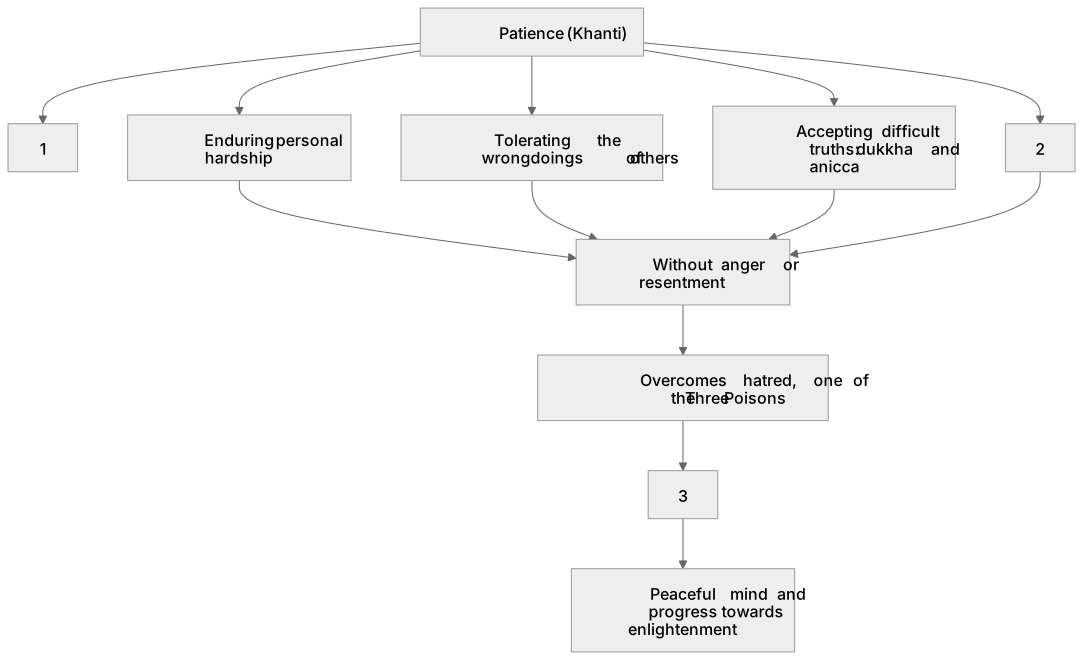
1Box 1
2Box 2
3Box 3
There is more to this lesson
The full lesson goes on to check your understanding and help you earn the marks. Create a free account to carry on, with your progress saved.
A week of Premium from your first lesson · Then the free plan continues · No card, no charge
Test your understanding of Buddhism - 3.1.1.2 Practices: patience
Active recall beats re-reading. Take an instant quiz now to test what you’ve learned and lock it into long-term memory.
A week of Premium from your first lesson · Then the free plan continues · No card, no charge