OCR · GCSE · Sociology
Norms
This study guide provides a comprehensive overview of sociological norms for OCR GCSE students. It explores how norms regulate social life, their cultural relativity, and how they are enforced, providing essential knowledge to excel in your exams.
- 7 min read
- 3 worked examples
- 5 practice questions
Study Notes
Overview
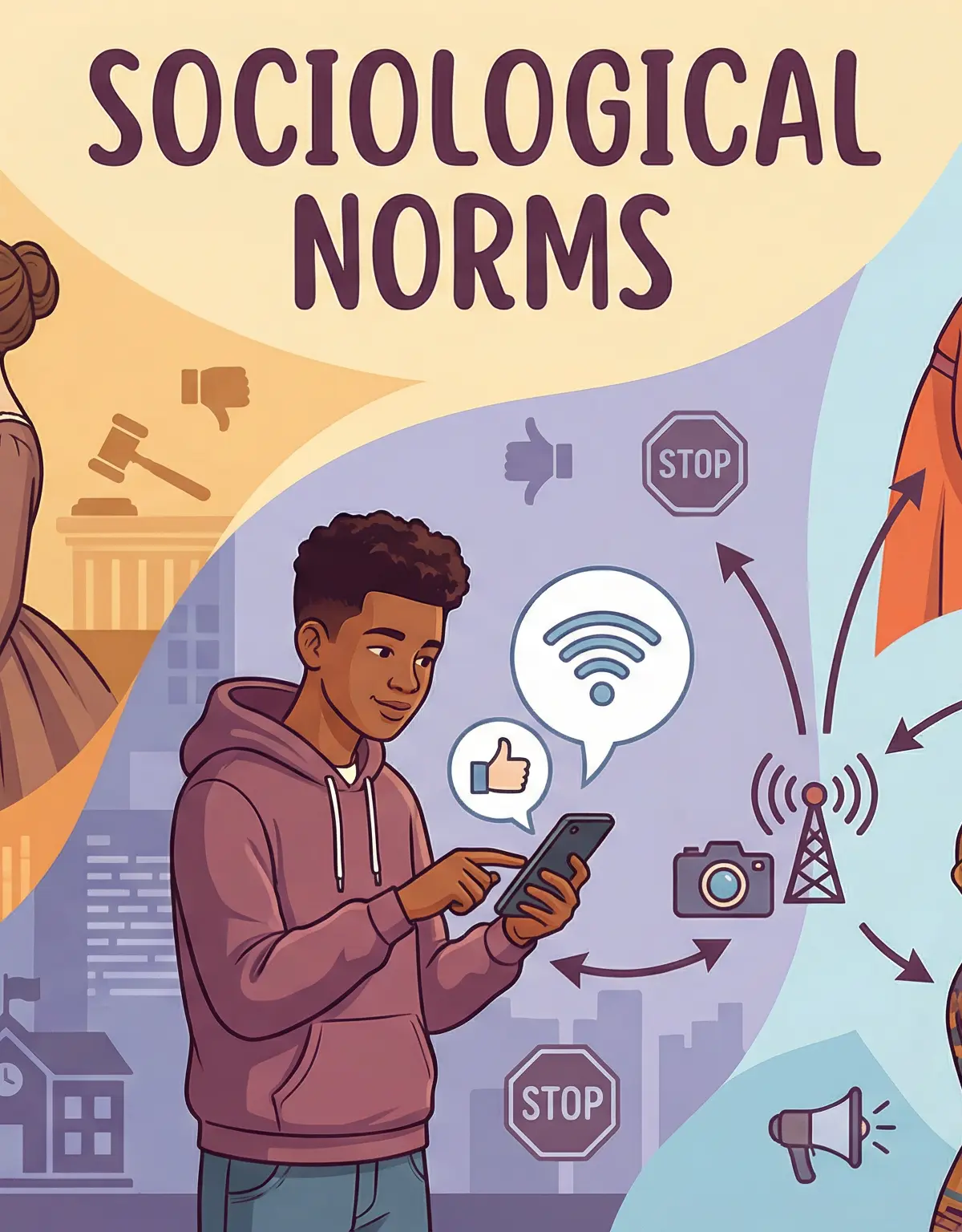
This guide delves into the sociological concept of norms, a cornerstone of understanding how societies function. For the OCR GCSE Sociology exam, candidates are expected to demonstrate a precise understanding of norms as the unwritten rules of behaviour that govern social situations. This is distinct from values, which are more general beliefs about what is right or wrong. We will explore how norms are socially constructed, meaning they are created and shaped by society, not biologically determined. A key focus will be on the cultural and historical relativity of norms, examining how they differ across cultures and change over time. You will learn about the agencies of socialisation, such as the family and education, which teach us these norms, and the mechanisms of social control, known as sanctions, that enforce them. Examiners will award high marks for the ability to apply these concepts with specific examples and to contrast theoretical perspectives like Functionalism and Marxism.
Key Concepts
Norms vs. Values
What happened: It is crucial to distinguish between norms and values. Values are general, abstract principles that a society considers important, such as 'honesty' or 'respect'. Norms are the specific, concrete rules of conduct that put those values into practice. For example, the value of 'hygiene' is expressed through the norm of washing your hands before eating.
Why it matters: Examiners award marks for this conceptual clarity. Using the terms interchangeably is a common mistake that will lose you credit. Always define them separately in an introduction.
Specific Knowledge: Value: Respect for elders. Norm: Giving up your seat for an elderly person on a bus.
Social Construction & Relativity
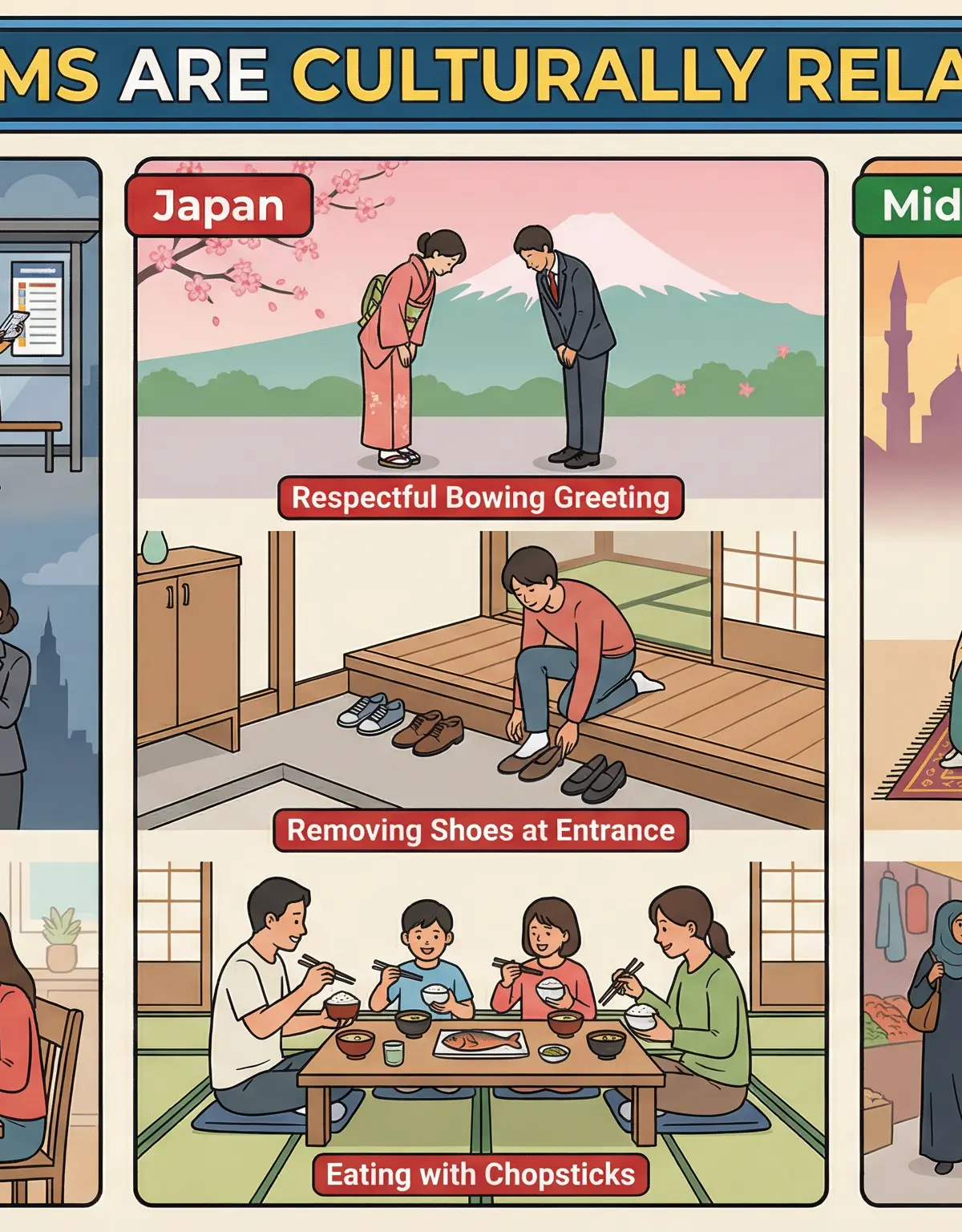
What happened: Sociologists argue that norms are not natural or universal; they are socially constructed. This means they are created, maintained, and changed by people within a society. This leads to cultural relativity – the idea that norms are specific to the culture they belong to.
Why it matters: This concept is fundamental to the sociological imagination. It challenges common-sense assumptions that 'our' way of doing things is the only way. For the exam, you must provide examples of this relativity.
Specific Knowledge: In the UK, the norm for greeting is a handshake. In Japan, it is bowing. In some parts of the Middle East, it is a hand on the heart. These are all socially constructed solutions to the universal need for a greeting ritual.
Agencies of Socialisation
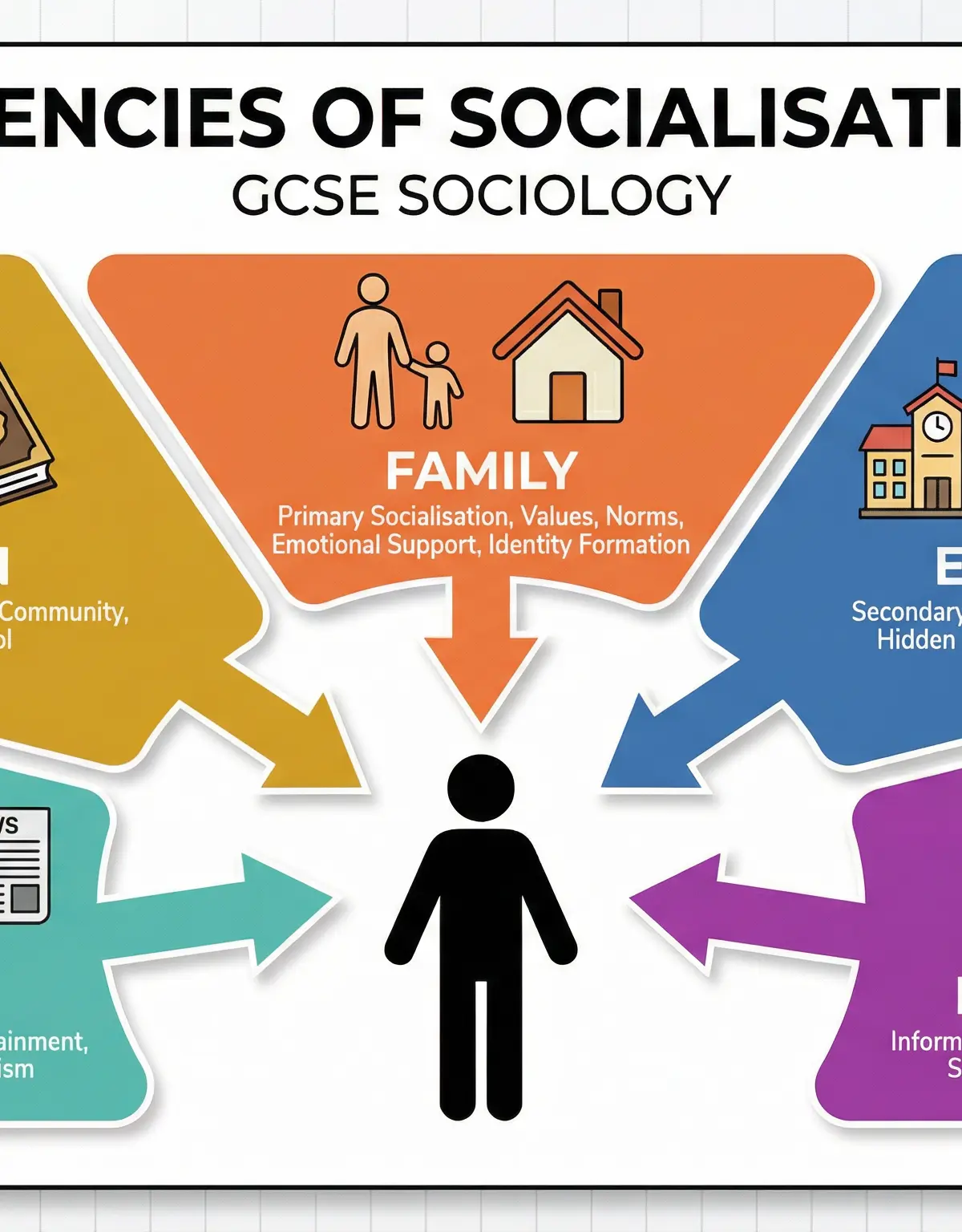
What happened: We learn norms through a lifelong process called socialisation. This occurs through various 'agencies'. Primary socialisation happens in the family, where we learn fundamental norms. Secondary socialisation continues through education, peer groups, the media, and religion.
Why it matters: This explains how norms are transmitted from one generation to the next, ensuring social continuity. Exam questions often ask how individuals learn to conform.
Specific Knowledge: Family: Teaches table manners. Education: Teaches the norm of punctuality. Peer Group: Teaches norms of fashion and slang. Media: Teaches consumer norms.
Sanctions & Social Control
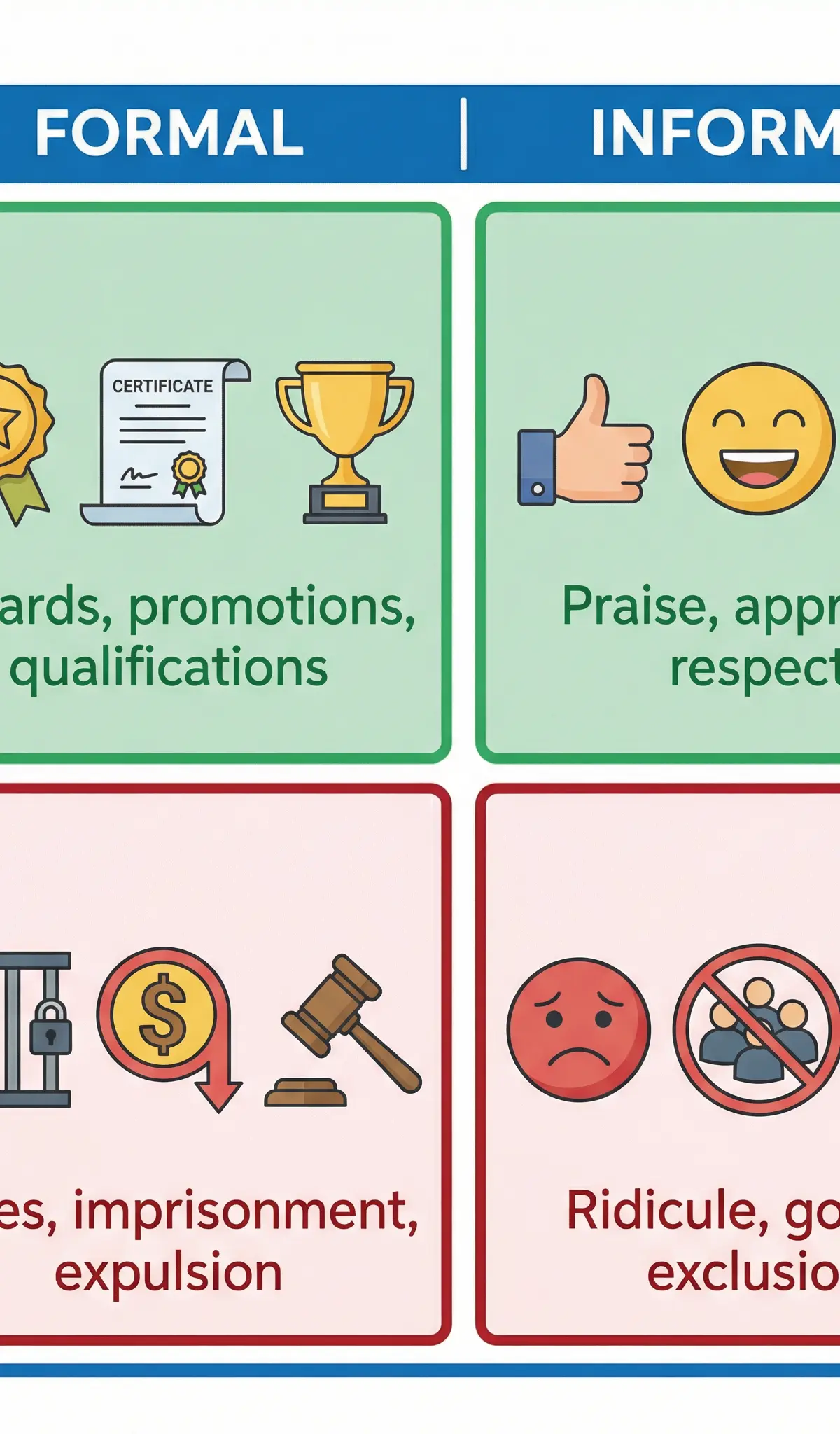
What happened: Norms are enforced through sanctions, which are reactions from others that encourage conformity and discourage deviance. Sanctions can be positive (rewards) or negative (punishments), and formal (official) or informal (unofficial).
Why it matters: Sanctions are the mechanism of social control. They ensure that most people follow social norms most of the time, which creates social order and predictability.
Specific Knowledge: See the diagram below for the four types of sanctions. A key skill is to link specific norms to the sanctions that enforce them.
Key Individuals
Émile Durkheim
Role: A founding father of Functionalism.
Key Actions: Argued that society needs a 'collective conscience' – a shared set of norms and values – to function. He saw norms as essential for creating social solidarity and preventing 'anomie' (normlessness).
Impact: His work provides the basis for the Functionalist view that norms serve a positive function by integrating individuals into society and maintaining social order.
Karl Marx
Role: A founding father of Marxism and conflict theory.
Key Actions: Argued that the norms of a society are the norms of the ruling class (the bourgeoisie). He saw norms as part of the 'superstructure' that legitimises the economic power of the ruling class.
Impact: His work provides the basis for the Marxist view that norms are not neutral but are tools of power and social control that maintain inequality. For example, the norm of respecting private property benefits the rich who own it.
Margaret Mead
Role: An influential cultural anthropologist.
Key Actions: Conducted groundbreaking research in the 1930s on tribes in Papua New Guinea, published in Sex and Temperament in Three Primitive Societies. She showed that gender norms (e.g., what is considered 'masculine' or 'feminine') varied dramatically between different societies.
Impact: Her work is classic evidence for the social construction and cultural relativity of norms. It provides a powerful counter-argument to the idea that norms are based on biology.
Second-Order Concepts
Causation
Norms are caused by a society's need for predictability and order. They emerge from shared values and are shaped by historical events, economic structures (as Marx argued), and cultural interactions. The process of socialisation is the direct cause of an individual learning and internalising these norms.
Consequence
The immediate consequence of norms is social order and predictable behaviour. They make daily life less chaotic because we know what to expect from others. However, a long-term consequence can be the reinforcement of social inequalities (e.g., gender norms limiting women's opportunities) or the suppression of individuality.
Change & Continuity
Many norms show continuity over long periods (e.g., norms around politeness). However, norms also change. For example, norms around smoking have changed dramatically in the UK over the last 50 years, from being socially acceptable to being heavily restricted and stigmatised. This change was driven by new medical knowledge and public health campaigns.
Significance
Norms are highly significant because they are the building blocks of social structure. They guide our micro-level interactions (e.g., how we talk to a teacher) and reflect macro-level power structures (e.g., laws about property). Understanding norms is essential for understanding how society works.
Source Skills
OCR GCSE Sociology does not have source-based questions in the same way as History. However, you will be presented with sociological evidence in the form of text (e.g., quotes from sociologists, descriptions of research) or data (e.g., tables of statistics). Your skill is to interpret this evidence. When given a quote from a sociologist, identify their theoretical perspective (e.g., is this a Functionalist or Marxist argument?). When given data, identify the key patterns and link them to sociological concepts like norms and social control.
Worked Examples
3 worked examples — open one to explore the question and available guidance.
Practice Questions
Try the question, then reveal an answer plan or example response
Describe two types of social sanctions. (4 marks)
Hint: Think about the 2x2 grid. Pick two quadrants and give an example for each.
Explain how the family socialises a child into social norms. (6 marks)
Hint: Use the concept of primary socialisation and give specific examples of norms learned in the family.
Explain and briefly evaluate the Marxist view of social norms. (12 marks)
Hint: Explain how norms serve the ruling class, then use Functionalism as your evaluation point.
Describe two examples of how norms have changed over time in the UK. (4 marks)
Hint: Think about health, family, or gender. Contrast the past with the present.
Explain how the media acts as an agency of socialisation. (6 marks)
Hint: Think about role models, stereotypes, and consumer culture.
Watch or listen (optional)
Test your understanding of Norms
Active recall beats re-reading. Take an instant quiz now to test what you’ve learned and lock it into long-term memory.
7 days Premium · Then the free plan continues · No card, no charge