AQA · GCSE · Biology
Course version: 8461 · Version from Sept 2018
Anaerobic respiration in plant and yeast cells is represented by the…
Full specification wording
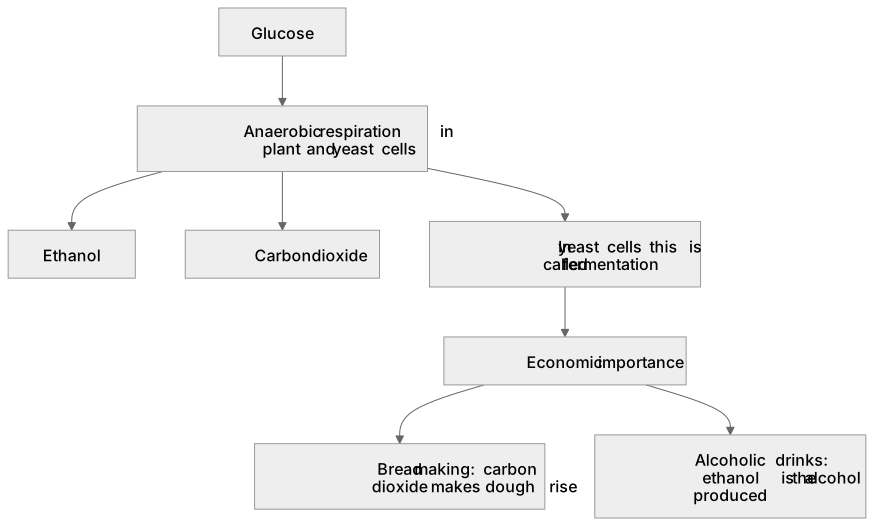
Aerobic and anaerobic respiration: Anaerobic respiration in plant and yeast cells is represented by the equation: glucose ethanol + carbon dioxide Anaerobic respiration in yeast cells is called fermentation and has economic importance in the manufacture of bread and alcoholic drinks.
In plant and yeast cells, anaerobic respiration converts glucose into ethanol and carbon dioxide.
Checked against the AQA 8461 specification (opens in a new tab) on .
- Point 6 of 6
- 3 key terms
Study notes
From the checked teaching notes for this specification point.
The idea
In plant and yeast cells, anaerobic respiration converts glucose into ethanol and carbon dioxide. The word equation is glucose → ethanol + carbon dioxide. In yeast cells this process is called fermentation. Fermentation has economic importance because it is used in baking and in making alcoholic drinks. In bread making, yeast ferments sugars in dough, and the carbon dioxide produced forms bubbles that make the dough rise; the ethanol evaporates during baking. In brewing and winemaking, yeast ferments sugars from grain, grapes or other plant material, and the ethanol produced is the alcohol in the drink, while carbon dioxide may be collected or released. The process transfers less energy per glucose molecule than aerobic respiration.
What earns the marks
- Anaerobic respiration in plant and yeast cells produces ethanol and carbon dioxide from glucose.
- The word equation is glucose → ethanol + carbon dioxide.
- Anaerobic respiration in yeast cells is called fermentation.
- Fermentation is used in bread making, where carbon dioxide makes dough rise.
- Fermentation is used in the manufacture of alcoholic drinks, where ethanol is the alcohol produced.
- Fermentation has economic importance because it is used in food and drink production.
Common mistakes and how to put them right
Writing that fermentation in yeast produces lactic acid.
Put it right by stating that yeast fermentation produces ethanol and carbon dioxide.
Omitting carbon dioxide from the equation.
Put it right by writing glucose → ethanol + carbon dioxide.
Confusing the role of ethanol and carbon dioxide in bread making.
Put it right by stating that carbon dioxide makes dough rise while ethanol evaporates during baking.
Exam tips
- Learn the word equation exactly as glucose → ethanol + carbon dioxide, including both products.
- When explaining bread making, name carbon dioxide as the gas that makes dough rise.
- When explaining alcoholic drinks, name ethanol as the alcohol produced by fermentation.
Try the lesson
The start of the Aerobic and anaerobic respiration: Anaerobic respiration in plant and yeast cells is represented by the equation: glucose ethanol + carbon dioxide Anaerobic respiration in yeast cells is called fermentation and has economic importance in the manufacture of bread and alcoholic drinks. lesson, made from checked teaching notes for this specification point.
Have a go first
Which gas is produced when yeast cells carry out anaerobic respiration?
Listen
In plant and yeast cells, anaerobic respiration converts glucose into ethanol and carbon dioxide. The word equation is glucose → ethanol + carbon dioxide. In yeast cells this process is called fermentation. Fermentation has economic importance because it is used in baking and in making alcoholic drinks. In bread making, yeast ferments sugars in dough, and the carbon dioxide produced forms bubbles that make the dough rise; the ethanol evaporates during baking. In brewing and winemaking, yeast ferments sugars from grain, grapes or other plant material, and the ethanol produced is the alcohol in the drink, while carbon dioxide may be collected or released. The process transfers less energy per glucose molecule than aerobic respiration. A strong answer earns marks for these points. Anaerobic respiration in plant and yeast cells produces ethanol and carbon dioxide from glucose. The word equation is glucose → ethanol + carbon dioxide. Anaerobic respiration in yeast cells is called fermentation. Fermentation is used in bread making, where carbon dioxide makes dough rise. A common slip: Writing that fermentation in yeast produces lactic acid. Instead, stating that yeast fermentation produces ethanol and carbon dioxide. Exam tip: Learn the word equation exactly as glucose → ethanol + carbon dioxide, including both products.
See it
Key words
Say what each word means before you turn the card.
Fermentation
Try answering aloud or in your head before turning the card.
Word equation
Try answering aloud or in your head before turning the card.
Economic importance of microorganisms
Try answering aloud or in your head before turning the card.
See every definition
- Fermentation
- Anaerobic respiration in yeast cells, which has economic importance in the manufacture of bread and alcoholic drinks.
- Word equation
- Glucose → ethanol + carbon dioxide, representing anaerobic respiration in plant and yeast cells.
- Economic importance of microorganisms
- Fermentation in yeast cells is used in the manufacture of bread and alcoholic drinks.
Label the diagram
Some boxes have lost their names. Pick the right name for each number.
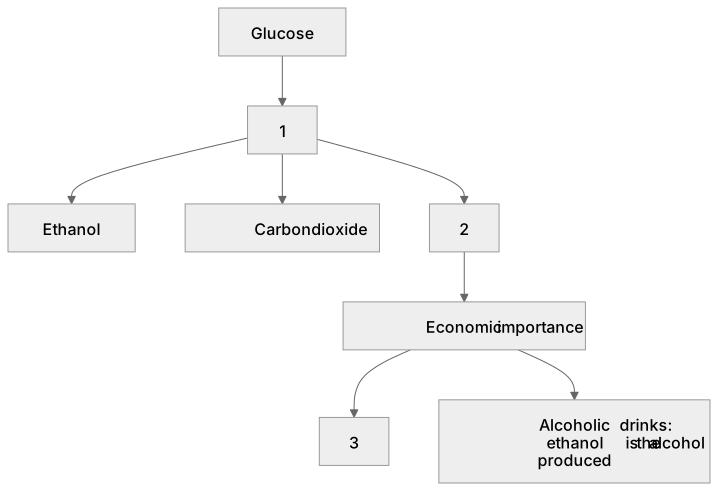
1Box 1
2Box 2
3Box 3
There is more to this lesson
The full lesson goes on to check your understanding and help you earn the marks. Create a free account to carry on, with your progress saved.
A week of Premium from your first lesson · Then the free plan continues · No card, no charge
Test your understanding of Aerobic and anaerobic respiration: Anaerobic respiration in plant and yeast cells is represented by the equation: glucose ethanol + carbon dioxide Anaerobic respiration in yeast cells is called fermentation and has economic importance in the manufacture of bread and alcoholic drinks.
Active recall beats re-reading. Take an instant quiz now to test what you’ve learned and lock it into long-term memory.
A week of Premium from your first lesson · Then the free plan continues · No card, no charge