AQA · GCSE · Biology
Course version: 8461 · Version from Sept 2018
Organisms need energy for: • chemical reactions to build larger molecules…
Full specification wording
Aerobic and anaerobic respiration: Organisms need energy for: • chemical reactions to build larger molecules • movement • keeping warm.
The energy transferred by respiration is not used only for movement.
Checked against the AQA 8461 specification (opens in a new tab) on .
- Point 5 of 6
Study notes
From the checked teaching notes for this specification point.
The idea
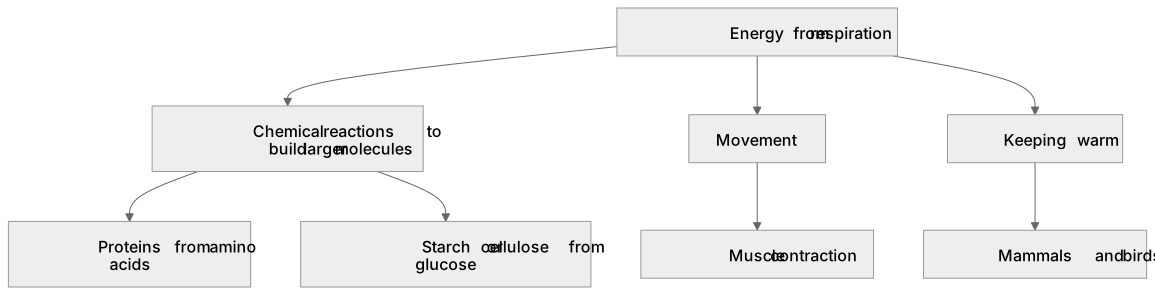
The energy transferred by respiration is not used only for movement. It powers chemical reactions that build larger molecules from smaller ones, such as joining amino acids into proteins or glucose units into starch and cellulose. It also enables movement, including muscle contraction, cilia beating and the movement of substances across membranes. In mammals and birds, some energy is transferred to the surroundings to keep the body at a constant warm temperature, which supports enzyme activity. For example, a growing plant uses energy to build cellulose for cell walls, a running mammal uses energy for muscle contraction, and a resting bird uses energy to maintain its body temperature. All three uses depend on respiration supplying energy in the form of ATP.
What earns the marks
- Energy from respiration is used in chemical reactions that build larger molecules from smaller ones.
- Examples of building larger molecules include making proteins from amino acids and making starch or cellulose from glucose.
- Energy is needed for movement, including muscle contraction and other cellular movement.
- Energy is transferred to keep warm in mammals and birds, maintaining a suitable body temperature.
- The three named uses are chemical reactions to build larger molecules, movement and keeping warm.
Common mistakes and how to put them right
Thinking energy is used only for movement.
Put it right by naming building larger molecules and keeping warm as additional uses.
Confusing building larger molecules with breaking down food.
Put it right by stating that respiration energy drives synthesis reactions such as protein formation.
Assuming all organisms use energy to keep warm.
Put it right by linking keeping warm mainly to mammals and birds, while all organisms use energy for synthesis and movement.
Exam tips
- Give a named example for each use, such as protein synthesis, muscle contraction and maintaining body temperature.
- Link each use back to energy transferred by respiration rather than to food directly.
- Use the phrase build larger molecules when describing synthesis, and support it with a specific molecule such as protein or cellulose.
Try the lesson
The start of the Aerobic and anaerobic respiration: Organisms need energy for: • chemical reactions to build larger molecules • movement • keeping warm. lesson, made from checked teaching notes for this specification point.
Have a go first
Which of the following is a key reason why organisms need a continuous supply of energy?
Listen
The energy transferred by respiration is not used only for movement. It powers chemical reactions that build larger molecules from smaller ones, such as joining amino acids into proteins or glucose units into starch and cellulose. It also enables movement, including muscle contraction, cilia beating and the movement of substances across membranes. In mammals and birds, some energy is transferred to the surroundings to keep the body at a constant warm temperature, which supports enzyme activity. For example, a growing plant uses energy to build cellulose for cell walls, a running mammal uses energy for muscle contraction, and a resting bird uses energy to maintain its body temperature. All three uses depend on respiration supplying energy in the form of ATP. A strong answer earns marks for these points. Energy from respiration is used in chemical reactions that build larger molecules from smaller ones. Examples of building larger molecules include making proteins from amino acids and making starch or cellulose from glucose. Energy is needed for movement, including muscle contraction and other cellular movement. Energy is transferred to keep warm in mammals and birds, maintaining a suitable body temperature. A common slip: Thinking energy is used only for movement. Instead, naming building larger molecules and keeping warm as additional uses. Exam tip: Give a named example for each use, such as protein synthesis, muscle contraction and maintaining body temperature.
See it
Label the diagram
Some boxes have lost their names. Pick the right name for each number.
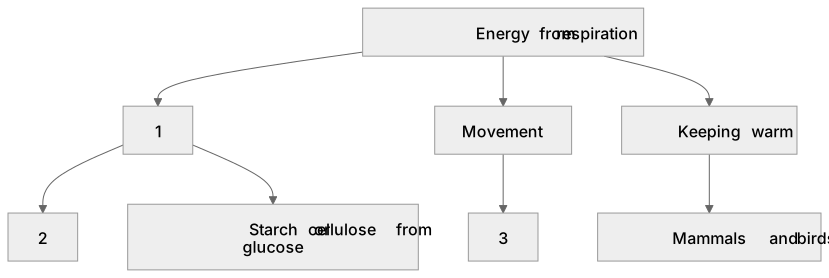
1Box 1
2Box 2
3Box 3
There is more to this lesson
The full lesson goes on to check your understanding and help you earn the marks. Create a free account to carry on, with your progress saved.
A week of Premium from your first lesson · Then the free plan continues · No card, no charge
Test your understanding of Aerobic and anaerobic respiration: Organisms need energy for: • chemical reactions to build larger molecules • movement • keeping warm.
Active recall beats re-reading. Take an instant quiz now to test what you’ve learned and lock it into long-term memory.
A week of Premium from your first lesson · Then the free plan continues · No card, no charge