AQA · GCSE · Biology
Course version: 8461 · Version from Sept 2018
Fever, abdominal cramps, vomiting and diarrhoea are caused by the bacteria…
Full specification wording
Bacterial diseases: Fever, abdominal cramps, vomiting and diarrhoea are caused by the bacteria and the toxins they secrete.
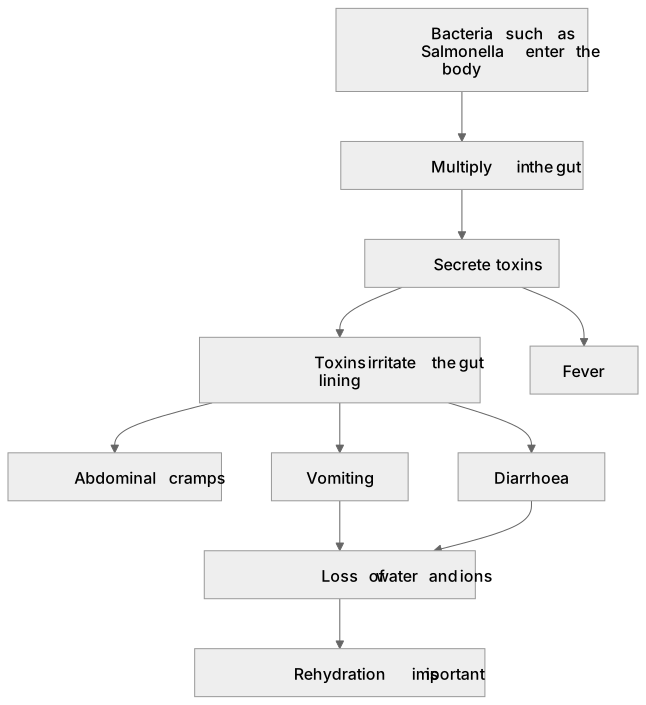
When bacteria such as Salmonella enter the body, they multiply in the gut and release toxins.
Checked against the AQA 8461 specification (opens in a new tab) on .
- Point 3 of 7
- 2 key terms
Study notes
From the checked teaching notes for this specification point.
The idea
When bacteria such as Salmonella enter the body, they multiply in the gut and release toxins. The toxins irritate the lining of the digestive system and affect the body's normal processes. This produces the symptoms of food poisoning: fever, abdominal cramps, vomiting and diarrhoea. Fever is a general response to infection as the body raises its temperature; cramps result from irritation and altered gut movement; vomiting and diarrhoea help expel the bacteria and toxins but also cause loss of water and ions. Understanding that both the bacteria and their toxins cause symptoms explains why food poisoning can continue even after the bacteria are killed, and why rehydration is an important part of care.
What earns the marks
- Bacteria such as Salmonella multiply in the digestive system and secrete toxins.
- Toxins irritate the gut lining and disrupt normal digestion, contributing to cramps, vomiting and diarrhoea.
- Fever is a response to infection and the presence of toxins in the body.
- Vomiting and diarrhoea are symptoms caused by the infection and toxin action, and they can lead to dehydration.
Common mistakes and how to put them right
Saying only the bacteria cause symptoms and ignoring toxins.
Put it right: Both the bacteria and the toxins they secrete cause the symptoms.
Confusing a symptom with a cause, for example calling diarrhoea the cause of food poisoning.
Put it right: Diarrhoea is a symptom caused by the infection and toxins.
Believing fever is caused directly by the food itself.
Put it right: Fever is a response to the bacterial infection and its toxins.
Exam tips
- Name the four symptoms accurately and link each to bacterial infection or toxin action.
- Use the word toxins when explaining how bacteria cause harm, as this is a key idea in this section.
- When describing treatment, mention rehydration because vomiting and diarrhoea cause loss of water and ions.
Try the lesson
The start of the Bacterial diseases: Fever, abdominal cramps, vomiting and diarrhoea are caused by the bacteria and the toxins they secrete. lesson, made from checked teaching notes for this specification point.
Have a go first
Which two things cause the fever, abdominal cramps, vomiting and diarrhoea of a bacterial disease?
Listen
When bacteria such as Salmonella enter the body, they multiply in the gut and release toxins. The toxins irritate the lining of the digestive system and affect the body's normal processes. This produces the symptoms of food poisoning: fever, abdominal cramps, vomiting and diarrhoea. Fever is a general response to infection as the body raises its temperature; cramps result from irritation and altered gut movement; vomiting and diarrhoea help expel the bacteria and toxins but also cause loss of water and ions. Understanding that both the bacteria and their toxins cause symptoms explains why food poisoning can continue even after the bacteria are killed, and why rehydration is an important part of care. A strong answer earns marks for these points. Bacteria such as Salmonella multiply in the digestive system and secrete toxins. Toxins irritate the gut lining and disrupt normal digestion, contributing to cramps, vomiting and diarrhoea. Fever is a response to infection and the presence of toxins in the body. Vomiting and diarrhoea are symptoms caused by the infection and toxin action, and they can lead to dehydration. A common slip: Saying only the bacteria cause symptoms and ignoring toxins. Instead, both the bacteria and the toxins they secrete cause the symptoms. Exam tip: Name the four symptoms accurately and link each to bacterial infection or toxin action.
See it
Key words
Say what each word means before you turn the card.
Toxins
Try answering aloud or in your head before turning the card.
Fever
Try answering aloud or in your head before turning the card.
See every definition
- Toxins
- Substances secreted by bacteria that irritate the lining of the digestive system and affect the body's normal processes.
- Fever
- A general response to infection as the body raises its temperature, caused by the bacterial infection and its toxins.
Label the diagram
Some boxes have lost their names. Pick the right name for each number.
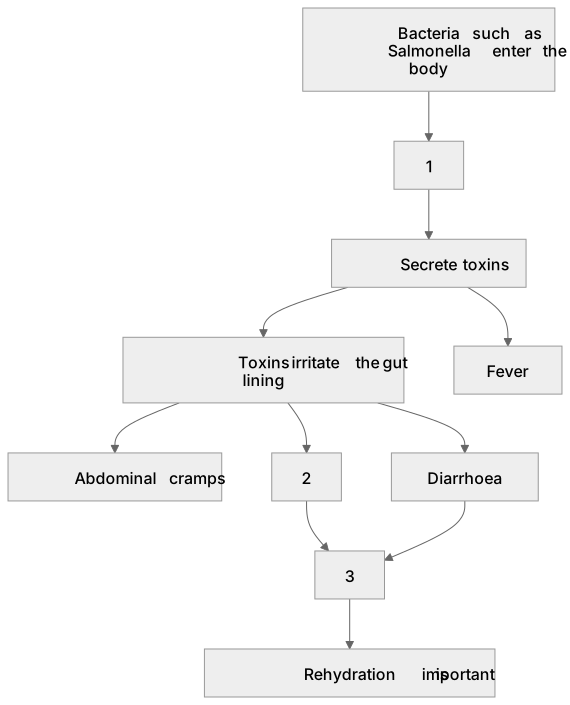
1Box 1
2Box 2
3Box 3
There is more to this lesson
The full lesson goes on to check your understanding and help you earn the marks. Create a free account to carry on, with your progress saved.
A week of Premium from your first lesson · Then the free plan continues · No card, no charge
Test your understanding of Bacterial diseases: Fever, abdominal cramps, vomiting and diarrhoea are caused by the bacteria and the toxins they secrete.
Active recall beats re-reading. Take an instant quiz now to test what you’ve learned and lock it into long-term memory.
A week of Premium from your first lesson · Then the free plan continues · No card, no charge