AQA · GCSE · Biology
Course version: 8461 · Version from Sept 2018
Most types of animal cell differentiate at an early stage. • Many types of…
Full specification wording
Cell differentiation: Most types of animal cell differentiate at an early stage. • Many types of plant cells retain the ability to differentiate throughout life.
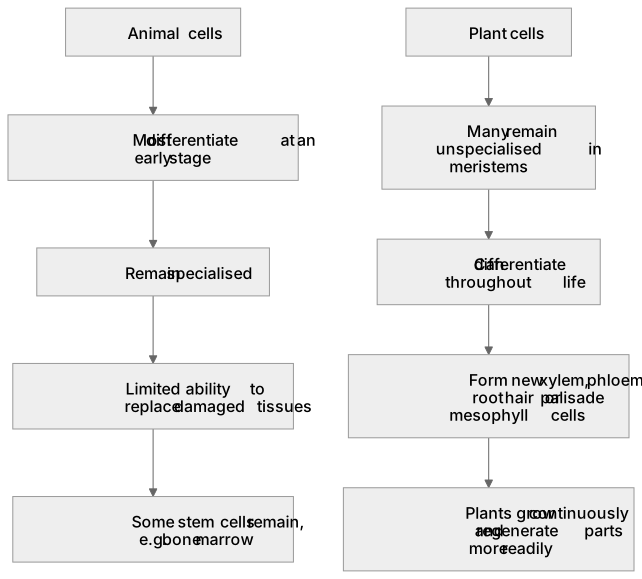
In animals, most cells become specialised early in development and then generally remain specialised; for example, nerve and muscle cells are formed before birth and do not normally change into…
Checked against the AQA 8461 specification (opens in a new tab) on .
- Point 3 of 6
- 4 key terms
Study notes
From the checked teaching notes for this specification point.
The idea
In animals, most cells become specialised early in development and then generally remain specialised; for example, nerve and muscle cells are formed before birth and do not normally change into other cell types. This means mature animals have limited ability to replace damaged tissues with new specialised cells, although some stem cells remain in tissues such as bone marrow. In plants, many cells remain unspecialised in meristems and can differentiate throughout life to form new xylem, phloem, root hair cells or palisade mesophyll cells as the plant grows or repairs damage. This difference explains why plants can grow continuously and regenerate parts more readily than most animals. It also links to the presence of stem cells, which are unspecialised cells capable of differentiating into specific cell types.
What earns the marks
- Most animal cells differentiate early in development and then remain specialised.
- Examples of animal cells that differentiate early include nerve cells and muscle cells.
- Mature animals have limited ability to produce new specialised cell types, although some stem cells remain in certain tissues.
- Many plant cells remain unspecialised in meristems and can differentiate throughout the plant's life.
- Plant differentiation produces cells such as xylem vessels, phloem sieve tubes, root hair cells and palisade mesophyll cells as the plant grows or repairs damage.
- The difference in differentiation ability helps explain why plants can grow continuously and regenerate parts more readily than most animals.
Common mistakes and how to put them right
Saying that no animal cells can ever differentiate after early development.
Put it right: The error is overgeneralising, and the correction is that some stem cells remain in tissues such as bone marrow and can differentiate.
Thinking that plant cells cannot differentiate after the plant is mature.
Put it right: The error is ignoring meristems, and the correction is that many plant cells retain the ability to differentiate throughout life.
Confusing differentiation with cell division.
Put it right: The error is using the terms interchangeably, and the correction is that division produces more cells while differentiation makes them specialised.
Exam tips
- Contrast animals and plants directly in your answer, using words such as 'whereas' or 'in contrast'.
- Mention meristems when explaining plant differentiation, as this shows precise knowledge of where unspecialised plant cells are found.
- Use named examples, such as nerve cells in animals and xylem vessels in plants, to support your comparison.
Try the lesson
The start of the Cell differentiation: Most types of animal cell differentiate at an early stage. • Many types of plant cells retain the ability to differentiate throughout life. lesson, made from checked teaching notes for this specification point.
Have a go first
Which statement about differentiation in animals and plants is correct?
Listen
In animals, most cells become specialised early in development and then generally remain specialised; for example, nerve and muscle cells are formed before birth and do not normally change into other cell types. This means mature animals have limited ability to replace damaged tissues with new specialised cells, although some stem cells remain in tissues such as bone marrow. In plants, many cells remain unspecialised in meristems and can differentiate throughout life to form new xylem, phloem, root hair cells or palisade mesophyll cells as the plant grows or repairs damage. This difference explains why plants can grow continuously and regenerate parts more readily than most animals. It also links to the presence of stem cells, which are unspecialised cells capable of differentiating into specific cell types. A strong answer earns marks for these points. Most animal cells differentiate early in development and then remain specialised. Examples of animal cells that differentiate early include nerve cells and muscle cells. Mature animals have limited ability to produce new specialised cell types, although some stem cells remain in certain tissues. Many plant cells remain unspecialised in meristems and can differentiate throughout the plant's life. Exam tip: Contrast animals and plants directly in your answer, using words such as 'whereas' or 'in contrast'.
See it
Key words
Say what each word means before you turn the card.
Timing of differentiation in animals and plants
Try answering aloud or in your head before turning the card.
Stem cells and unspecialised cells
Try answering aloud or in your head before turning the card.
Meristems and plant growth
Try answering aloud or in your head before turning the card.
Regeneration and repair
Try answering aloud or in your head before turning the card.
See every definition
- Timing of differentiation in animals and plants
- Most types of animal cell differentiate at an early stage, whereas many types of plant cells retain the ability to differentiate throughout life.
- Stem cells and unspecialised cells
- Unspecialised cells capable of differentiating into specific cell types, some of which remain in tissues such as bone marrow.
- Meristems and plant growth
- Many plant cells remain unspecialised in meristems and can differentiate throughout life as the plant grows or repairs damage.
- Regeneration and repair
- The difference in differentiation ability helps explain why plants can grow continuously and regenerate parts more readily than most animals.
Label the diagram
Some boxes have lost their names. Pick the right name for each number.
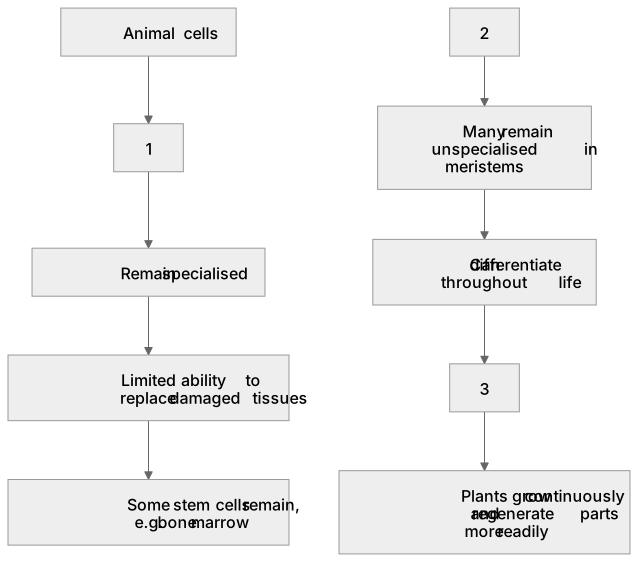
1Box 1
2Box 2
3Box 3
There is more to this lesson
The full lesson goes on to check your understanding and help you earn the marks. Create a free account to carry on, with your progress saved.
A week of Premium from your first lesson · Then the free plan continues · No card, no charge
Test your understanding of Cell differentiation: Most types of animal cell differentiate at an early stage. • Many types of plant cells retain the ability to differentiate throughout life.
Active recall beats re-reading. Take an instant quiz now to test what you’ve learned and lock it into long-term memory.
A week of Premium from your first lesson · Then the free plan continues · No card, no charge