AQA · GCSE · Biology
Course version: 8461 · Version from Sept 2018
Chromosomes: Each chromosome carries a large number of genes.
A gene is a short section of a DNA molecule that codes for a particular characteristic or for the sequence of amino acids in a protein.
Checked against the AQA 8461 specification (opens in a new tab) on .
- Point 2 of 3
- 2 key terms
Study notes
From the checked teaching notes for this specification point.
The idea
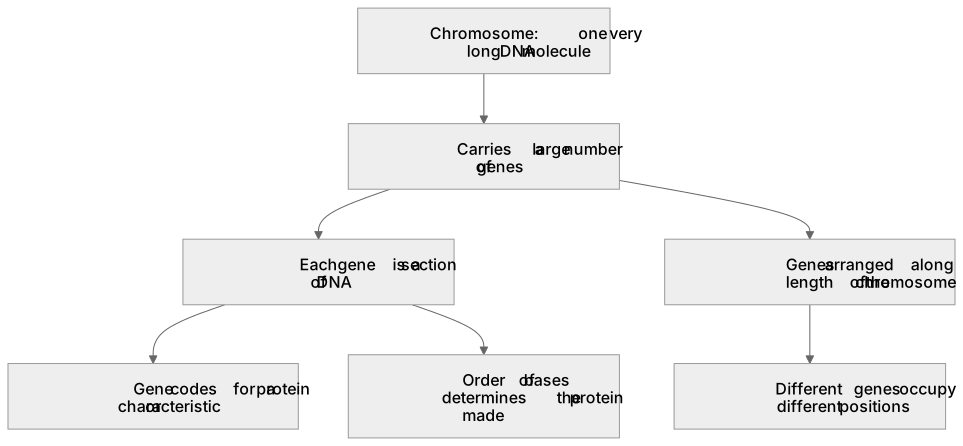
A gene is a short section of a DNA molecule that codes for a particular characteristic or for the sequence of amino acids in a protein. Because a chromosome is one enormously long DNA molecule, it can hold hundreds or even thousands of genes arranged along its length. Different genes occupy different positions, and the order of bases within a gene determines the protein made. A helpful method is to picture a chromosome as a very long instruction tape and each gene as one instruction on that tape. Humans have around 20,000 protein-coding genes spread across 46 chromosomes, so no single chromosome carries all the information. This explains why characteristics are inherited together in patterns and why changes in a gene can alter a protein and therefore a characteristic.
What earns the marks
- Defines a gene as a section of DNA that codes for a protein or characteristic.
- States that one chromosome carries many genes, not just one.
- Explains that genes are arranged along the length of the DNA molecule in a chromosome.
- Links the base sequence of a gene to the protein it codes for.
- Uses a human example, such as many genes on chromosome 1, to show that numbers per chromosome are large.
Common mistakes and how to put them right
Confusing a gene with a chromosome.
Put it right: A gene is a small section of DNA, while a chromosome is the whole packaged DNA molecule containing many genes.
Saying each chromosome carries one gene.
Put it right: Each chromosome carries a large number of genes.
Stating that genes are made of protein.
Put it right: Genes are made of DNA and code for proteins.
Exam tips
- Define gene and chromosome separately before describing their relationship, because muddled definitions lose marks quickly.
- Use the phrase section of DNA when defining a gene, as this signals the correct scale.
- When a question asks about the number of genes, avoid quoting an exact figure unless it is given; say a large number instead.
Try the lesson
The start of the Chromosomes: Each chromosome carries a large number of genes. lesson, made from checked teaching notes for this specification point.
Have a go first
Which statement correctly describes the relationship between chromosomes and genes?
Listen
A gene is a short section of a DNA molecule that codes for a particular characteristic or for the sequence of amino acids in a protein. Because a chromosome is one enormously long DNA molecule, it can hold hundreds or even thousands of genes arranged along its length. Different genes occupy different positions, and the order of bases within a gene determines the protein made. A helpful method is to picture a chromosome as a very long instruction tape and each gene as one instruction on that tape. Humans have around 20,000 protein-coding genes spread across 46 chromosomes, so no single chromosome carries all the information. This explains why characteristics are inherited together in patterns and why changes in a gene can alter a protein and therefore a characteristic. A strong answer earns marks for these points. Defines a gene as a section of DNA that codes for a protein or characteristic. States that one chromosome carries many genes, not just one. Explains that genes are arranged along the length of the DNA molecule in a chromosome. Links the base sequence of a gene to the protein it codes for. A common slip: Confusing a gene with a chromosome. Instead, a gene is a small section of DNA, while a chromosome is the whole packaged DNA molecule containing many genes. Exam tip: Define gene and chromosome separately before describing their relationship, because muddled definitions lose marks quickly.
See it
Key words
Say what each word means before you turn the card.
Gene
Try answering aloud or in your head before turning the card.
Chromosome
Try answering aloud or in your head before turning the card.
See every definition
- Gene
- A short section of a DNA molecule that codes for a particular characteristic or for the sequence of amino acids in a protein.
- Chromosome
- One enormously long DNA molecule that can hold hundreds or even thousands of genes arranged along its length.
Label the diagram
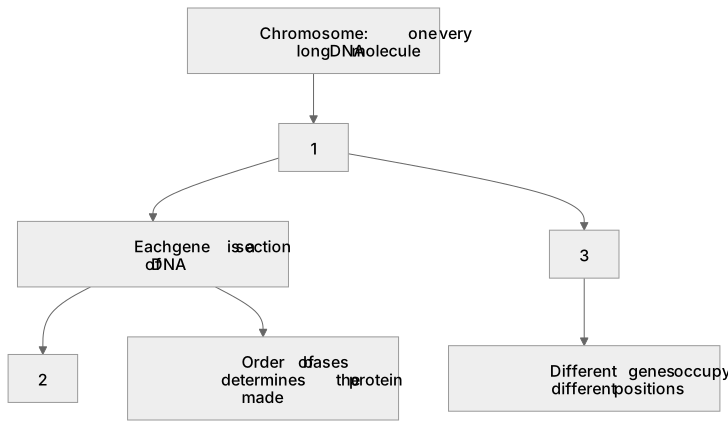
Some boxes have lost their names. Pick the right name for each number.
1Box 1
2Box 2
3Box 3
There is more to this lesson
The full lesson goes on to check your understanding and help you earn the marks. Create a free account to carry on, with your progress saved.
A week of Premium from your first lesson · Then the free plan continues · No card, no charge
Test your understanding of Chromosomes: Each chromosome carries a large number of genes.
Active recall beats re-reading. Take an instant quiz now to test what you’ve learned and lock it into long-term memory.
A week of Premium from your first lesson · Then the free plan continues · No card, no charge