AQA · GCSE · Biology
Course version: 8461 · Version from Sept 2018
An ecosystem is the interaction of a community of living organisms…
Full specification wording
Communities: An ecosystem is the interaction of a community of living organisms (biotic) with the non-living (abiotic) parts of their environment.
An ecosystem is not just a place or a list of species; it is the interaction between the living community and the non-living surroundings.
Checked against the AQA 8461 specification (opens in a new tab) on .
- Point 3 of 11
- 4 key terms
Study notes
From the checked teaching notes for this specification point.
The idea
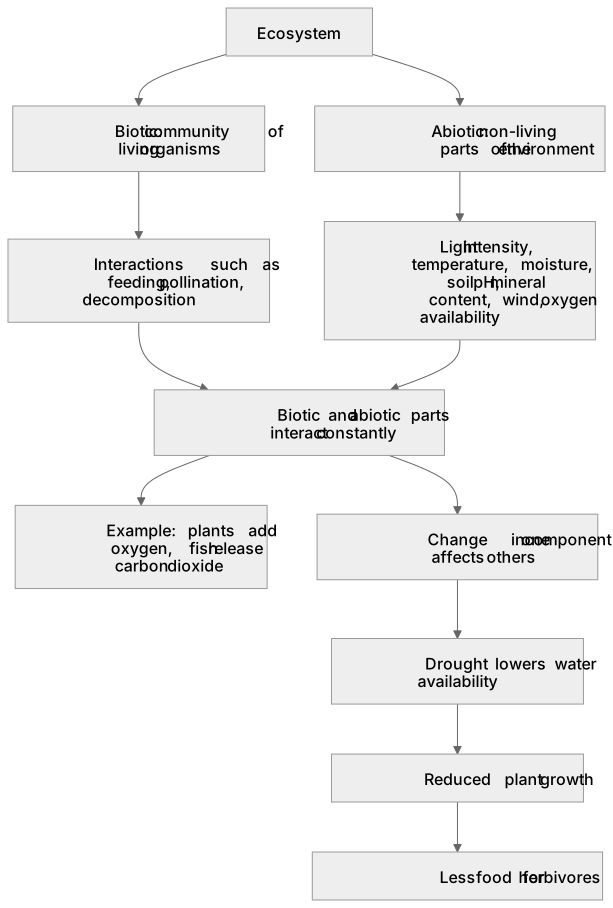
An ecosystem is not just a place or a list of species; it is the interaction between the living community and the non-living surroundings. The biotic part is all the organisms: plants, animals, fungi and bacteria, including their relationships such as feeding, pollination and decomposition. The abiotic part is everything non-living: light intensity, temperature, moisture, soil pH and mineral content, wind and oxygen availability. These parts interact constantly. For example, in a pond, water temperature and oxygen concentration (abiotic) affect which fish and plants (biotic) can survive, while the plants add oxygen and the fish release carbon dioxide. Changes to one part ripple through the whole system: a drought lowers water availability, reducing plant growth, which reduces food for herbivores. Always name both components and state how they affect each other.
What earns the marks
- Define the biotic component as the community of living organisms, including their interactions.
- Define the abiotic component as the non-living parts of the environment, such as light, temperature, water, soil pH and oxygen.
- State that an ecosystem involves interaction between the biotic and abiotic components, not merely their coexistence.
- Give a named example of an interaction, such as plants affecting oxygen concentration or temperature affecting which species survive.
- Explain that a change in one component can affect other components of the ecosystem.
Common mistakes and how to put them right
Defining an ecosystem as only the organisms present.
Put it right: It also includes the non-living environment and the interactions between them.
Treating abiotic factors as unimportant background.
Put it right: Factors such as temperature and light directly affect which organisms survive.
Giving a habitat as the definition of an ecosystem.
Put it right: A habitat is where an organism lives, whereas an ecosystem includes the community and its interactions with the abiotic environment.
Exam tips
- In definitions, include both the living community and the non-living environment, and use the words biotic and abiotic.
- When giving an example, state the direction of the effect, such as how temperature affects enzyme activity or growth.
- Avoid writing that an ecosystem is just a habitat; add the idea of interaction.
Try the lesson
The start of the Communities: An ecosystem is the interaction of a community of living organisms (biotic) with the non-living (abiotic) parts of their environment. lesson, made from checked teaching notes for this specification point.
Have a go first
Which term describes a community of living organisms interacting with the non-living parts of their environment?
Listen
An ecosystem is not just a place or a list of species; it is the interaction between the living community and the non-living surroundings. The biotic part is all the organisms: plants, animals, fungi and bacteria, including their relationships such as feeding, pollination and decomposition. The abiotic part is everything non-living: light intensity, temperature, moisture, soil pH and mineral content, wind and oxygen availability. These parts interact constantly. For example, in a pond, water temperature and oxygen concentration (abiotic) affect which fish and plants (biotic) can survive, while the plants add oxygen and the fish release carbon dioxide. Changes to one part ripple through the whole system: a drought lowers water availability, reducing plant growth, which reduces food for herbivores. Always name both components and state how they affect each other. A strong answer earns marks for these points. Define the biotic component as the community of living organisms, including their interactions. Define the abiotic component as the non-living parts of the environment, such as light, temperature, water, soil pH and oxygen. State that an ecosystem involves interaction between the biotic and abiotic components, not merely their coexistence. Give a named example of an interaction, such as plants affecting oxygen concentration or temperature affecting which species survive. A common slip: Defining an ecosystem as only the organisms present. Instead, it also includes the non-living environment and the interactions between them. Exam tip: In definitions, include both the living community and the non-living environment, and use the words biotic and abiotic.
See it
Key words
Say what each word means before you turn the card.
Ecosystem
Try answering aloud or in your head before turning the card.
Biotic component
Try answering aloud or in your head before turning the card.
Abiotic component
Try answering aloud or in your head before turning the card.
Interactions within ecosystems
Try answering aloud or in your head before turning the card.
See every definition
- Ecosystem
- The interaction of a community of living organisms with the non-living parts of their environment.
- Biotic component
- The community of living organisms, including their relationships such as feeding, pollination and decomposition.
- Abiotic component
- The non-living parts of the environment, such as light intensity, temperature, moisture, soil pH and mineral content, wind and oxygen availability.
- Interactions within ecosystems
- The biotic and abiotic parts affect each other constantly, and a change in one part can affect other components of the ecosystem.
Label the diagram
Some boxes have lost their names. Pick the right name for each number.
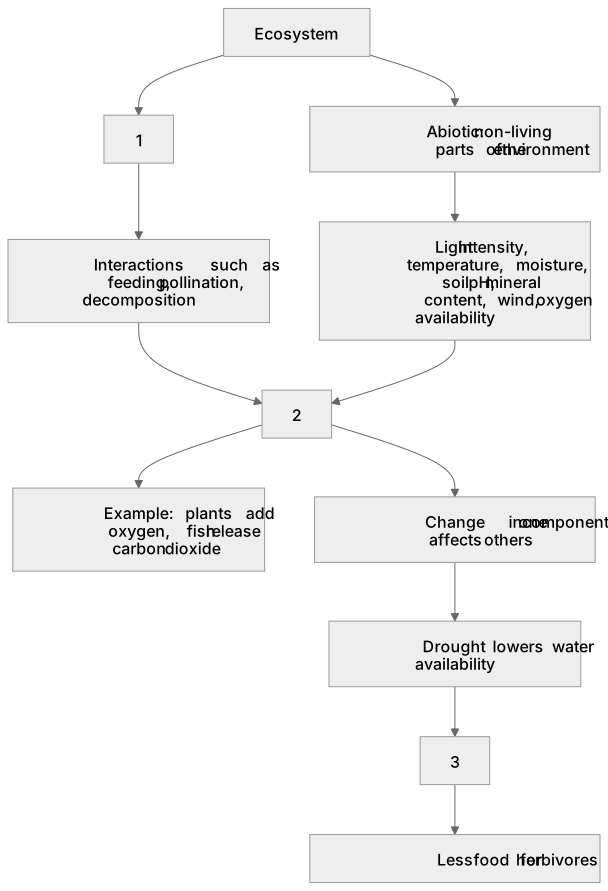
1Box 1
2Box 2
3Box 3
There is more to this lesson
The full lesson goes on to check your understanding and help you earn the marks. Create a free account to carry on, with your progress saved.
A week of Premium from your first lesson · Then the free plan continues · No card, no charge
Test your understanding of Communities: An ecosystem is the interaction of a community of living organisms (biotic) with the non-living (abiotic) parts of their environment.
Active recall beats re-reading. Take an instant quiz now to test what you’ve learned and lock it into long-term memory.
A week of Premium from your first lesson · Then the free plan continues · No card, no charge