AQA · GCSE · Biology
Course version: 8461 · Version from Sept 2018
Communities: If one species is removed it can affect the whole community.
Because species in a community are linked, removing one can change many others.
Checked against the AQA 8461 specification (opens in a new tab) on .
- Point 8 of 11
- 3 key terms
Study notes
From the checked teaching notes for this specification point.
The idea
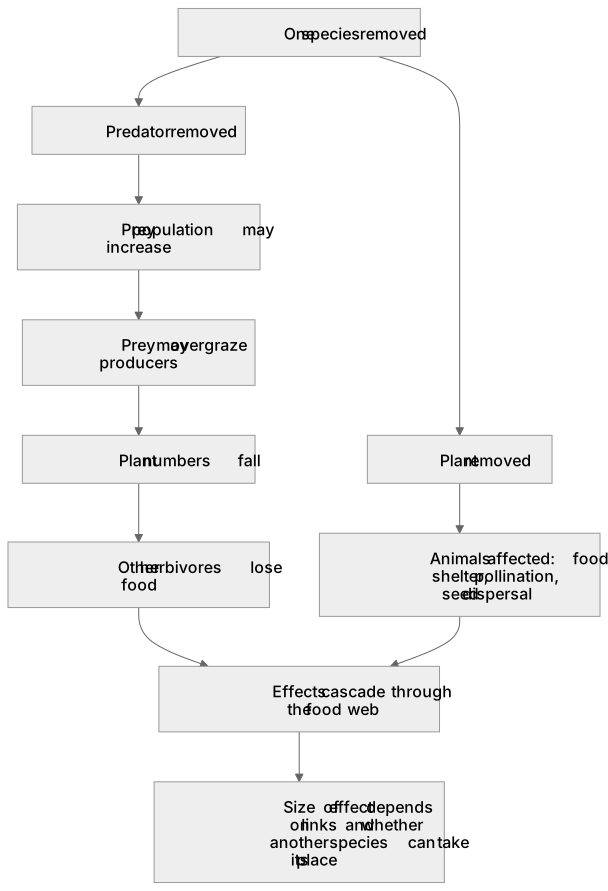
Because species in a community are linked, removing one can change many others. If a predator disappears, its prey may increase, then overgraze the plants below it, so plant numbers fall and other herbivores lose food. If a plant disappears, animals that fed on it, sheltered in it or depended on it for pollination or seed dispersal are affected. Effects can cascade through a food web, and a keystone species has an unusually large influence relative to its abundance. A practical example is removing a top predator from a lake, after which smaller fish multiply and the invertebrates they eat decline. The size of the effect depends on how many links the species had and whether another species can take its place.
What earns the marks
- Species in a community are linked by feeding and other dependencies, so a change in one population can change others.
- Removing a predator can allow its prey population to increase.
- An increased prey population may overgraze producers, reducing plant numbers and affecting other herbivores.
- Removing a plant affects animals that used it for food, shelter, pollination or seed dispersal.
- Effects can spread through a food web as a cascade rather than staying with one pair of species.
- A keystone species has a disproportionately large effect on the community relative to its abundance.
Common mistakes and how to put them right
Assuming only the direct predator and prey are affected.
Put it right by tracing effects along further links in the food web.
Claiming the community always collapses.
Put it right by saying the effect depends on the number of links and whether another species can replace the lost one.
Ignoring plant dependencies; correct this by considering food, shelter, pollination and seed dispersal provided by plants.
Exam tips
- Trace the effect step by step through the food web, naming each population that changes.
- State the direction of each change, such as prey numbers rise and plant numbers fall.
- Use the phrase may or can, because the outcome depends on the rest of the community.
Try the lesson
The start of the Communities: If one species is removed it can affect the whole community. lesson, made from checked teaching notes for this specification point.
Have a go first
In a food web, a fox eats rabbits. If all the rabbits are removed from the community, what is the most likely effect on the foxes?
Listen
Because species in a community are linked, removing one can change many others. If a predator disappears, its prey may increase, then overgraze the plants below it, so plant numbers fall and other herbivores lose food. If a plant disappears, animals that fed on it, sheltered in it or depended on it for pollination or seed dispersal are affected. Effects can cascade through a food web, and a keystone species has an unusually large influence relative to its abundance. A practical example is removing a top predator from a lake, after which smaller fish multiply and the invertebrates they eat decline. The size of the effect depends on how many links the species had and whether another species can take its place. A strong answer earns marks for these points. Species in a community are linked by feeding and other dependencies, so a change in one population can change others. Removing a predator can allow its prey population to increase. An increased prey population may overgraze producers, reducing plant numbers and affecting other herbivores. Removing a plant affects animals that used it for food, shelter, pollination or seed dispersal. A common slip: Assuming only the direct predator and prey are affected. Instead, tracing effects along further links in the food web. Exam tip: Trace the effect step by step through the food web, naming each population that changes.
See it
Key words
Say what each word means before you turn the card.
Food webs and cascading effects
Try answering aloud or in your head before turning the card.
Keystone species
Try answering aloud or in your head before turning the card.
Interdependence
Try answering aloud or in your head before turning the card.
See every definition
- Food webs and cascading effects
- Effects can spread through a food web as a cascade rather than staying with one pair of species.
- Keystone species
- A species that has a disproportionately large effect on the community relative to its abundance.
- Interdependence
- Species in a community are linked by feeding and other dependencies, so a change in one population can change others.
Label the diagram
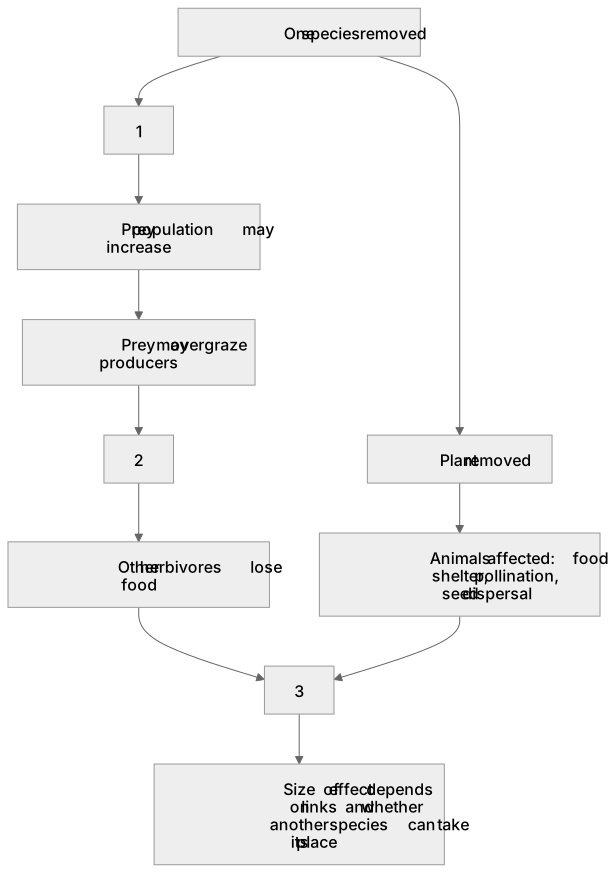
Some boxes have lost their names. Pick the right name for each number.
1Box 1
2Box 2
3Box 3
There is more to this lesson
The full lesson goes on to check your understanding and help you earn the marks. Create a free account to carry on, with your progress saved.
A week of Premium from your first lesson · Then the free plan continues · No card, no charge
Test your understanding of Communities: If one species is removed it can affect the whole community.
Active recall beats re-reading. Take an instant quiz now to test what you’ve learned and lock it into long-term memory.
A week of Premium from your first lesson · Then the free plan continues · No card, no charge