AQA · GCSE · Biology
Course version: 8461 · Version from Sept 2018
A carbohydrate controlled diet and an exercise regime are common treatments.
Full specification wording
Control of blood glucose concentration: A carbohydrate controlled diet and an exercise regime are common treatments.
Because Type 2 diabetes involves poor responsiveness to insulin, treatment often focuses on reducing the glucose load and improving how well cells respond.
Checked against the AQA 8461 specification (opens in a new tab) on .
- Point 8 of 13
- 4 key terms
Study notes
From the checked teaching notes for this specification point.
The idea
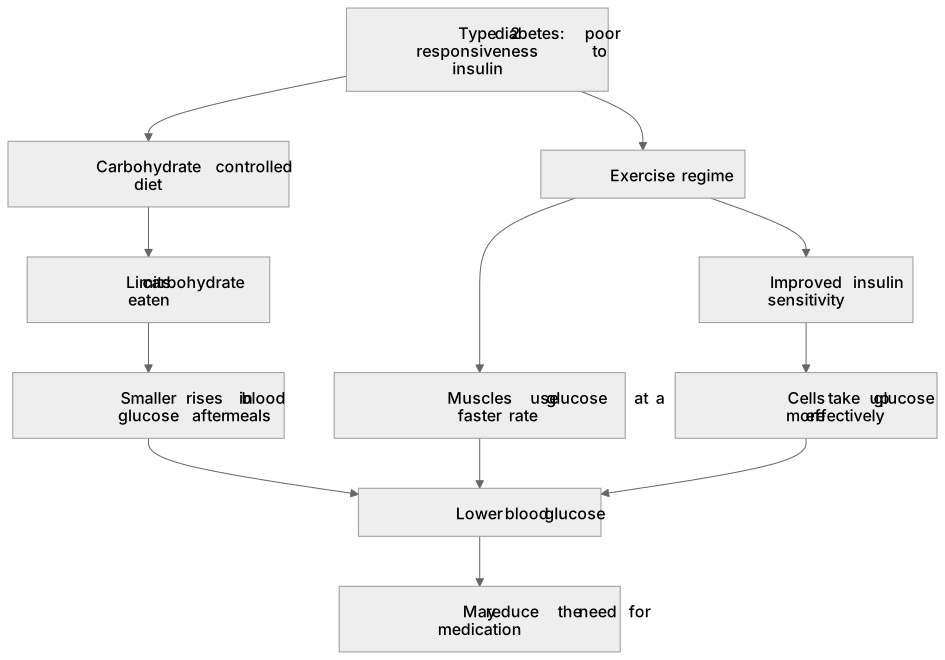
Because Type 2 diabetes involves poor responsiveness to insulin, treatment often focuses on reducing the glucose load and improving how well cells respond. A carbohydrate controlled diet limits how much carbohydrate, especially sugar, is eaten, so smaller rises in blood glucose occur after meals. Regular exercise increases the rate at which muscles use glucose and can improve insulin sensitivity, helping cells respond better. Together these measures can lower blood glucose and, in some cases, reduce the need for medication.
What earns the marks
- A carbohydrate controlled diet limits the amount of carbohydrate eaten, reducing glucose absorbed into the blood.
- Fewer and smaller rises in blood glucose occur after meals when carbohydrate intake is controlled.
- Regular exercise increases the use of glucose by muscles during activity.
- Exercise can improve the sensitivity of body cells to insulin, so glucose is taken up more effectively.
- Diet and exercise together can lower blood glucose and may reduce the need for medication.
Common mistakes and how to put them right
Saying a carbohydrate controlled diet means eating no carbohydrate.
Put it right: It means controlling the amount and type, not eliminating it.
Claiming exercise cures Type 2 diabetes permanently.
Put it right: It helps manage blood glucose but does not guarantee a cure.
Confusing the treatment of Type 2 with insulin injections as the first option.
Put it right: Lifestyle measures are commonly used first, though medication may also be needed.
Exam tips
- Link each treatment to its effect on blood glucose rather than listing treatments alone.
- Use the term carbohydrate controlled rather than simply diet, to show precision.
- When comparing treatments, note that Type 1 normally requires insulin injections, whereas Type 2 commonly begins with lifestyle changes.
Try the lesson
The start of the Control of blood glucose concentration: A carbohydrate controlled diet and an exercise regime are common treatments. lesson, made from checked teaching notes for this specification point.
Have a go first
Which two treatments are commonly used to help control Type 2 diabetes?
Listen
Because Type 2 diabetes involves poor responsiveness to insulin, treatment often focuses on reducing the glucose load and improving how well cells respond. A carbohydrate controlled diet limits how much carbohydrate, especially sugar, is eaten, so smaller rises in blood glucose occur after meals. Regular exercise increases the rate at which muscles use glucose and can improve insulin sensitivity, helping cells respond better. Together these measures can lower blood glucose and, in some cases, reduce the need for medication. A strong answer earns marks for these points. A carbohydrate controlled diet limits the amount of carbohydrate eaten, reducing glucose absorbed into the blood. Fewer and smaller rises in blood glucose occur after meals when carbohydrate intake is controlled. Regular exercise increases the use of glucose by muscles during activity. Exercise can improve the sensitivity of body cells to insulin, so glucose is taken up more effectively. Exam tip: Link each treatment to its effect on blood glucose rather than listing treatments alone.
See it
Key words
Say what each word means before you turn the card.
Carbohydrate controlled diet
Try answering aloud or in your head before turning the card.
Exercise regime
Try answering aloud or in your head before turning the card.
Insulin sensitivity
Try answering aloud or in your head before turning the card.
Lifestyle management of disease
Try answering aloud or in your head before turning the card.
See every definition
- Carbohydrate controlled diet
- Limits the amount of carbohydrate eaten, reducing glucose absorbed into the blood so fewer and smaller rises in blood glucose occur after meals.
- Exercise regime
- Regular exercise increases the use of glucose by muscles during activity and can improve the sensitivity of body cells to insulin.
- Insulin sensitivity
- The responsiveness of body cells to insulin; exercise can improve it so glucose is taken up more effectively.
- Lifestyle management of disease
- Diet and exercise together can lower blood glucose and may reduce the need for medication in Type 2 diabetes.
Label the diagram
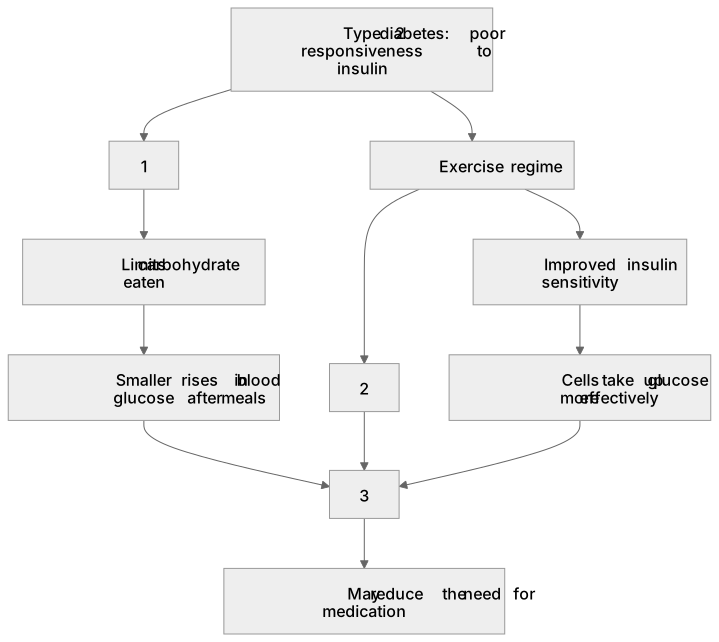
Some boxes have lost their names. Pick the right name for each number.
1Box 1
2Box 2
3Box 3
There is more to this lesson
The full lesson goes on to check your understanding and help you earn the marks. Create a free account to carry on, with your progress saved.
A week of Premium from your first lesson · Then the free plan continues · No card, no charge
Test your understanding of Control of blood glucose concentration: A carbohydrate controlled diet and an exercise regime are common treatments.
Active recall beats re-reading. Take an instant quiz now to test what you’ve learned and lock it into long-term memory.
A week of Premium from your first lesson · Then the free plan continues · No card, no charge