AQA · GCSE · Biology
Course version: 8461 · Version from Sept 2018
Obesity is a risk factor for Type 2 diabetes.
Full specification wording
Control of blood glucose concentration: Obesity is a risk factor for Type 2 diabetes.
A risk factor raises the chance that a condition develops; it is not a guaranteed cause.
Checked against the AQA 8461 specification (opens in a new tab) on .
- Point 9 of 13
- 3 key terms
Study notes
From the checked teaching notes for this specification point.
The idea
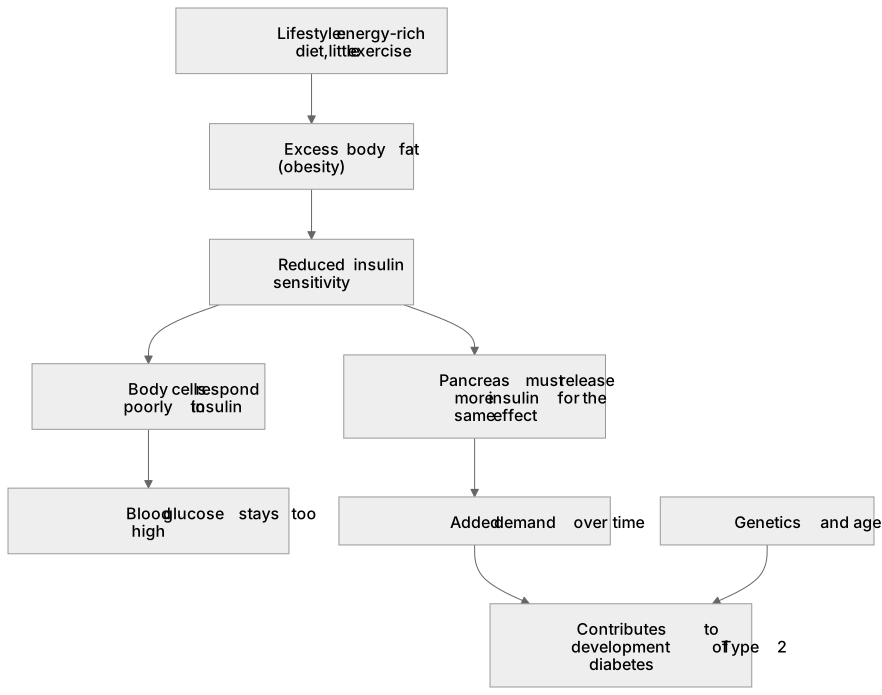
A risk factor raises the chance that a condition develops; it is not a guaranteed cause. Obesity means carrying excess body fat, often indicated by a high body mass index. In Type 2 diabetes, body cells respond poorly to insulin, so blood glucose stays too high. Excess fat tissue is linked to reduced insulin sensitivity, so the pancreas must release more insulin to have the same effect. Over time, this added demand can contribute to the development of Type 2 diabetes. For example, a person with a high BMI who eats an energy-rich diet and takes little exercise has a greater risk than someone of healthy mass who is physically active. Genetics and age also affect risk, so obesity is one factor among several.
What earns the marks
- State that a risk factor increases the probability of developing a condition rather than guaranteeing it.
- Define obesity as excess body fat, commonly assessed using body mass index.
- Explain that in Type 2 diabetes body cells respond less well to insulin, so blood glucose remains too high.
- Link excess fat tissue to reduced insulin sensitivity and a greater demand for insulin secretion.
- Recognise that obesity is one risk factor among others, including genetic and lifestyle factors.
- Apply the idea to a named example, such as comparing two people with different body mass indices and activity levels.
Common mistakes and how to put them right
Treating obesity as a direct cause of Type 2 diabetes.
Put it right by describing it as a risk factor that raises the chance of developing the condition.
Confusing Type 2 diabetes with Type 1 diabetes.
Put it right by stating that Type 2 involves reduced responsiveness to insulin, whereas Type 1 involves insufficient insulin production.
Assuming only diet matters.
Put it right by including body fat, physical activity and genetic factors as influences on risk.
Exam tips
- Use the phrase risk factor and explain what it means in terms of probability.
- Link obesity to reduced insulin sensitivity rather than simply stating that sugar causes diabetes.
- If a question supplies data about BMI or activity, quote a relevant value and compare groups explicitly.
Try the lesson
The start of the Control of blood glucose concentration: Obesity is a risk factor for Type 2 diabetes. lesson, made from checked teaching notes for this specification point.
Have a go first
Which condition is made more likely by obesity?
Listen
A risk factor raises the chance that a condition develops; it is not a guaranteed cause. Obesity means carrying excess body fat, often indicated by a high body mass index. In Type 2 diabetes, body cells respond poorly to insulin, so blood glucose stays too high. Excess fat tissue is linked to reduced insulin sensitivity, so the pancreas must release more insulin to have the same effect. Over time, this added demand can contribute to the development of Type 2 diabetes. For example, a person with a high BMI who eats an energy-rich diet and takes little exercise has a greater risk than someone of healthy mass who is physically active. Genetics and age also affect risk, so obesity is one factor among several. A strong answer earns marks for these points. State that a risk factor increases the probability of developing a condition rather than guaranteeing it. Define obesity as excess body fat, commonly assessed using body mass index. Explain that in Type 2 diabetes body cells respond less well to insulin, so blood glucose remains too high. Link excess fat tissue to reduced insulin sensitivity and a greater demand for insulin secretion. A common slip: Treating obesity as a direct cause of Type 2 diabetes. Instead, describing it as a risk factor that raises the chance of developing the condition. Exam tip: Use the phrase risk factor and explain what it means in terms of probability.
See it
Key words
Say what each word means before you turn the card.
Risk factor
Try answering aloud or in your head before turning the card.
Obesity
Try answering aloud or in your head before turning the card.
Type 2 diabetes
Try answering aloud or in your head before turning the card.
See every definition
- Risk factor
- Something that raises the chance that a condition develops; it is not a guaranteed cause.
- Obesity
- Carrying excess body fat, often indicated by a high body mass index.
- Type 2 diabetes
- A condition in which body cells respond poorly to insulin, so blood glucose stays too high.
Label the diagram
Some boxes have lost their names. Pick the right name for each number.
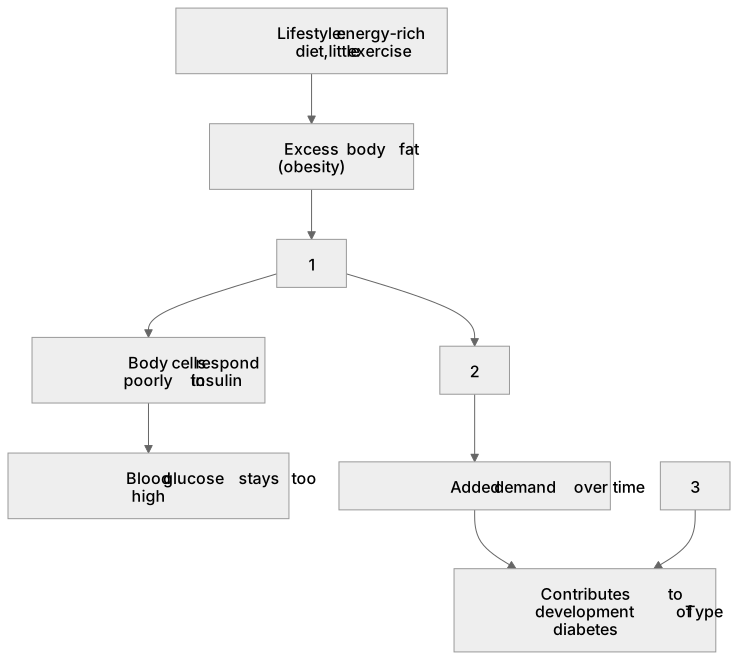
1Box 1
2Box 2
3Box 3
There is more to this lesson
The full lesson goes on to check your understanding and help you earn the marks. Create a free account to carry on, with your progress saved.
A week of Premium from your first lesson · Then the free plan continues · No card, no charge
Test your understanding of Control of blood glucose concentration: Obesity is a risk factor for Type 2 diabetes.
Active recall beats re-reading. Take an instant quiz now to test what you’ve learned and lock it into long-term memory.
A week of Premium from your first lesson · Then the free plan continues · No card, no charge