AQA · GCSE · Biology
Course version: 8461 · Version from Sept 2018
A non-communicable disease: Stents are used to keep the coronary arteries…
Full specification wording
Coronary heart disease: a non-communicable disease: Stents are used to keep the coronary arteries open.
A stent is a small mesh tube inserted into a narrowed coronary artery during a procedure called angioplasty.
Checked against the AQA 8461 specification (opens in a new tab) on .
- Point 4 of 10
- 2 key terms
Study notes
From the checked teaching notes for this specification point.
The idea
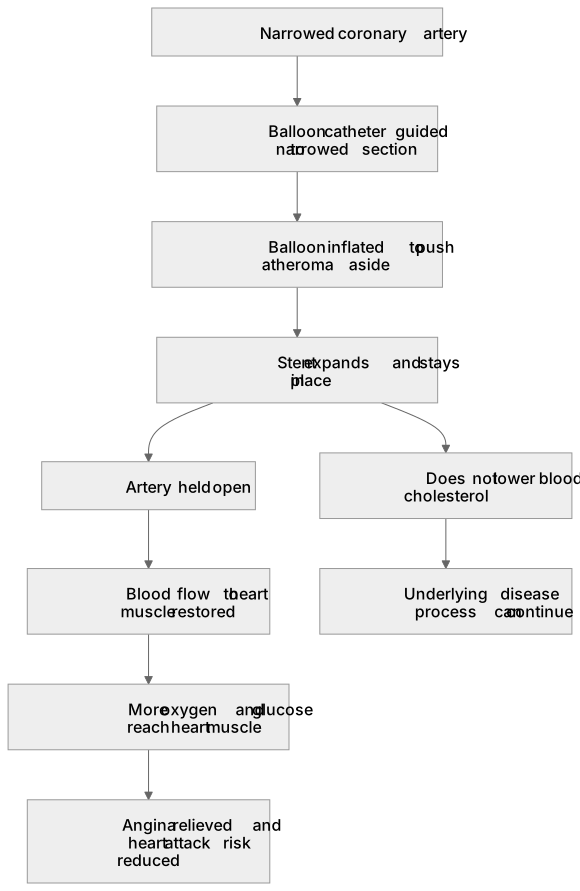
A stent is a small mesh tube inserted into a narrowed coronary artery during a procedure called angioplasty. A balloon catheter is guided to the narrowed section, the balloon is inflated to push the atheroma aside, and the stent expands and stays in place to hold the artery open. This restores blood flow through the coronary artery, so the heart muscle receives more oxygen and glucose. Stents can relieve angina and reduce the risk of a heart attack. They act quickly and are a local treatment, but they do not lower blood cholesterol, so the underlying disease process can continue and further narrowing may occur elsewhere.
What earns the marks
- A stent is a mesh tube inserted into a coronary artery.
- Insertion usually involves a balloon catheter that is inflated to widen the artery.
- Restoring the lumen increases blood flow to the heart muscle.
- Stents do not reduce blood cholesterol, so they treat the narrowing rather than its cause.
Common mistakes and how to put them right
Saying a stent dissolves the fatty material.
Put it right: It pushes the lining aside and holds the artery open.
Confusing a stent with a statin.
Put it right: A stent is a physical tube inserted into the artery, while a statin is a drug that lowers cholesterol.
Claiming a stent cures coronary heart disease permanently.
Put it right: A stent relieves the blockage at that site but does not stop further fatty deposits forming.
Exam tips
- Name the artery and the direction of benefit: state that the stent keeps the coronary artery open so more blood reaches the heart muscle.
- Compare stents with statins when asked: stents give rapid relief at one site, whereas statins reduce cholesterol and slow the disease process.
- Avoid describing the surgical steps in unnecessary detail; one sentence on balloon inflation is enough unless the question specifically asks how it is inserted.
Try the lesson
The start of the Coronary heart disease: a non-communicable disease: Stents are used to keep the coronary arteries open. lesson, made from checked teaching notes for this specification point.
Have a go first
What is the job of a stent in the treatment of coronary heart disease?
Listen
A stent is a small mesh tube inserted into a narrowed coronary artery during a procedure called angioplasty. A balloon catheter is guided to the narrowed section, the balloon is inflated to push the atheroma aside, and the stent expands and stays in place to hold the artery open. This restores blood flow through the coronary artery, so the heart muscle receives more oxygen and glucose. Stents can relieve angina and reduce the risk of a heart attack. They act quickly and are a local treatment, but they do not lower blood cholesterol, so the underlying disease process can continue and further narrowing may occur elsewhere. A strong answer earns marks for these points. A stent is a mesh tube inserted into a coronary artery. Insertion usually involves a balloon catheter that is inflated to widen the artery. Restoring the lumen increases blood flow to the heart muscle. Stents do not reduce blood cholesterol, so they treat the narrowing rather than its cause. A common slip: Saying a stent dissolves the fatty material: the error is that a stent does not remove atheroma. Instead, it pushes the lining aside and holds the artery open. Exam tip: Name the artery and the direction of benefit: state that the stent keeps the coronary artery open so more blood reaches the heart muscle.
See it
Key words
Say what each word means before you turn the card.
Stent
Try answering aloud or in your head before turning the card.
Angioplasty
Try answering aloud or in your head before turning the card.
See every definition
- Stent
- A small mesh tube inserted into a narrowed coronary artery to hold it open.
- Angioplasty
- A procedure in which a balloon catheter is guided to the narrowed section and the balloon is inflated to push the atheroma aside.
Label the diagram
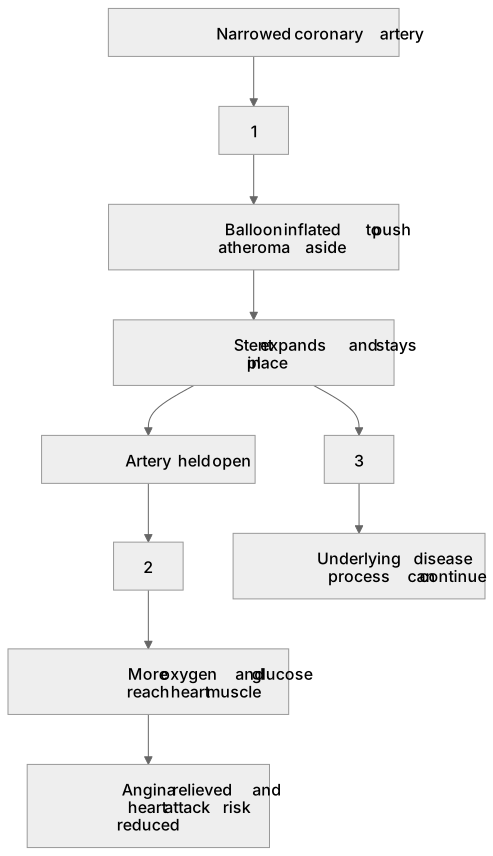
Some boxes have lost their names. Pick the right name for each number.
1Box 1
2Box 2
3Box 3
There is more to this lesson
The full lesson goes on to check your understanding and help you earn the marks. Create a free account to carry on, with your progress saved.
A week of Premium from your first lesson · Then the free plan continues · No card, no charge
Test your understanding of Coronary heart disease: a non-communicable disease: Stents are used to keep the coronary arteries open.
Active recall beats re-reading. Take an instant quiz now to test what you’ve learned and lock it into long-term memory.
A week of Premium from your first lesson · Then the free plan continues · No card, no charge