AQA · GCSE · Biology
Course version: 8461 · Version from Sept 2018
A non-communicable disease: Statins are widely used to reduce blood…
Full specification wording
Coronary heart disease: a non-communicable disease: Statins are widely used to reduce blood cholesterol levels which slows down the rate of fatty material deposit.
Statins are medicines taken regularly, usually as tablets, that reduce the level of cholesterol in the blood.
Checked against the AQA 8461 specification (opens in a new tab) on .
- Point 5 of 10
- 3 key terms
Study notes
From the checked teaching notes for this specification point.
The idea
Statins are medicines taken regularly, usually as tablets, that reduce the level of cholesterol in the blood. Cholesterol is a fatty substance carried in the blood; a high level is linked to the build-up of fatty material, called atheroma, in artery walls. By lowering blood cholesterol, statins slow down the rate at which this fatty material is deposited in the coronary arteries. Slower deposition means the lumen narrows more slowly, so blood flow and oxygen supply to the heart muscle are maintained for longer and the risk of angina and heart attack is reduced. Statins are widely used because they are effective and relatively easy to take, but they must be taken long term and can cause side effects such as muscle pain.
What earns the marks
- Statins are drugs that reduce the level of cholesterol in the blood.
- Cholesterol is a fatty substance associated with the build-up of atheroma in artery walls.
- Lower blood cholesterol slows the rate at which fatty material is deposited in the coronary arteries.
- Slower deposition means the coronary arteries narrow more slowly.
- Statins are taken long term and may cause side effects, so benefits and risks must be weighed.
Common mistakes and how to put them right
Saying statins widen the arteries.
Put it right: They lower cholesterol, which slows further fatty deposit.
Confusing cholesterol with glucose.
Put it right: Cholesterol is a fatty substance carried in the blood, while glucose is a sugar used in respiration.
Claiming statins remove existing atheroma.
Put it right: Statins slow the rate of new fatty material being deposited.
Exam tips
- Use the causal chain 'statins lower blood cholesterol → less fatty material deposited → slower narrowing of coronary arteries'.
- When comparing treatments, state that statins act on the cause of the disease process, whereas stents act on an existing blockage.
- If asked about drawbacks, mention that statins must be taken regularly for a long time and can have side effects.
Try the lesson
The start of the Coronary heart disease: a non-communicable disease: Statins are widely used to reduce blood cholesterol levels which slows down the rate of fatty material deposit. lesson, made from checked teaching notes for this specification point.
Have a go first
What do statins reduce in the blood?
Listen
Statins are medicines taken regularly, usually as tablets, that reduce the level of cholesterol in the blood. Cholesterol is a fatty substance carried in the blood; a high level is linked to the build-up of fatty material, called atheroma, in artery walls. By lowering blood cholesterol, statins slow down the rate at which this fatty material is deposited in the coronary arteries. Slower deposition means the lumen narrows more slowly, so blood flow and oxygen supply to the heart muscle are maintained for longer and the risk of angina and heart attack is reduced. Statins are widely used because they are effective and relatively easy to take, but they must be taken long term and can cause side effects such as muscle pain. A strong answer earns marks for these points. Statins are drugs that reduce the level of cholesterol in the blood. Cholesterol is a fatty substance associated with the build-up of atheroma in artery walls. Lower blood cholesterol slows the rate at which fatty material is deposited in the coronary arteries. Slower deposition means the coronary arteries narrow more slowly. A common slip: Saying statins widen the arteries: the error is that statins do not mechanically open vessels. Instead, they lower cholesterol, which slows further fatty deposit. Exam tip: Use the causal chain 'statins lower blood cholesterol → less fatty material deposited → slower narrowing of coronary arteries'.
See it
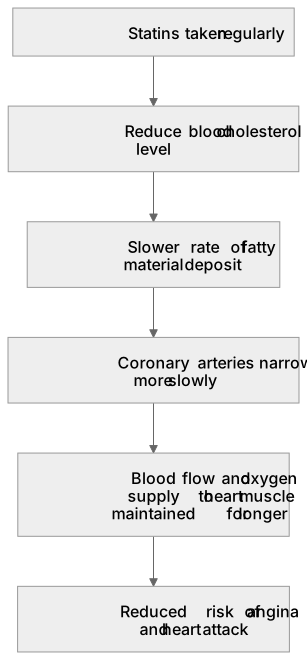
Put it in order
Put these steps in the order they happen.
- 1. Slower rate of fatty material deposit
- 2. Reduce blood cholesterol level
- 3. Statins taken regularly
- 4. Reduced risk of angina and heart attack
- 5. Blood flow and oxygen supply to heart muscle maintained for longer
- 6. Coronary arteries narrow more slowly
Key words
Say what each word means before you turn the card.
Cholesterol
Try answering aloud or in your head before turning the card.
Statins
Try answering aloud or in your head before turning the card.
Atheroma
Try answering aloud or in your head before turning the card.
See every definition
- Cholesterol
- A fatty substance carried in the blood, where a high level is linked to the build-up of fatty material in artery walls.
- Statins
- Medicines taken regularly, usually as tablets, that reduce the level of cholesterol in the blood.
- Atheroma
- Fatty material that builds up in artery walls.
Label the diagram
Some boxes have lost their names. Pick the right name for each number.
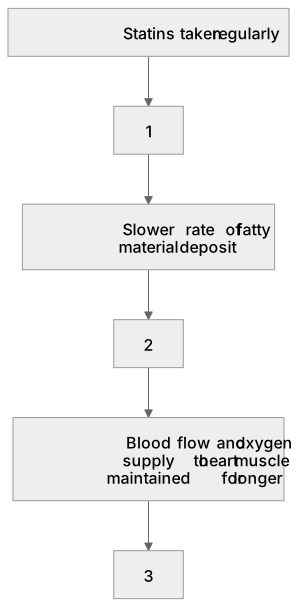
1Box 1
2Box 2
3Box 3
There is more to this lesson
The full lesson goes on to check your understanding and help you earn the marks. Create a free account to carry on, with your progress saved.
A week of Premium from your first lesson · Then the free plan continues · No card, no charge
Test your understanding of Coronary heart disease: a non-communicable disease: Statins are widely used to reduce blood cholesterol levels which slows down the rate of fatty material deposit.
Active recall beats re-reading. Take an instant quiz now to test what you’ve learned and lock it into long-term memory.
A week of Premium from your first lesson · Then the free plan continues · No card, no charge