AQA · GCSE · Biology
Course version: 8461 · Version from Sept 2018
There are links with this practical to Antibiotics and painkillers.
Full specification wording
Culturing microorganisms (biology only): There are links with this practical to Antibiotics and painkillers.
The zones of inhibition you measure show how well an antibiotic stops bacterial growth.
Checked against the AQA 8461 specification (opens in a new tab) on .
- Point 11 of 11
- 4 key terms
Study notes
From the checked teaching notes for this specification point.
The idea
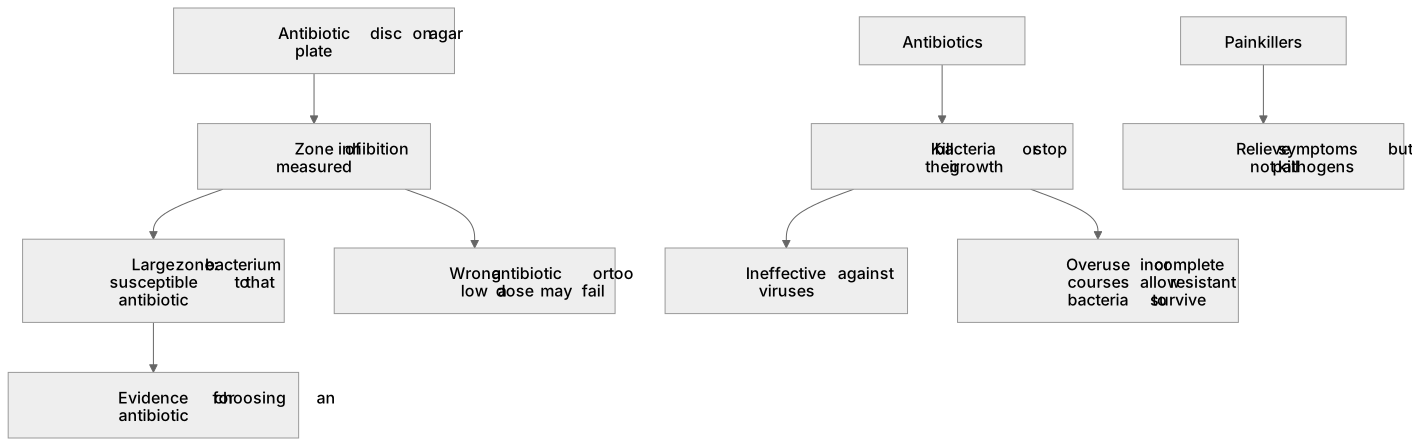
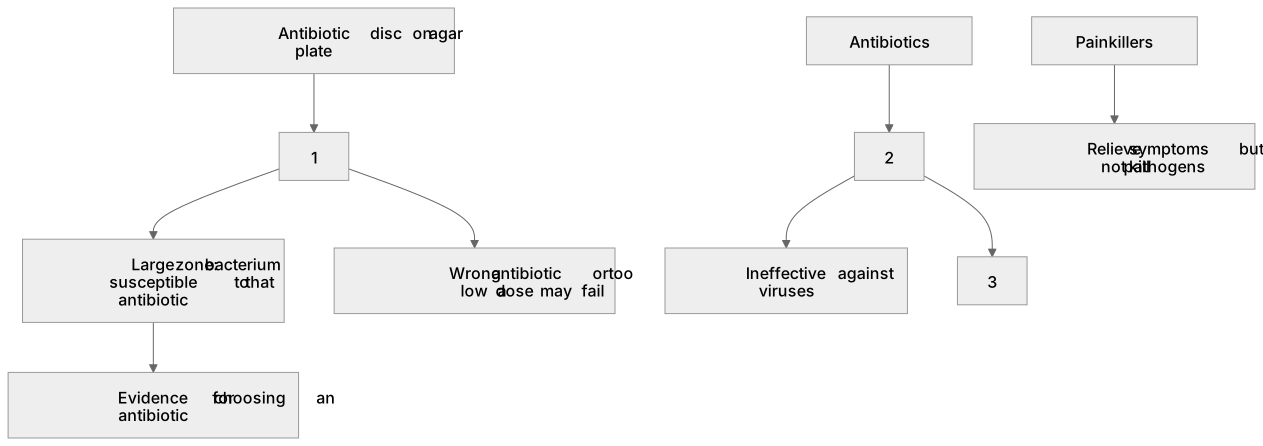
The zones of inhibition you measure show how well an antibiotic stops bacterial growth. This connects to the topic of antibiotics and painkillers: antibiotics kill bacteria or stop their growth, while painkillers relieve symptoms but do not kill pathogens. Antibiotics are effective only against bacteria, not viruses, which is why viral infections such as colds are not treated with antibiotics. The practical also shows why the wrong antibiotic, or too low a dose, may fail, and why overuse contributes to antibiotic resistance. A clear, large zone around an antibiotic disc indicates that the bacterium is susceptible to that antibiotic. This evidence helps explain why doctors choose particular antibiotics and why completing a prescribed course matters.
What earns the marks
- States that antibiotics kill bacteria or inhibit their growth, whereas painkillers relieve symptoms without killing pathogens.
- Links a large zone of inhibition to greater susceptibility of the bacterium to that antibiotic.
- Explains that antibiotics are ineffective against viruses, so viral infections are not treated with them.
- Relates the practical to antibiotic resistance, including the idea that overuse or incomplete courses can allow resistant bacteria to survive.
- Uses zone measurements as evidence when discussing which antibiotic might be chosen for a bacterial infection.
Common mistakes and how to put them right
Claiming painkillers kill bacteria.
Put it right: Painkillers relieve symptoms but do not kill pathogens.
Stating antibiotics treat viral infections.
Put it right: Antibiotics act on bacteria and are ineffective against viruses.
Saying resistance means the patient's body becomes resistant.
Put it right: The bacteria become resistant, not the person.
Exam tips
- Use the phrase zone of inhibition when linking practical results to antibiotic effectiveness.
- Distinguish clearly between antibiotics and painkillers in any comparison question.
- When discussing resistance, refer to bacteria surviving and reproducing rather than to human immunity.
Try the lesson
The start of the Culturing microorganisms (biology only): There are links with this practical to Antibiotics and painkillers. lesson, made from checked teaching notes for this specification point.
Have a go first
Which statement describes how antibiotics differ from painkillers?
Listen
The zones of inhibition you measure show how well an antibiotic stops bacterial growth. This connects to the topic of antibiotics and painkillers: antibiotics kill bacteria or stop their growth, while painkillers relieve symptoms but do not kill pathogens. Antibiotics are effective only against bacteria, not viruses, which is why viral infections such as colds are not treated with antibiotics. The practical also shows why the wrong antibiotic, or too low a dose, may fail, and why overuse contributes to antibiotic resistance. A clear, large zone around an antibiotic disc indicates that the bacterium is susceptible to that antibiotic. This evidence helps explain why doctors choose particular antibiotics and why completing a prescribed course matters. A strong answer earns marks for these points. States that antibiotics kill bacteria or inhibit their growth, whereas painkillers relieve symptoms without killing pathogens. Links a large zone of inhibition to greater susceptibility of the bacterium to that antibiotic. Explains that antibiotics are ineffective against viruses, so viral infections are not treated with them. Relates the practical to antibiotic resistance, including the idea that overuse or incomplete courses can allow resistant bacteria to survive. A common slip: Claiming painkillers kill bacteria. Instead, painkillers relieve symptoms but do not kill pathogens. Exam tip: Use the phrase zone of inhibition when linking practical results to antibiotic effectiveness.
See it
Key words
Say what each word means before you turn the card.
Antibiotics and painkillers
Try answering aloud or in your head before turning the card.
Antibiotic resistance
Try answering aloud or in your head before turning the card.
Evidence-based treatment choices
Try answering aloud or in your head before turning the card.
Links between practical work and medical application
Try answering aloud or in your head before turning the card.
See every definition
- Antibiotics and painkillers
- Antibiotics kill bacteria or stop their growth, while painkillers relieve symptoms but do not kill pathogens.
- Antibiotic resistance
- Overuse or incomplete courses can allow resistant bacteria to survive, and the bacteria become resistant, not the person.
- Evidence-based treatment choices
- Zone measurements are used as evidence when discussing which antibiotic might be chosen for a bacterial infection.
- Links between practical work and medical application
- The zones of inhibition measured show how well an antibiotic stops bacterial growth, linking the practical to antibiotics and painkillers.
Label the diagram
Some boxes have lost their names. Pick the right name for each number.
1Box 1
2Box 2
3Box 3
There is more to this lesson
The full lesson goes on to check your understanding and help you earn the marks. Create a free account to carry on, with your progress saved.
A week of Premium from your first lesson · Then the free plan continues · No card, no charge
Test your understanding of Culturing microorganisms (biology only): There are links with this practical to Antibiotics and painkillers.
Active recall beats re-reading. Take an instant quiz now to test what you’ve learned and lock it into long-term memory.
A week of Premium from your first lesson · Then the free plan continues · No card, no charge