AQA · GCSE · Biology
Course version: 8461 · Version from Sept 2018
New drugs are extensively tested for toxicity, efficacy and dose.
Full specification wording
Discovery and development of drugs: New drugs are extensively tested for toxicity, efficacy and dose.
Testing a new drug is not a single check but a detailed investigation of three linked properties.
Checked against the AQA 8461 specification (opens in a new tab) on .
- Point 6 of 9
- 3 key terms
Study notes
From the checked teaching notes for this specification point.
The idea
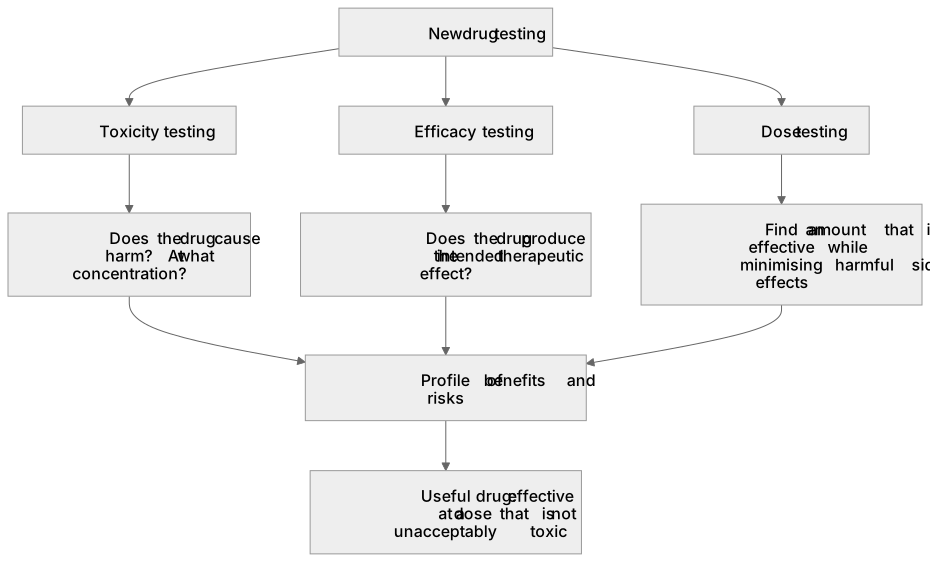
Testing a new drug is not a single check but a detailed investigation of three linked properties. Toxicity testing asks whether the drug harms cells, tissues or whole organisms, and at what concentration harm appears. Efficacy testing asks whether the drug produces the intended therapeutic effect, such as lowering blood pressure or killing bacteria. Dose testing finds the amount that gives a useful effect with acceptable side effects, often by trying a range of doses. These three aspects interact: a drug that works only at a toxic dose is not suitable, and a safe drug that does nothing is useless. Extensive testing therefore builds a profile of benefits and risks before any wider use.
What earns the marks
- Define toxicity as the capacity of the drug to cause harm and state that it is tested at different concentrations.
- Define efficacy as the ability of the drug to produce the intended therapeutic effect.
- Explain that dose is tested to find an amount that is effective while minimising harmful side effects.
- Describe how a range of doses or concentrations is used to identify a suitable dose.
- Link the three tests together, noting that a useful drug must be effective at a dose that is not unacceptably toxic.
Common mistakes and how to put them right
Treating toxicity, efficacy and dose as the same thing.
Put it right by defining each separately and giving an example of what each test measures.
Assuming that a higher dose always means a better effect.
Put it right by explaining that higher doses can increase toxicity and side effects.
Thinking efficacy means safety.
Put it right: Efficacy means the drug works, while safety relates to toxicity and side effects.
Exam tips
- Use the three headings toxicity, efficacy and dose to structure your answer and ensure all are covered.
- Give a concrete example of efficacy, such as a drug lowering blood glucose in diabetes.
- When discussing dose, mention both benefit and risk rather than only the beneficial effect.
Try the lesson
The start of the Discovery and development of drugs: New drugs are extensively tested for toxicity, efficacy and dose. lesson, made from checked teaching notes for this specification point.
Have a go first
A new medicine has been developed to treat high blood pressure. Before it can be prescribed to patients, it is tested to find out whether it harms the body, whether it works and what amount should be given. Which term describes testing a new drug to find out whether it works?
Listen
Testing a new drug is not a single check but a detailed investigation of three linked properties. Toxicity testing asks whether the drug harms cells, tissues or whole organisms, and at what concentration harm appears. Efficacy testing asks whether the drug produces the intended therapeutic effect, such as lowering blood pressure or killing bacteria. Dose testing finds the amount that gives a useful effect with acceptable side effects, often by trying a range of doses. These three aspects interact: a drug that works only at a toxic dose is not suitable, and a safe drug that does nothing is useless. Extensive testing therefore builds a profile of benefits and risks before any wider use. A strong answer earns marks for these points. Define toxicity as the capacity of the drug to cause harm and state that it is tested at different concentrations. Define efficacy as the ability of the drug to produce the intended therapeutic effect. Explain that dose is tested to find an amount that is effective while minimising harmful side effects. Describe how a range of doses or concentrations is used to identify a suitable dose. A common slip: Treating toxicity, efficacy and dose as the same thing. Instead, defining each separately and giving an example of what each test measures. Exam tip: Use the three headings toxicity, efficacy and dose to structure your answer and ensure all are covered.
See it
Key words
Say what each word means before you turn the card.
Toxicity
Try answering aloud or in your head before turning the card.
Efficacy
Try answering aloud or in your head before turning the card.
Dose
Try answering aloud or in your head before turning the card.
See every definition
- Toxicity
- The capacity of the drug to cause harm, tested at different concentrations to see whether it harms cells, tissues or whole organisms.
- Efficacy
- The ability of the drug to produce the intended therapeutic effect, such as lowering blood pressure or killing bacteria.
- Dose
- The amount tested to find one that gives a useful effect with acceptable side effects, often by trying a range of doses.
Label the diagram
Some boxes have lost their names. Pick the right name for each number.
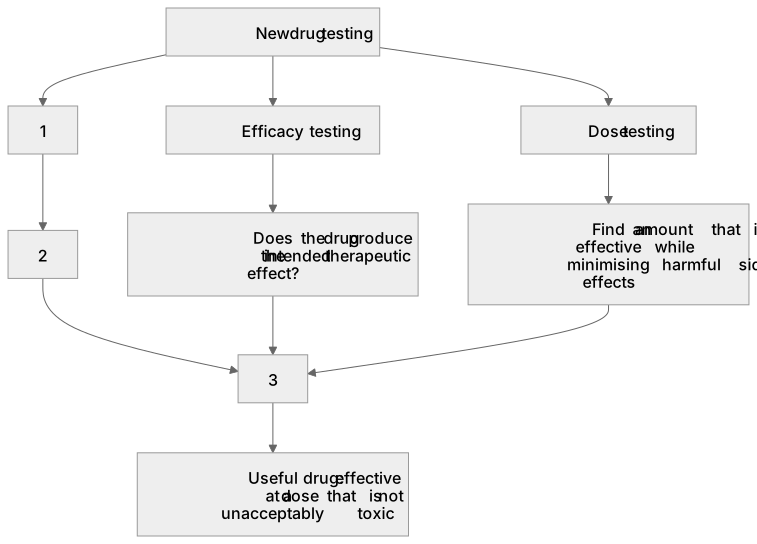
1Box 1
2Box 2
3Box 3
There is more to this lesson
The full lesson goes on to check your understanding and help you earn the marks. Create a free account to carry on, with your progress saved.
A week of Premium from your first lesson · Then the free plan continues · No card, no charge
Test your understanding of Discovery and development of drugs: New drugs are extensively tested for toxicity, efficacy and dose.
Active recall beats re-reading. Take an instant quiz now to test what you’ve learned and lock it into long-term memory.
A week of Premium from your first lesson · Then the free plan continues · No card, no charge