AQA · GCSE · Biology
Course version: 8461 · Version from Sept 2018
Preclinical testing is done in a laboratory using cells, tissues and live…
Full specification wording
Discovery and development of drugs: Preclinical testing is done in a laboratory using cells, tissues and live animals.
Preclinical testing happens before any testing in humans.
Checked against the AQA 8461 specification (opens in a new tab) on .
- Point 7 of 9
- 3 key terms
Study notes
From the checked teaching notes for this specification point.
The idea
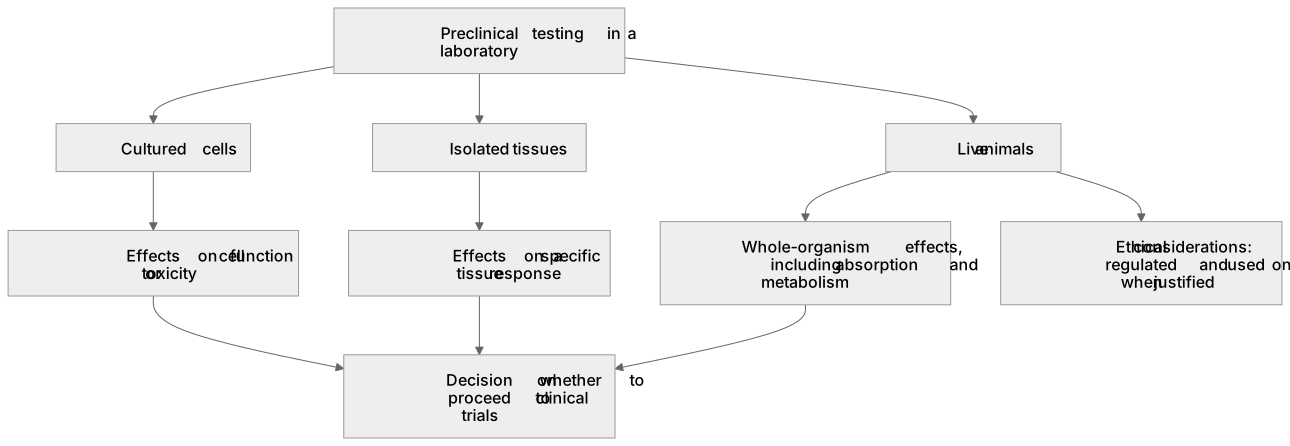
Preclinical testing happens before any testing in humans. It takes place in a laboratory and uses three main biological systems: cultured cells, isolated tissues and live animals. Cells can show whether a drug enters cells, affects cell division or causes cytotoxicity. Tissues can show effects on contraction, secretion or nerve impulses. Live animals allow the drug to be studied in a whole organism, where absorption, distribution, metabolism and excretion can be observed. Animal testing raises ethical issues, so it is regulated and carried out only when necessary. Results from preclinical testing help decide whether a drug is promising and safe enough to move into clinical trials with human volunteers.
What earns the marks
- State that preclinical testing occurs in a laboratory before testing in humans.
- Describe the use of cells, such as cultured cells, to test for effects on cell function or toxicity.
- Describe the use of tissues, such as isolated organ tissue, to test effects on a specific tissue response.
- Describe the use of live animals to study effects in a whole organism, including how the drug is absorbed or metabolised.
- Explain that preclinical results inform the decision about whether to proceed to clinical trials and raise ethical considerations.
Common mistakes and how to put them right
Confusing preclinical testing with clinical trials.
Put it right: Preclinical testing uses cells, tissues and animals, while clinical trials use humans.
Thinking that animal testing is the only preclinical method.
Put it right by including cells and tissues as well.
Ignoring the ethical dimension of animal testing.
Put it right by noting that it is regulated and used only when justified.
Exam tips
- Name all three systems, cells, tissues and live animals, because the statement specifically lists them.
- Give one advantage of each system, for example cells allow many replicates while whole animals show whole-body effects.
- If asked about ethics, state that animal testing is regulated and must be justified, without making unsupported claims.
Try the lesson
The start of the Discovery and development of drugs: Preclinical testing is done in a laboratory using cells, tissues and live animals. lesson, made from checked teaching notes for this specification point.
Have a go first
Before a new medicine is tested on humans, it is tested in a laboratory using cells, tissues and live animals. What is this stage of drug testing called?
Listen
Preclinical testing happens before any testing in humans. It takes place in a laboratory and uses three main biological systems: cultured cells, isolated tissues and live animals. Cells can show whether a drug enters cells, affects cell division or causes cytotoxicity. Tissues can show effects on contraction, secretion or nerve impulses. Live animals allow the drug to be studied in a whole organism, where absorption, distribution, metabolism and excretion can be observed. Animal testing raises ethical issues, so it is regulated and carried out only when necessary. Results from preclinical testing help decide whether a drug is promising and safe enough to move into clinical trials with human volunteers. A strong answer earns marks for these points. State that preclinical testing occurs in a laboratory before testing in humans. Describe the use of cells, such as cultured cells, to test for effects on cell function or toxicity. Describe the use of tissues, such as isolated organ tissue, to test effects on a specific tissue response. Describe the use of live animals to study effects in a whole organism, including how the drug is absorbed or metabolised. A common slip: Thinking that animal testing is the only preclinical method. Instead, including cells and tissues as well. Exam tip: Name all three systems, cells, tissues and live animals, because the statement specifically lists them.
See it
Key words
Say what each word means before you turn the card.
Cells, tissues and whole organisms
Try answering aloud or in your head before turning the card.
Ethics of animal research
Try answering aloud or in your head before turning the card.
Evidence before human trials
Try answering aloud or in your head before turning the card.
See every definition
- Cells, tissues and whole organisms
- The three main biological systems used in preclinical testing: cultured cells, isolated tissues and live animals.
- Ethics of animal research
- Animal testing raises ethical issues, so it is regulated and carried out only when necessary.
- Evidence before human trials
- Results from preclinical testing help decide whether a drug is promising and safe enough to move into clinical trials with human volunteers.
Label the diagram
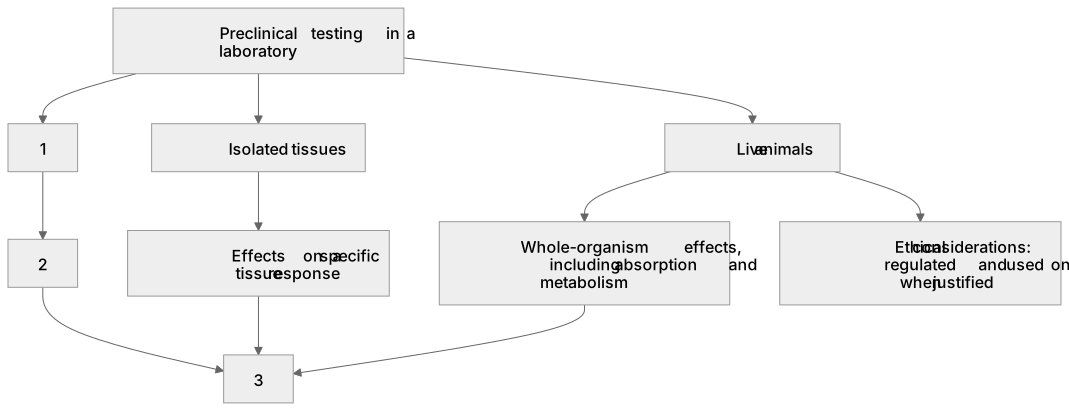
Some boxes have lost their names. Pick the right name for each number.
1Box 1
2Box 2
3Box 3
There is more to this lesson
The full lesson goes on to check your understanding and help you earn the marks. Create a free account to carry on, with your progress saved.
A week of Premium from your first lesson · Then the free plan continues · No card, no charge
Test your understanding of Discovery and development of drugs: Preclinical testing is done in a laboratory using cells, tissues and live animals.
Active recall beats re-reading. Take an instant quiz now to test what you’ve learned and lock it into long-term memory.
A week of Premium from your first lesson · Then the free plan continues · No card, no charge