AQA · GCSE · Biology
Course version: 8461 · Version from Sept 2018
(HT only) When the protein chain is complete it folds up to form a unique…
Full specification wording
DNA structure (biology only): (HT only) When the protein chain is complete it folds up to form a unique shape.
After translation, the polypeptide chain is complete but not yet functional.
Checked against the AQA 8461 specification (opens in a new tab) on .
- Point 13 of 19
- 4 key terms
Study notes
From the checked teaching notes for this specification point.
The idea
After translation, the polypeptide chain is complete but not yet functional. It must fold into a specific three-dimensional shape. This folding is determined by the sequence of amino acids, which dictates interactions such as hydrogen bonds, ionic bonds, disulfide bridges and hydrophobic interactions between different parts of the chain. The unique shape is crucial for the protein's function. For example, enzymes have an active site that is complementary to their substrate; this shape is a result of folding. If the protein does not fold correctly, it may be non-functional. The folding process can occur spontaneously or with the help of chaperone proteins. The final shape is often described as the protein's tertiary structure.
What earns the marks
- The completed protein chain is a polypeptide.
- The chain folds into a specific three-dimensional shape.
- The shape is determined by the sequence of amino acids.
- Folding involves interactions between amino acids, such as hydrogen bonds and disulfide bridges.
- The unique shape is essential for the protein's function.
- Examples include enzymes with active sites and structural proteins like collagen.
Common mistakes and how to put them right
Thinking that the protein is functional immediately after translation.
Put it right: It must fold into its unique shape first.
Believing that all proteins have the same shape.
Put it right: Each protein has a unique shape determined by its amino acid sequence.
Confusing the primary structure (amino acid sequence) with the tertiary structure (3D shape).
Put it right: The primary structure determines the tertiary structure.
Exam tips
- Use the term 'unique shape' when describing the folded protein.
- Link the shape to the protein's function, e.g., enzymes have a specific active site.
- If asked why a protein is non-functional if the shape is altered, explain that the active site or binding site no longer fits its target molecule.
Try the lesson
The start of the DNA structure (biology only): (HT only) When the protein chain is complete it folds up to form a unique shape. lesson, made from checked teaching notes for this specification point.
Have a go first
A completed protein chain folds into a specific three-dimensional shape. What is this folded shape mainly determined by?
Listen
After translation, the polypeptide chain is complete but not yet functional. It must fold into a specific three-dimensional shape. This folding is determined by the sequence of amino acids, which dictates interactions such as hydrogen bonds, ionic bonds, disulfide bridges and hydrophobic interactions between different parts of the chain. The unique shape is crucial for the protein's function. For example, enzymes have an active site that is complementary to their substrate; this shape is a result of folding. If the protein does not fold correctly, it may be non-functional. The folding process can occur spontaneously or with the help of chaperone proteins. The final shape is often described as the protein's tertiary structure. A strong answer earns marks for these points. The completed protein chain is a polypeptide. The chain folds into a specific three-dimensional shape. The shape is determined by the sequence of amino acids. Folding involves interactions between amino acids, such as hydrogen bonds and disulfide bridges. A common slip: Thinking that the protein is functional immediately after translation. Instead, it must fold into its unique shape first. Exam tip: Use the term 'unique shape' when describing the folded protein.
See it
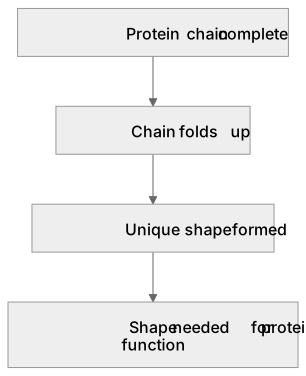
Put it in order
Put these steps in the order they happen.
- 1. Unique shape formed
- 2. Shape needed for protein function
- 3. Chain folds up
- 4. Protein chain complete
Key words
Say what each word means before you turn the card.
Protein folding
Try answering aloud or in your head before turning the card.
Tertiary structure
Try answering aloud or in your head before turning the card.
Protein function
Try answering aloud or in your head before turning the card.
Amino acid interactions
Try answering aloud or in your head before turning the card.
See every definition
- Protein folding
- When the protein chain is complete it folds up to form a unique shape.
- Tertiary structure
- The final shape of a protein is often described as its tertiary structure.
- Protein function
- The unique shape is crucial for the protein's function.
- Amino acid interactions
- Folding involves interactions between amino acids, such as hydrogen bonds and disulfide bridges.
Label the diagram
Some boxes have lost their names. Pick the right name for each number.
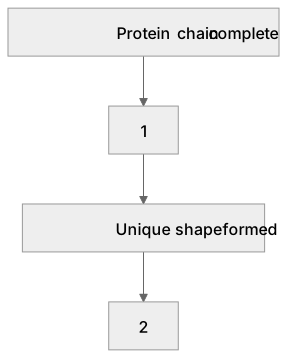
1Box 1
2Box 2
There is more to this lesson
The full lesson goes on to check your understanding and help you earn the marks. Create a free account to carry on, with your progress saved.
A week of Premium from your first lesson · Then the free plan continues · No card, no charge
Test your understanding of DNA structure (biology only): (HT only) When the protein chain is complete it folds up to form a unique shape.
Active recall beats re-reading. Take an instant quiz now to test what you’ve learned and lock it into long-term memory.
A week of Premium from your first lesson · Then the free plan continues · No card, no charge