AQA · GCSE · Biology
Course version: 8461 · Version from Sept 2018
This unique shape enables the proteins to do their job as enzymes,…
Full specification wording
DNA structure (biology only): This unique shape enables the proteins to do their job as enzymes, hormones or forming structures in the body such as collagen.
When a protein chain is assembled, it folds up into a unique three-dimensional shape.
Checked against the AQA 8461 specification (opens in a new tab) on .
- Point 14 of 19
- 3 key terms
Study notes
From the checked teaching notes for this specification point.
The idea
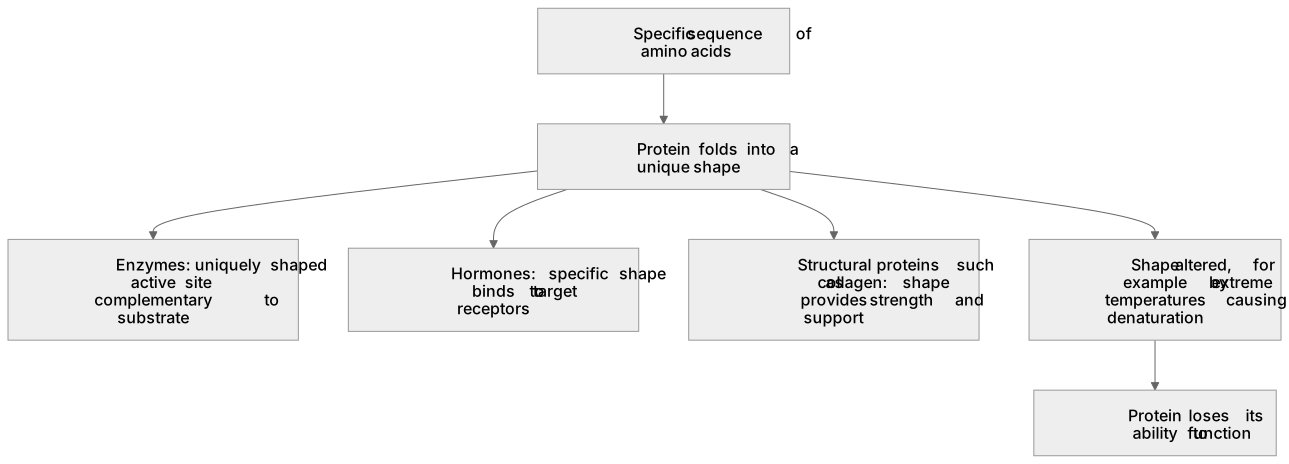
When a protein chain is assembled, it folds up into a unique three-dimensional shape. This unique shape is essential because it enables the protein to carry out its specific function in the body. For example, enzymes fold to create a specific active site that is complementary to a particular substrate, allowing them to catalyse chemical reactions. Hormones, such as insulin, rely on their specific shape to bind to target receptors and trigger responses. Structural proteins, like collagen, form strong, fibrous shapes that provide structural support in tissues such as skin and bone. If the unique shape of a protein is altered, for instance by extreme temperatures causing denaturation, the protein will lose its ability to function.
What earns the marks
- The specific sequence of amino acids causes the protein to fold into a unique shape.
- Enzymes have a uniquely shaped active site that is complementary to their substrate.
- Hormones have a specific shape that allows them to bind to target receptors.
- Structural proteins like collagen have a shape that provides strength and support to tissues.
Common mistakes and how to put them right
Thinking that all proteins function as enzymes.
Put it right: Proteins have many roles, including acting as hormones and forming structural components like collagen.
Believing that a protein's shape is unrelated to its job.
Put it right: The unique shape is crucial; if the shape changes, the protein can no longer function.
Confusing the roles of different structural proteins.
Put it right: Collagen forms structures like tendons and bones, whereas enzymes catalyse reactions.
Exam tips
- Always link the unique shape of a protein directly to its specific function when giving examples.
- Use the term 'complementary' when describing how the shape of an enzyme's active site fits its substrate.
Try the lesson
The start of the DNA structure (biology only): This unique shape enables the proteins to do their job as enzymes, hormones or forming structures in the body such as collagen. lesson, made from checked teaching notes for this specification point.
Have a go first
Collagen is a protein found in the human body. According to its unique shape, what type of role does collagen perform?
Listen
When a protein chain is assembled, it folds up into a unique three-dimensional shape. This unique shape is essential because it enables the protein to carry out its specific function in the body. For example, enzymes fold to create a specific active site that is complementary to a particular substrate, allowing them to catalyse chemical reactions. Hormones, such as insulin, rely on their specific shape to bind to target receptors and trigger responses. Structural proteins, like collagen, form strong, fibrous shapes that provide structural support in tissues such as skin and bone. If the unique shape of a protein is altered, for instance by extreme temperatures causing denaturation, the protein will lose its ability to function. A strong answer earns marks for these points. The specific sequence of amino acids causes the protein to fold into a unique shape. Enzymes have a uniquely shaped active site that is complementary to their substrate. Hormones have a specific shape that allows them to bind to target receptors. Structural proteins like collagen have a shape that provides strength and support to tissues. A common slip: Thinking that all proteins function as enzymes. Instead, Proteins have many roles, including acting as hormones and forming structural components like collagen. Exam tip: Always link the unique shape of a protein directly to its specific function when giving examples.
See it
Key words
Say what each word means before you turn the card.
Protein structure
Try answering aloud or in your head before turning the card.
Enzymes and hormones
Try answering aloud or in your head before turning the card.
Structural proteins
Try answering aloud or in your head before turning the card.
See every definition
- Protein structure
- When a protein chain is assembled, it folds up into a unique three-dimensional shape that is essential for carrying out its specific function.
- Enzymes and hormones
- Proteins that do their job by folding to create a specific active site complementary to a particular substrate, or by relying on their specific shape to bind to target receptors.
- Structural proteins
- Proteins, like collagen, that form strong, fibrous shapes providing structural support in tissues such as skin and bone.
Label the diagram
Some boxes have lost their names. Pick the right name for each number.
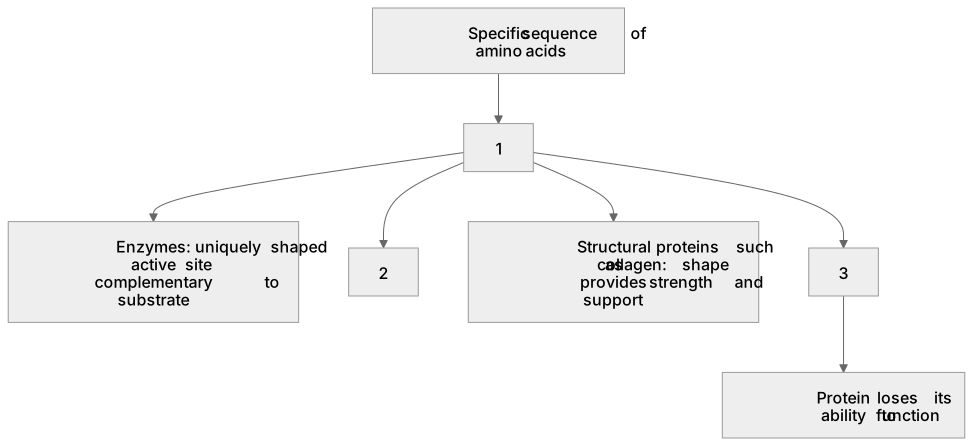
1Box 1
2Box 2
3Box 3
There is more to this lesson
The full lesson goes on to check your understanding and help you earn the marks. Create a free account to carry on, with your progress saved.
A week of Premium from your first lesson · Then the free plan continues · No card, no charge
Test your understanding of DNA structure (biology only): This unique shape enables the proteins to do their job as enzymes, hormones or forming structures in the body such as collagen.
Active recall beats re-reading. Take an instant quiz now to test what you’ve learned and lock it into long-term memory.
A week of Premium from your first lesson · Then the free plan continues · No card, no charge