AQA · GCSE · Biology
Course version: 8461 · Version from Sept 2018
Plant and animal cells (eukaryotic cells) have a cell membrane, cytoplasm…
Full specification wording
Eukaryotes and prokaryotes: Plant and animal cells (eukaryotic cells) have a cell membrane, cytoplasm and genetic material enclosed in a nucleus.
Eukaryotic cells are the building blocks of plants, animals, fungi and protists.
Checked against the AQA 8461 specification (opens in a new tab) on .
- Point 1 of 6
- 4 key terms
Study notes
From the checked teaching notes for this specification point.
The idea
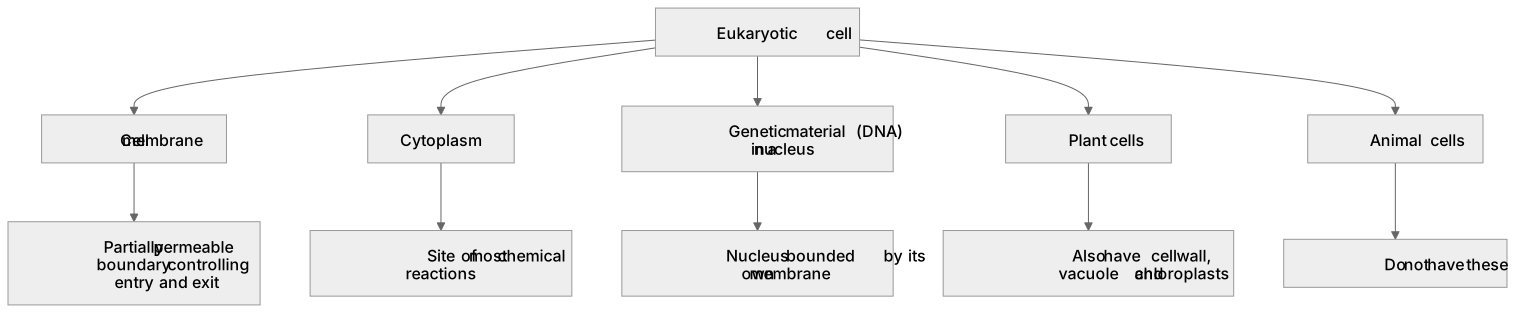
Eukaryotic cells are the building blocks of plants, animals, fungi and protists. Every one is bounded by a partially permeable cell membrane that controls what enters and leaves. Inside is cytoplasm, a watery jelly where most chemical reactions of the cell happen. The genetic material, DNA, sits inside a nucleus bounded by its own membrane, so the DNA is separated from the cytoplasm. This shared plan explains why plant and animal cells look similar under a light microscope: both show a nucleus, cytoplasm and membrane. Plant cells add a cellulose cell wall, a permanent vacuole and chloroplasts, but these are extra features, not part of the definition of a eukaryote. A cheek cell and a root hair cell both fit this description.
What earns the marks
- Names the cell membrane as the partially permeable boundary controlling entry and exit of substances.
- Identifies cytoplasm as the site of most chemical reactions in the cell.
- States that eukaryotic genetic material is DNA.
- States that the genetic material is enclosed within a nucleus bounded by a membrane.
- Applies the term eukaryotic to plant and animal cells and distinguishes them from prokaryotes.
- Recognises that plant cells also contain a cell wall, vacuole and chloroplasts, while animal cells do not.
Common mistakes and how to put them right
Saying the cell wall controls what enters the cell.
Put it right by naming the cell membrane as the controlling boundary and the wall as support.
Describing the nucleus as the site of chemical reactions.
Put it right by placing reactions in the cytoplasm and giving the nucleus the role of holding genetic material.
Treating chloroplasts or a vacuole as features of all eukaryotic cells.
Put it right by restricting those structures to plant cells.
Exam tips
- Label a diagram with straight lines that touch the structure, and spell membrane and cytoplasm correctly.
- When asked for differences, compare plant and animal cells feature by feature rather than listing one cell type alone.
- Use the word eukaryotic only after you have named the nucleus, so the term is clearly earned.
Try the lesson
The start of the Eukaryotes and prokaryotes: Plant and animal cells (eukaryotic cells) have a cell membrane, cytoplasm and genetic material enclosed in a nucleus. lesson, made from checked teaching notes for this specification point.
Have a go first
Which part of a plant cell controls the activities of the cell by holding the genetic material?
Listen
Eukaryotic cells are the building blocks of plants, animals, fungi and protists. Every one is bounded by a partially permeable cell membrane that controls what enters and leaves. Inside is cytoplasm, a watery jelly where most chemical reactions of the cell happen. The genetic material, DNA, sits inside a nucleus bounded by its own membrane, so the DNA is separated from the cytoplasm. This shared plan explains why plant and animal cells look similar under a light microscope: both show a nucleus, cytoplasm and membrane. Plant cells add a cellulose cell wall, a permanent vacuole and chloroplasts, but these are extra features, not part of the definition of a eukaryote. A cheek cell and a root hair cell both fit this description. A strong answer earns marks for these points. Names the cell membrane as the partially permeable boundary controlling entry and exit of substances. Identifies cytoplasm as the site of most chemical reactions in the cell. States that eukaryotic genetic material is DNA. States that the genetic material is enclosed within a nucleus bounded by a membrane. A common slip: Saying the cell wall controls what enters the cell. Instead, naming the cell membrane as the controlling boundary and the wall as support. Exam tip: Label a diagram with straight lines that touch the structure, and spell membrane and cytoplasm correctly.
See it
Watch it explained
Compare a cheek cell and a root hair cell as eukaryotic cells. Which features do they share, and which plant-cell extras are not part of the definition of a eukaryote?
Read the described scene instead
Welcome to this GCSE AQA Biology breakdown on eukaryotes and prokaryotes. We focus on eukaryotic cells: the building blocks of plants, animals, fungi and protists. Every eukaryotic cell is bounded by a partially permeable cell membrane that controls what enters and leaves. Inside is cytoplasm, a watery jelly where most chemical reactions happen. The genetic material is DNA, and it sits inside a nucleus bounded by its own membrane, so the DNA is separated from the cytoplasm. This shared plan explains why plant and animal cells look similar under a light microscope: both show a nucleus, cytoplasm and membrane. We will also note plant-cell extras and how eukaryotic cells are distinguished from prokaryotes. Let's map the core ideas. The cell membrane is a partially permeable boundary controlling entry and exit of substances. The cytoplasm is the watery jelly where most chemical reactions happen. Eukaryotic genetic material is DNA, enclosed within a nucleus bounded by a membrane and separated from the cytoplasm. Eukaryotic cells build plants, animals, fungi and protists. Plant cells add a cellulose cell wall, a permanent vacuole and chloroplasts, but these are extra features, not part of the definition of a eukaryote, so they are not features of all eukaryotic cells. Core study notes: the shared eukaryotic plan has three must-know parts. The partially permeable cell membrane controls what enters and leaves. The cytoplasm is the site of most chemical reactions. The genetic material is DNA, enclosed within a nucleus bounded by a membrane, so it is separated from the cytoplasm. Plant and animal cells both fit this description, which is why they look similar under a light microscope: both show a nucleus, cytoplasm and membrane. A cheek cell and a root hair cell both fit the eukaryotic description. Use this sequence to describe a eukaryotic cell accurately. Start at the boundary: name the cell membrane as the partially permeable structure controlling entry and exit. Move inside: identify the cytoplasm as the watery jelly where most chemical reactions happen. Locate the genetic material: state that DNA is enclosed in a nucleus bounded by its own membrane, separating it from the cytoplasm. Finally, add plant-cell extras only as extras. A cellulose cell wall, a permanent vacuole and chloroplasts are not part of the definition of a eukaryote. This order keeps your answer focused on shared eukaryotic organisation. Let's work through an exam-style comparison using a cheek cell and a root hair cell. The question asks which features they share and which plant-cell extras are not part of the eukaryotic definition. Start with the shared boundary: name the partially permeable cell membrane that controls what enters and leaves. Next, name the cytoplasm, where most chemical reactions happen. Then state the genetic organisation: DNA is enclosed within a nucleus bounded by a membrane, separating it from the cytoplasm. The guide notes that plant cells add a cellulose cell wall, a permanent vacuole and chloroplasts, but these are extra features. They are not part of the definition of a eukaryote, and you should not treat them as features of all eukaryotic cells. Now the common pitfalls. Do not say the cell wall controls what enters the cell. The controlling boundary is the partially permeable cell membrane; the wall is support. Do not describe the nucleus as the site of chemical reactions. Most chemical reactions happen in the cytoplasm; the nucleus holds DNA, enclosed by its own membrane. Do not treat chloroplasts or a permanent vacuole as features of all eukaryotic cells. The guide restricts those structures to plant cells, and they are extras, not part of the eukaryotic definition. For exam technique, label diagrams with straight lines that touch the structure, and spell membrane and cytoplasm correctly. When asked for differences, compare plant and animal cells feature by feature rather than listing one cell type alone. Use eukaryotic only after naming the nucleus. To recap: eukaryotic cells are the building blocks of plants, animals, fungi and protists. Every one has a partially permeable cell membrane controlling entry and exit, cytoplasm where most chemical reactions happen, and DNA enclosed in a nucleus bounded by a membrane. That shared organisation explains why plant and animal cells look similar under a light microscope: both show a nucleus, cytoplasm and membrane. Plant cells add a cellulose cell wall, a permanent vacuole and chloroplasts, but these are extras, not part of the definition of a eukaryote. A cheek cell and a root hair cell both fit the eukaryotic description. Use these points to distinguish eukaryotic cells from prokaryotes.
Key words
Say what each word means before you turn the card.
Cell membrane
Try answering aloud or in your head before turning the card.
Cytoplasm
Try answering aloud or in your head before turning the card.
Eukaryotic
Try answering aloud or in your head before turning the card.
Nucleus
Try answering aloud or in your head before turning the card.
See every definition
- Cell membrane
- A partially permeable boundary that controls what enters and leaves the cell.
- Cytoplasm
- A watery jelly where most chemical reactions of the cell happen.
- Eukaryotic
- Describes cells whose genetic material, DNA, is enclosed in a nucleus bounded by its own membrane.
- Nucleus
- A structure bounded by its own membrane that holds the genetic material, DNA, separated from the cytoplasm.
Label the diagram
Some boxes have lost their names. Pick the right name for each number.
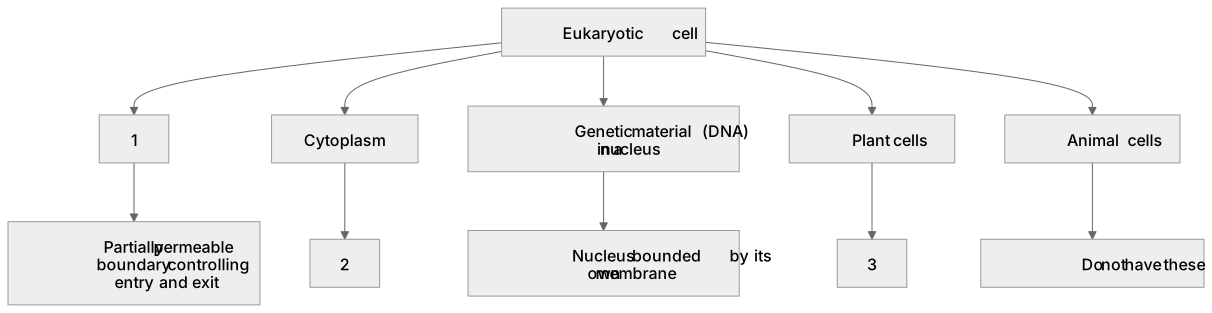
1Box 1
2Box 2
3Box 3
There is more to this lesson
The full lesson goes on to check your understanding and help you earn the marks. Create a free account to carry on, with your progress saved.
A week of Premium from your first lesson · Then the free plan continues · No card, no charge
Test your understanding of Eukaryotes and prokaryotes: Plant and animal cells (eukaryotic cells) have a cell membrane, cytoplasm and genetic material enclosed in a nucleus.
Active recall beats re-reading. Take an instant quiz now to test what you’ve learned and lock it into long-term memory.
A week of Premium from your first lesson · Then the free plan continues · No card, no charge