AQA · GCSE · Biology
Course version: 8461 · Version from Sept 2018
They have cytoplasm and a cell membrane surrounded by a cell wall.
Full specification wording
Eukaryotes and prokaryotes: They have cytoplasm and a cell membrane surrounded by a cell wall.
A bacterial cell is built from a cytoplasm and a cell membrane, and the membrane is surrounded by a cell wall.
Checked against the AQA 8461 specification (opens in a new tab) on .
- Point 3 of 6
- 4 key terms
Study notes
From the checked teaching notes for this specification point.
The idea
A bacterial cell is built from a cytoplasm and a cell membrane, and the membrane is surrounded by a cell wall. The cytoplasm holds the cell's chemical reactions and the ribosomes that make proteins. The cell membrane is partially permeable and controls what enters and leaves. The wall lies outside the membrane and gives the cell shape and protection; it is not selectively permeable, so it does not control entry. Bacterial walls are made of peptidoglycan, a polymer of sugars and amino acids, which differs from the cellulose walls of plant cells. Some bacteria also have a slime capsule outside the wall. When labelling, place the wall outside the membrane and keep the two labels separate, because examiners look for the correct order of layers.
What earns the marks
- Names the cytoplasm as the site of the cell's chemical reactions.
- Names the cell membrane as the partially permeable barrier controlling entry and exit.
- States that the cell wall lies outside the cell membrane.
- Gives the wall the function of support, shape or protection rather than control of entry.
- States that bacterial walls are made of peptidoglycan, unlike the cellulose walls of plants.
- Recognises that some bacteria have an additional slime capsule outside the wall.
Common mistakes and how to put them right
Saying the cell wall is partially permeable and controls entry.
Put it right by giving that role to the cell membrane and describing the wall as supportive.
Placing the cell wall inside the cell membrane.
Put it right by drawing the wall as the outermost layer of the two.
Calling the bacterial wall cellulose.
Put it right by naming peptidoglycan as the bacterial wall material.
Exam tips
- On a diagram, draw the wall as a line outside the membrane and label each layer separately.
- When asked for a function, match each structure to one clear job rather than repeating the same job twice.
- Use the term partially permeable for the membrane only, never for the wall.
Try the lesson
The start of the Eukaryotes and prokaryotes: They have cytoplasm and a cell membrane surrounded by a cell wall. lesson, made from checked teaching notes for this specification point.
Have a go first
Which structure immediately surrounds the cell membrane of a bacterial cell?
Listen
A bacterial cell is built from a cytoplasm and a cell membrane, and the membrane is surrounded by a cell wall. The cytoplasm holds the cell's chemical reactions and the ribosomes that make proteins. The cell membrane is partially permeable and controls what enters and leaves. The wall lies outside the membrane and gives the cell shape and protection; it is not selectively permeable, so it does not control entry. Bacterial walls are made of peptidoglycan, a polymer of sugars and amino acids, which differs from the cellulose walls of plant cells. Some bacteria also have a slime capsule outside the wall. When labelling, place the wall outside the membrane and keep the two labels separate, because examiners look for the correct order of layers. A strong answer earns marks for these points. Names the cytoplasm as the site of the cell's chemical reactions. Names the cell membrane as the partially permeable barrier controlling entry and exit. States that the cell wall lies outside the cell membrane. Gives the wall the function of support, shape or protection rather than control of entry. A common slip: Saying the cell wall is partially permeable and controls entry. Instead, giving that role to the cell membrane and describing the wall as supportive. Exam tip: On a diagram, draw the wall as a line outside the membrane and label each layer separately.
See it
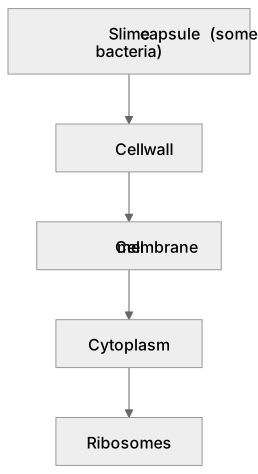
Put it in order
Put these steps in the order they happen.
- 1. Cell wall
- 2. Cell membrane
- 3. Slime capsule (some bacteria)
- 4. Ribosomes
- 5. Cytoplasm
Watch it explained
What is the one idea the video explains? Say it in a sentence.
Read the described scene instead
This lesson looks at the structure of a bacterial cell. A bacterium is built from a cytoplasm and a cell membrane, and that membrane is surrounded by a cell wall. We will look at what each layer does and how to label them in the correct order. Start inside the cell. The cytoplasm holds the cell's chemical reactions and the ribosomes that make proteins. Around it, the cell membrane is partially permeable and controls what enters and leaves the cell. Outside the membrane sits the cell wall, which gives the cell shape and protection. Notice the division of jobs. The cell membrane is partially permeable, so it decides what passes in and out. The wall is not selectively permeable, so it does not control entry. That is why the term partially permeable belongs to the membrane only, never to the wall. Two mistakes are common here. First, saying the cell wall is partially permeable and controls entry. Give that role to the membrane and describe the wall as supportive instead. Second, placing the wall inside the membrane. Draw the wall as the outermost of the two layers. Pause here and think about how you would label a bacterial cell diagram from the outside in. Working outwards from the cytoplasm, first draw the cell membrane. Then draw the wall as a line outside the membrane, and label each layer separately. If the question asks for functions, match each structure to one clear job. Bacterial walls are made of peptidoglycan, a polymer of sugars and amino acids. This differs from the cellulose walls of plant cells, so do not call a bacterial wall cellulose. Some bacteria also have a slime capsule outside the wall. To recap. The cytoplasm holds the chemical reactions and ribosomes. The cell membrane is partially permeable and controls what enters and leaves. The cell wall lies outside the membrane and gives shape and protection, but does not control entry. Bacterial walls are peptidoglycan, and some bacteria have a slime capsule outside the wall.
Key words
Say what each word means before you turn the card.
Cell membrane
Try answering aloud or in your head before turning the card.
Cell wall
Try answering aloud or in your head before turning the card.
Peptidoglycan
Try answering aloud or in your head before turning the card.
Slime capsule
Try answering aloud or in your head before turning the card.
See every definition
- Cell membrane
- The partially permeable barrier that controls what enters and leaves the cell.
- Cell wall
- The layer outside the cell membrane that gives the cell shape and protection rather than controlling entry.
- Peptidoglycan
- A polymer of sugars and amino acids that bacterial walls are made of, unlike the cellulose walls of plant cells.
- Slime capsule
- An additional layer found outside the wall in some bacteria.
Label the diagram
Some boxes have lost their names. Pick the right name for each number.
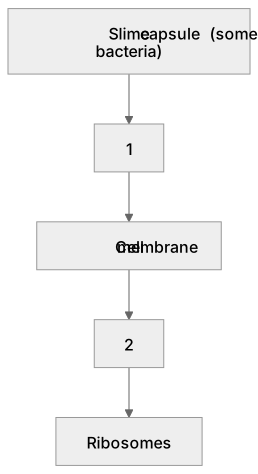
1Box 1
2Box 2
There is more to this lesson
The full lesson goes on to check your understanding and help you earn the marks. Create a free account to carry on, with your progress saved.
A week of Premium from your first lesson · Then the free plan continues · No card, no charge
Test your understanding of Eukaryotes and prokaryotes: They have cytoplasm and a cell membrane surrounded by a cell wall.
Active recall beats re-reading. Take an instant quiz now to test what you’ve learned and lock it into long-term memory.
A week of Premium from your first lesson · Then the free plan continues · No card, no charge