AQA · GCSE · Biology
Course version: 8461 · Version from Sept 2018
Rose black spot can be treated by using fungicides and/or removing and…
Full specification wording
Fungal diseases: Rose black spot can be treated by using fungicides and/or removing and destroying the affected leaves.
This statement describes two practical control measures for rose black spot, a fungal disease that produces purple-black spots on rose leaves and causes them to drop early.
Checked against the AQA 8461 specification (opens in a new tab) on .
- Point 4 of 4
- 3 key terms
Study notes
From the checked teaching notes for this specification point.
The idea
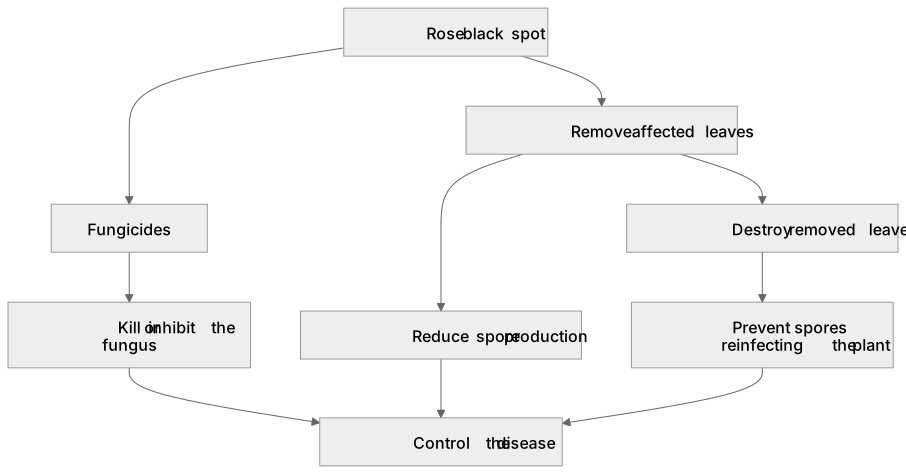
This statement describes two practical control measures for rose black spot, a fungal disease that produces purple-black spots on rose leaves and causes them to drop early. A fungicide is a chemical that kills or inhibits the fungus growing in the plant tissue, so it reduces the disease and protects new growth. Removing affected leaves takes away infected tissue, which lowers the number of spores released to reinfect the plant. Destroying the removed leaves, for example by burning or binning them rather than adding them to compost, prevents those spores returning to the rose. The two methods can be combined. Gardeners also improve air flow and avoid overhead watering to reduce spread, but the specification focuses on fungicides and leaf removal.
What earns the marks
- Fungicides are chemicals applied to kill or inhibit the rose black spot fungus.
- Removing affected leaves physically removes infected tissue and reduces spore production.
- Destroying removed leaves, such as by burning, prevents spores from reinfecting the plant.
- Using both methods together can control the disease more effectively than either alone.
- Reducing spore numbers limits further spread to healthy leaves and nearby roses.
Common mistakes and how to put them right
Saying that removing leaves cures the whole plant instantly.
Put it right: It reduces the source of spores and limits spread but does not remove fungus already inside other tissues.
Thinking that affected leaves can be composted safely.
Put it right: They must be destroyed so spores are not released back into the environment.
Confusing fungicide with pesticide or herbicide.
Put it right: A fungicide acts against fungi, not insects or weeds.
Exam tips
- Give both treatments and explain the purpose of each rather than just naming them.
- Use the word 'destroy' when describing disposal of affected leaves, not simply 'remove'.
- Link each treatment to reducing spore numbers or spread to show understanding of the mechanism.
Try the lesson
The start of the Fungal diseases: Rose black spot can be treated by using fungicides and/or removing and destroying the affected leaves. lesson, made from checked teaching notes for this specification point.
Have a go first
Which two methods are used to treat rose black spot?
Listen
This statement describes two practical control measures for rose black spot, a fungal disease that produces purple-black spots on rose leaves and causes them to drop early. A fungicide is a chemical that kills or inhibits the fungus growing in the plant tissue, so it reduces the disease and protects new growth. Removing affected leaves takes away infected tissue, which lowers the number of spores released to reinfect the plant. Destroying the removed leaves, for example by burning or binning them rather than adding them to compost, prevents those spores returning to the rose. The two methods can be combined. Gardeners also improve air flow and avoid overhead watering to reduce spread, but the specification focuses on fungicides and leaf removal. A strong answer earns marks for these points. Fungicides are chemicals applied to kill or inhibit the rose black spot fungus. Removing affected leaves physically removes infected tissue and reduces spore production. Destroying removed leaves, such as by burning, prevents spores from reinfecting the plant. Using both methods together can control the disease more effectively than either alone. A common slip: Saying that removing leaves cures the whole plant instantly. Instead, it reduces the source of spores and limits spread but does not remove fungus already inside other tissues. Exam tip: Give both treatments and explain the purpose of each rather than just naming them.
See it
Key words
Say what each word means before you turn the card.
Fungicides
Try answering aloud or in your head before turning the card.
Removing affected leaves
Try answering aloud or in your head before turning the card.
Destroying removed leaves
Try answering aloud or in your head before turning the card.
See every definition
- Fungicides
- Chemicals applied to kill or inhibit the rose black spot fungus growing in the plant tissue.
- Removing affected leaves
- Physically removing infected tissue, which lowers the number of spores released to reinfect the plant.
- Destroying removed leaves
- Disposing of removed leaves, for example by burning or binning them rather than adding them to compost, so spores do not return to the rose.
Label the diagram
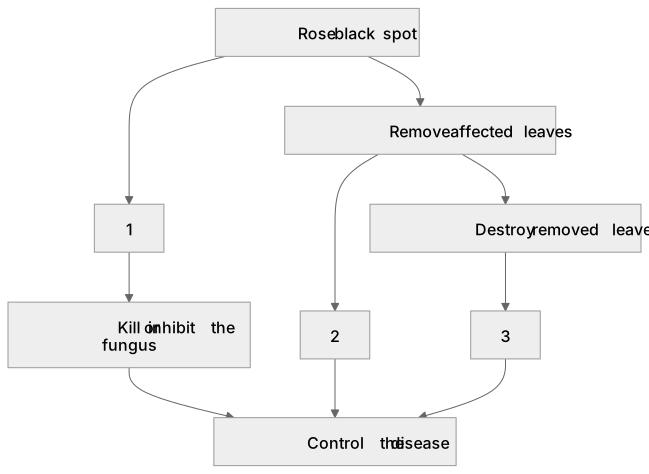
Some boxes have lost their names. Pick the right name for each number.
1Box 1
2Box 2
3Box 3
There is more to this lesson
The full lesson goes on to check your understanding and help you earn the marks. Create a free account to carry on, with your progress saved.
A week of Premium from your first lesson · Then the free plan continues · No card, no charge
Test your understanding of Fungal diseases: Rose black spot can be treated by using fungicides and/or removing and destroying the affected leaves.
Active recall beats re-reading. Take an instant quiz now to test what you’ve learned and lock it into long-term memory.
A week of Premium from your first lesson · Then the free plan continues · No card, no charge