AQA · GCSE · Biology
Course version: 8461 · Version from Sept 2018
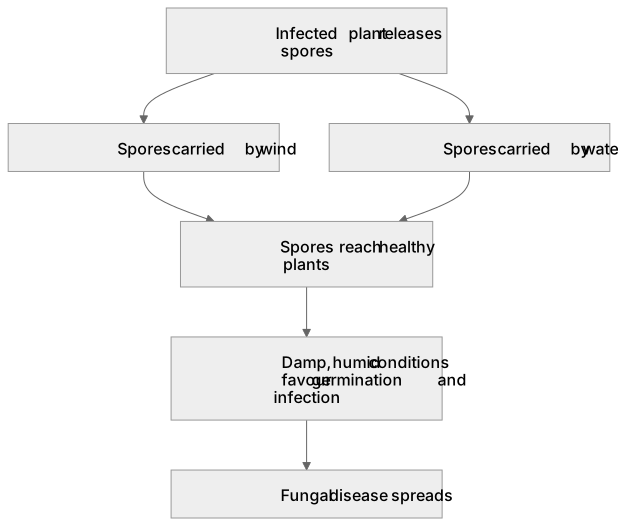
Fungal diseases: It is spread in the environment by water or wind.
This statement explains how fungal pathogens disperse from one host plant to another through the environment.
Checked against the AQA 8461 specification (opens in a new tab) on .
- Point 3 of 4
- 4 key terms
Study notes
From the checked teaching notes for this specification point.
The idea
This statement explains how fungal pathogens disperse from one host plant to another through the environment. Fungal spores are microscopic reproductive structures released in huge numbers from infected tissue. Because they are so small and light, air currents can lift them and carry them long distances, so wind is a major route for spreading diseases such as rose black spot. Water also carries spores: rain splash transfers spores between leaves, and irrigation or standing water can move them to new plants. Damp conditions help spores land, germinate and infect, which is why fungal diseases often spread quickly in warm, humid weather. Understanding these routes explains why growers improve ventilation, avoid overhead watering and space plants apart.
What earns the marks
- Fungal pathogens, such as the rose black spot fungus, release spores as their dispersal stage.
- Wind carries lightweight spores through the air from infected plants to healthy plants.
- Water, including rain splash and irrigation, can transfer spores between leaves and neighbouring plants.
- Damp, humid conditions favour spore germination and infection, so spread is faster in these conditions.
- Reducing wind movement and avoiding overhead watering can limit dispersal and reduce disease spread.
Common mistakes and how to put them right
Thinking that fungal diseases spread only by direct contact between plants.
Put it right: Spores can travel through air and water without the plants touching.
Confusing the fungus itself with the spore.
Put it right: The spore is the dispersal structure, while the fungus is the growing pathogen.
Believing that wind and water create the fungus.
Put it right: They only transport existing spores produced by the pathogen.
Exam tips
- Name both routes, water and wind, and link each to spores rather than to the whole fungus.
- Use the phrase 'spores are carried' to show the mechanism of dispersal clearly.
- Apply the idea to a context, such as rain splash moving spores between rose leaves, to gain credit in application questions.
Try the lesson
The start of the Fungal diseases: It is spread in the environment by water or wind. lesson, made from checked teaching notes for this specification point.
Have a go first
A fungal disease of plants produces spores that are carried away from an infected plant. Which two agents spread these spores through the environment?
Listen
This statement explains how fungal pathogens disperse from one host plant to another through the environment. Fungal spores are microscopic reproductive structures released in huge numbers from infected tissue. Because they are so small and light, air currents can lift them and carry them long distances, so wind is a major route for spreading diseases such as rose black spot. Water also carries spores: rain splash transfers spores between leaves, and irrigation or standing water can move them to new plants. Damp conditions help spores land, germinate and infect, which is why fungal diseases often spread quickly in warm, humid weather. Understanding these routes explains why growers improve ventilation, avoid overhead watering and space plants apart. A strong answer earns marks for these points. Fungal pathogens, such as the rose black spot fungus, release spores as their dispersal stage. Wind carries lightweight spores through the air from infected plants to healthy plants. Water, including rain splash and irrigation, can transfer spores between leaves and neighbouring plants. Damp, humid conditions favour spore germination and infection, so spread is faster in these conditions. A common slip: Thinking that fungal diseases spread only by direct contact between plants. Instead, spores can travel through air and water without the plants touching. Exam tip: Name both routes, water and wind, and link each to spores rather than to the whole fungus.
See it
Key words
Say what each word means before you turn the card.
Pathogen dispersal
Try answering aloud or in your head before turning the card.
Spore structure and function
Try answering aloud or in your head before turning the card.
Environmental conditions and disease
Try answering aloud or in your head before turning the card.
Plant disease control
Try answering aloud or in your head before turning the card.
See every definition
- Pathogen dispersal
- Fungal pathogens release spores as their dispersal stage, and these are carried through the environment by water or wind.
- Spore structure and function
- Spores are microscopic reproductive structures released in huge numbers from infected tissue, and being small and light they are the dispersal structure rather than the growing fungus.
- Environmental conditions and disease
- Damp, humid conditions favour spore germination and infection, so fungal diseases often spread quickly in warm, humid weather.
- Plant disease control
- Reducing wind movement and avoiding overhead watering can limit dispersal and reduce disease spread, which is why growers improve ventilation and space plants apart.
Label the diagram
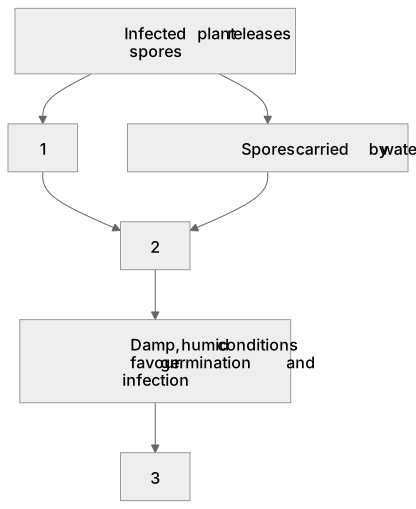
Some boxes have lost their names. Pick the right name for each number.
1Box 1
2Box 2
3Box 3
There is more to this lesson
The full lesson goes on to check your understanding and help you earn the marks. Create a free account to carry on, with your progress saved.
A week of Premium from your first lesson · Then the free plan continues · No card, no charge
Test your understanding of Fungal diseases: It is spread in the environment by water or wind.
Active recall beats re-reading. Take an instant quiz now to test what you’ve learned and lock it into long-term memory.
A week of Premium from your first lesson · Then the free plan continues · No card, no charge