AQA · GCSE · Biology
Course version: 8461 · Version from Sept 2018
Rose black spot is a fungal disease where purple or black spots develop on…
Full specification wording
Fungal diseases: Rose black spot is a fungal disease where purple or black spots develop on leaves, which often turn yellow and drop early.
Rose black spot is a disease of rose plants caused by a fungus.
Checked against the AQA 8461 specification (opens in a new tab) on .
- Point 1 of 4
Study notes
From the checked teaching notes for this specification point.
The idea
Rose black spot is a disease of rose plants caused by a fungus. The fungus infects leaves, producing purple or black spots on the leaf surface. Around these spots, leaf tissue often turns yellow as the fungus damages cells and disrupts chlorophyll. The affected leaves may drop from the plant earlier than normal, a process called premature leaf fall. The fungus spreads between plants by spores carried in water splashes or wind, especially in warm, damp conditions. A concrete example is a rose bush in a wet summer showing dark spots on many leaves; these leaves yellow and fall, leaving the plant with fewer leaves. Gardeners can reduce spread by removing and destroying fallen infected leaves and improving air flow.
What earns the marks
- Rose black spot is caused by a fungus, not a bacterium or virus.
- The disease produces purple or black spots on rose leaves.
- Infected leaves often turn yellow around the spots.
- Affected leaves may drop early, known as premature leaf fall.
- The fungus spreads by spores, often in damp conditions.
Common mistakes and how to put them right
Calling rose black spot a bacterial disease.
Put it right: It is fungal.
Thinking the spots are always black only.
Put it right: They can be purple or black.
Assuming leaf drop is normal seasonal shedding.
Put it right: Infected leaves drop early because of the disease.
Exam tips
- Use the exact symptom words: purple or black spots, yellowing, early leaf drop.
- State the pathogen type clearly: rose black spot is fungal.
- Link symptoms to effects on the plant, such as reduced photosynthesis.
Try the lesson
The start of the Fungal diseases: Rose black spot is a fungal disease where purple or black spots develop on leaves, which often turn yellow and drop early. lesson, made from checked teaching notes for this specification point.
Have a go first
Rose black spot is a disease of rose plants. Which type of organism causes rose black spot?
Listen
Rose black spot is a disease of rose plants caused by a fungus. The fungus infects leaves, producing purple or black spots on the leaf surface. Around these spots, leaf tissue often turns yellow as the fungus damages cells and disrupts chlorophyll. The affected leaves may drop from the plant earlier than normal, a process called premature leaf fall. The fungus spreads between plants by spores carried in water splashes or wind, especially in warm, damp conditions. A concrete example is a rose bush in a wet summer showing dark spots on many leaves; these leaves yellow and fall, leaving the plant with fewer leaves. Gardeners can reduce spread by removing and destroying fallen infected leaves and improving air flow. A strong answer earns marks for these points. Rose black spot is caused by a fungus, not a bacterium or virus. The disease produces purple or black spots on rose leaves. Infected leaves often turn yellow around the spots. Affected leaves may drop early, known as premature leaf fall. A common slip: Calling rose black spot a bacterial disease. Instead, it is fungal. Exam tip: Use the exact symptom words: purple or black spots, yellowing, early leaf drop.
See it
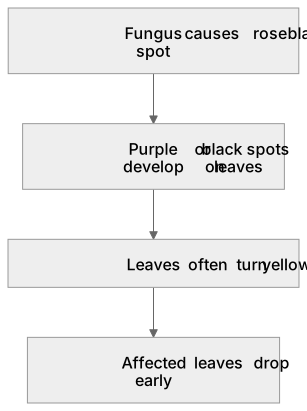
Put it in order
Put these steps in the order they happen.
- 1. Leaves often turn yellow
- 2. Affected leaves drop early
- 3. Purple or black spots develop on leaves
- 4. Fungus causes rose black spot
Label the diagram
Some boxes have lost their names. Pick the right name for each number.
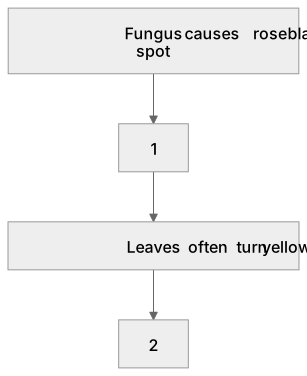
1Box 1
2Box 2
There is more to this lesson
The full lesson goes on to check your understanding and help you earn the marks. Create a free account to carry on, with your progress saved.
A week of Premium from your first lesson · Then the free plan continues · No card, no charge
Test your understanding of Fungal diseases: Rose black spot is a fungal disease where purple or black spots develop on leaves, which often turn yellow and drop early.
Active recall beats re-reading. Take an instant quiz now to test what you’ve learned and lock it into long-term memory.
A week of Premium from your first lesson · Then the free plan continues · No card, no charge