AQA · GCSE · Biology
Course version: 8461 · Version from Sept 2018
It affects the growth of the plant as photosynthesis is reduced.
Full specification wording
Fungal diseases: It affects the growth of the plant as photosynthesis is reduced.
Rose black spot damages leaves, and leaves are the main organs of photosynthesis.
Checked against the AQA 8461 specification (opens in a new tab) on .
- Point 2 of 4
- 4 key terms
Study notes
From the checked teaching notes for this specification point.
The idea
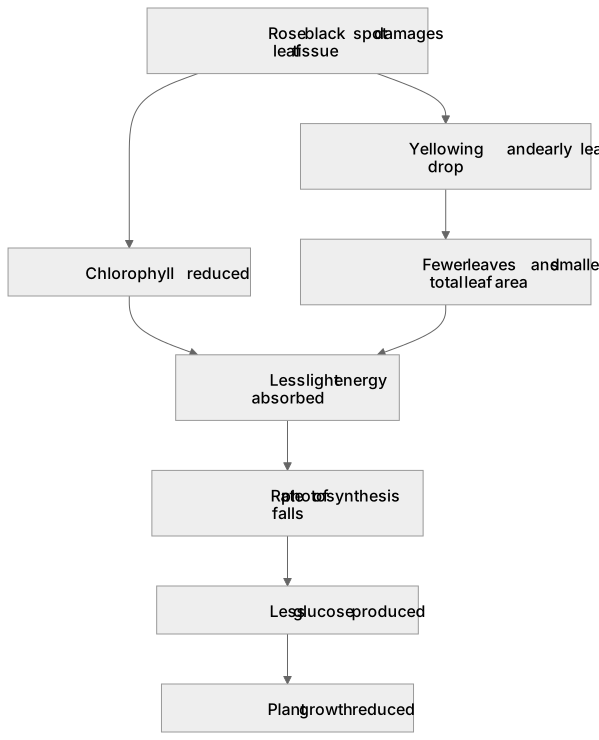
Rose black spot damages leaves, and leaves are the main organs of photosynthesis. The fungus destroys areas of leaf tissue and causes yellowing, which reduces the amount of chlorophyll available to absorb light. When infected leaves drop early, the plant has fewer leaves and a smaller total leaf area. Less chlorophyll and fewer leaves mean less light energy is absorbed, so the rate of photosynthesis falls. Photosynthesis produces glucose, which the plant uses for respiration, growth and making new cells. With less glucose, the plant's growth is reduced. A concrete example is a rose bush that loses many leaves in summer; it produces fewer new shoots and smaller flowers because it cannot make enough glucose for growth.
What earns the marks
- Rose black spot damages leaf tissue and reduces chlorophyll.
- Yellowing and early leaf drop reduce the total leaf area available for photosynthesis.
- Less chlorophyll and fewer leaves mean less light energy is absorbed.
- A lower rate of photosynthesis means less glucose is produced.
- Reduced glucose availability limits the plant's growth.
Common mistakes and how to put them right
Saying the plant cannot respire at all.
Put it right: Photosynthesis is reduced, which lowers glucose production and therefore growth.
Thinking the fungus directly eats the plant's roots.
Put it right: It affects leaves, reducing photosynthesis.
Confusing reduced photosynthesis with reduced transpiration.
Put it right: The statement is about photosynthesis and glucose production for growth.
Exam tips
- Link leaf damage to reduced chlorophyll and reduced light absorption.
- Explain the consequence: less glucose means less growth.
- Use the term 'rate of photosynthesis' when describing the effect.
Try the lesson
The start of the Fungal diseases: It affects the growth of the plant as photosynthesis is reduced. lesson, made from checked teaching notes for this specification point.
Have a go first
Rose black spot reduces the growth of a rose plant. Which process is reduced by this disease?
Listen
Rose black spot damages leaves, and leaves are the main organs of photosynthesis. The fungus destroys areas of leaf tissue and causes yellowing, which reduces the amount of chlorophyll available to absorb light. When infected leaves drop early, the plant has fewer leaves and a smaller total leaf area. Less chlorophyll and fewer leaves mean less light energy is absorbed, so the rate of photosynthesis falls. Photosynthesis produces glucose, which the plant uses for respiration, growth and making new cells. With less glucose, the plant's growth is reduced. A concrete example is a rose bush that loses many leaves in summer; it produces fewer new shoots and smaller flowers because it cannot make enough glucose for growth. A strong answer earns marks for these points. Rose black spot damages leaf tissue and reduces chlorophyll. Yellowing and early leaf drop reduce the total leaf area available for photosynthesis. Less chlorophyll and fewer leaves mean less light energy is absorbed. A lower rate of photosynthesis means less glucose is produced. A common slip: Saying the plant cannot respire at all. Instead, photosynthesis is reduced, which lowers glucose production and therefore growth. Exam tip: Link leaf damage to reduced chlorophyll and reduced light absorption.
See it
Key words
Say what each word means before you turn the card.
Photosynthesis
Try answering aloud or in your head before turning the card.
Plant growth
Try answering aloud or in your head before turning the card.
Glucose production
Try answering aloud or in your head before turning the card.
Effects of disease
Try answering aloud or in your head before turning the card.
See every definition
- Photosynthesis
- The process that produces glucose and is reduced when the plant has less chlorophyll and fewer leaves.
- Plant growth
- Something that is reduced when the plant has less glucose, which it uses for respiration, growth and making new cells.
- Glucose production
- A process that falls when the rate of photosynthesis falls, leaving the plant with less glucose for growth.
- Effects of disease
- Damage to leaf tissue, yellowing and early leaf drop, which reduce the total leaf area available for photosynthesis.
Label the diagram
Some boxes have lost their names. Pick the right name for each number.
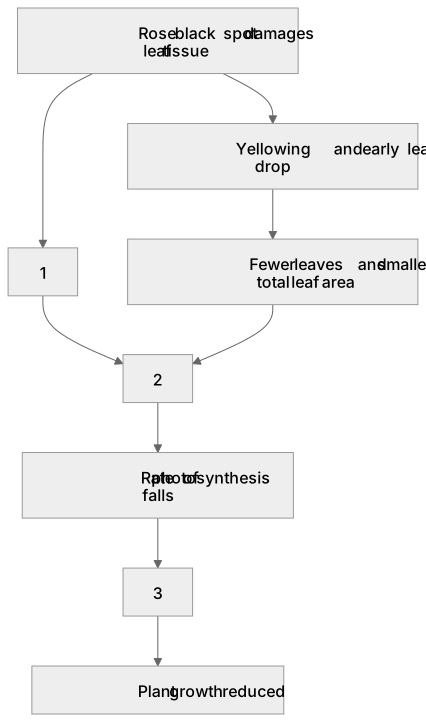
1Box 1
2Box 2
3Box 3
There is more to this lesson
The full lesson goes on to check your understanding and help you earn the marks. Create a free account to carry on, with your progress saved.
A week of Premium from your first lesson · Then the free plan continues · No card, no charge
Test your understanding of Fungal diseases: It affects the growth of the plant as photosynthesis is reduced.
Active recall beats re-reading. Take an instant quiz now to test what you’ve learned and lock it into long-term memory.
A week of Premium from your first lesson · Then the free plan continues · No card, no charge