AQA · GCSE · Biology
Course version: 8461 · Version from Sept 2018
Concerns about GM crops include the effect on populations of wild flowers…
Full specification wording
Genetic engineering: Concerns about GM crops include the effect on populations of wild flowers and insects.
GM crops are plants whose DNA has been altered by genetic engineering, often to resist herbicides or pests.
Checked against the AQA 8461 specification (opens in a new tab) on .
- Point 9 of 13
- 4 key terms
Study notes
From the checked teaching notes for this specification point.
The idea
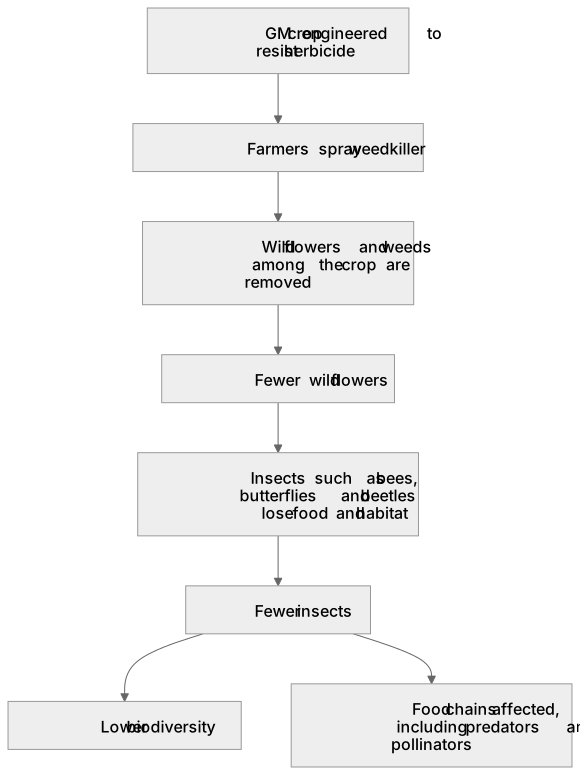
GM crops are plants whose DNA has been altered by genetic engineering, often to resist herbicides or pests. A concern is that herbicide-resistant crops allow farmers to spray weedkillers that kill broad-leaved weeds among the crop. Those weeds are food and habitat for wild flowers and insects such as bees, butterflies and beetles. If weed numbers fall, insect populations that depend on them may decline, reducing biodiversity and disrupting food chains. For example, a field of herbicide-resistant oilseed rape may be sprayed so that only the crop survives, removing wild flowers that once grew between the plants. This can lower the number of pollinators and the predators that feed on them. The effect is indirect: the change to the crop leads to changed farming practice, which changes the habitat.
What earns the marks
- GM crops are organisms whose genetic material has been modified by genetic engineering, often to give herbicide or pest resistance.
- Herbicide-resistant GM crops allow farmers to spray weedkillers that remove wild plants growing among the crop.
- Wild flowers and weeds provide food and shelter for insects such as bees, butterflies and beetles.
- A reduction in wild flower populations can cause a decline in insect populations that depend on them.
- Fewer insects can reduce biodiversity and affect food chains, including predators and pollinators.
- The concern is an indirect effect of changed farming practice, not a direct toxic effect of the GM crop itself.
Common mistakes and how to put them right
Thinking GM crops directly poison insects.
Put it right: The main concern is loss of wild plants that insects feed on, so link the effect through habitat loss.
Assuming all GM crops harm wildlife equally.
Put it right: The impact depends on the trait and how the crop is managed, so describe the herbicide-resistant example specifically.
Confusing wild flowers with the crop itself.
Put it right: The concern is about non-crop plants and the insects that rely on them, so keep the two separate.
Exam tips
- Use the chain: herbicide-resistant crop → weedkiller use → fewer wild flowers → fewer insects → lower biodiversity.
- Name specific groups such as bees, butterflies or beetles to show understanding of insect populations.
- Link the concern to food chains or biodiversity so the ecological consequence is explicit.
Try the lesson
The start of the Genetic engineering: Concerns about GM crops include the effect on populations of wild flowers and insects. lesson, made from checked teaching notes for this specification point.
Have a go first
Which group of organisms could be harmed if GM crops reduce the number of wild flowers growing in a field?
Listen
GM crops are plants whose DNA has been altered by genetic engineering, often to resist herbicides or pests. A concern is that herbicide-resistant crops allow farmers to spray weedkillers that kill broad-leaved weeds among the crop. Those weeds are food and habitat for wild flowers and insects such as bees, butterflies and beetles. If weed numbers fall, insect populations that depend on them may decline, reducing biodiversity and disrupting food chains. For example, a field of herbicide-resistant oilseed rape may be sprayed so that only the crop survives, removing wild flowers that once grew between the plants. This can lower the number of pollinators and the predators that feed on them. The effect is indirect: the change to the crop leads to changed farming practice, which changes the habitat. A strong answer earns marks for these points. GM crops are organisms whose genetic material has been modified by genetic engineering, often to give herbicide or pest resistance. Herbicide-resistant GM crops allow farmers to spray weedkillers that remove wild plants growing among the crop. Wild flowers and weeds provide food and shelter for insects such as bees, butterflies and beetles. A reduction in wild flower populations can cause a decline in insect populations that depend on them. Exam tip: Use the chain: herbicide-resistant crop → weedkiller use → fewer wild flowers → fewer insects → lower biodiversity.
See it
Key words
Say what each word means before you turn the card.
Genetic engineering
Try answering aloud or in your head before turning the card.
Biodiversity
Try answering aloud or in your head before turning the card.
Food chains and interdependence
Try answering aloud or in your head before turning the card.
Human impact on ecosystems
Try answering aloud or in your head before turning the card.
See every definition
- Genetic engineering
- The process by which the DNA of plants such as GM crops has been altered, often to resist herbicides or pests.
- Biodiversity
- The variety of living things, which can be reduced when fewer insects survive because wild flowers have declined.
- Food chains and interdependence
- The feeding links between organisms, which can be disrupted when insect populations that depend on wild flowers decline.
- Human impact on ecosystems
- The indirect effect of changed farming practice, such as spraying weedkillers that remove wild plants growing among the crop.
Label the diagram
Some boxes have lost their names. Pick the right name for each number.
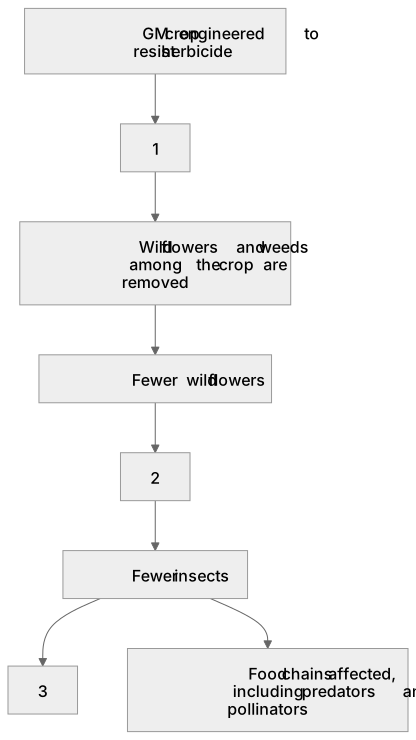
1Box 1
2Box 2
3Box 3
There is more to this lesson
The full lesson goes on to check your understanding and help you earn the marks. Create a free account to carry on, with your progress saved.
A week of Premium from your first lesson · Then the free plan continues · No card, no charge
Test your understanding of Genetic engineering: Concerns about GM crops include the effect on populations of wild flowers and insects.
Active recall beats re-reading. Take an instant quiz now to test what you’ve learned and lock it into long-term memory.
A week of Premium from your first lesson · Then the free plan continues · No card, no charge