AQA · GCSE · Biology
Course version: 8461 · Version from Sept 2018
Genetic engineering: GM crops generally show increased yields.
Yield is the amount of usable crop harvested from a given area, often measured in tonnes per hectare.
Checked against the AQA 8461 specification (opens in a new tab) on .
- Point 8 of 13
Study notes
From the checked teaching notes for this specification point.
The idea
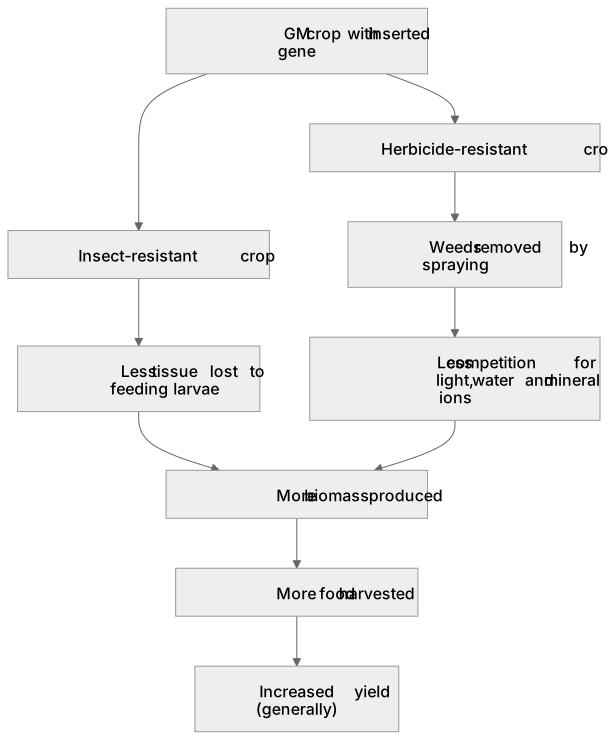
Yield is the amount of usable crop harvested from a given area, often measured in tonnes per hectare. GM crops often give a higher yield because the inserted gene reduces losses. An insect-resistant crop loses less tissue to feeding larvae, so more of the plant's energy goes into growth and grain. A herbicide-resistant crop can be sprayed to remove weeds, so the crop faces less competition for light, water and mineral ions. With less damage and less competition, more biomass is produced and more food can be harvested.
For example: A field of GM maize protected from corn borers can produce more grain than the same field of unmodified maize.
What earns the marks
- Yield is the mass or amount of crop harvested from a given area.
- Insect-resistant GM crops lose less tissue to pests, so more biomass remains for harvest.
- Herbicide-resistant GM crops suffer less competition from weeds for light, water and mineral ions.
- Reduced loss and competition allow more of the plant's products to be harvested.
- Increased yield means more food can be produced from the same area of land.
- The increase is described as general, because yield also depends on weather, soil and farming methods.
Common mistakes and how to put them right
Confusing yield with growth rate.
Put it right: Yield is the harvested amount, not how quickly the plant grows.
Ignoring the cause: higher yield results from reduced pest damage or reduced weed competition, not from the gene directly creating more grain.
Exam tips
- Define yield before explaining why it increases.
- Link the increase to a specific cause, such as less insect damage or less weed competition.
- Use the word generally to show that other factors can still affect the final yield.
Try the lesson
The start of the Genetic engineering: GM crops generally show increased yields. lesson, made from checked teaching notes for this specification point.
Have a go first
What is meant by the yield of a crop?
Listen
Yield is the amount of usable crop harvested from a given area, often measured in tonnes per hectare. GM crops often give a higher yield because the inserted gene reduces losses. An insect-resistant crop loses less tissue to feeding larvae, so more of the plant's energy goes into growth and grain. A herbicide-resistant crop can be sprayed to remove weeds, so the crop faces less competition for light, water and mineral ions. With less damage and less competition, more biomass is produced and more food can be harvested. For example, a field of GM maize protected from corn borers can produce more grain than the same field of unmodified maize. A strong answer earns marks for these points. Yield is the mass or amount of crop harvested from a given area. Insect-resistant GM crops lose less tissue to pests, so more biomass remains for harvest. Herbicide-resistant GM crops suffer less competition from weeds for light, water and mineral ions. Reduced loss and competition allow more of the plant's products to be harvested. Exam tip: Define yield before explaining why it increases.
See it
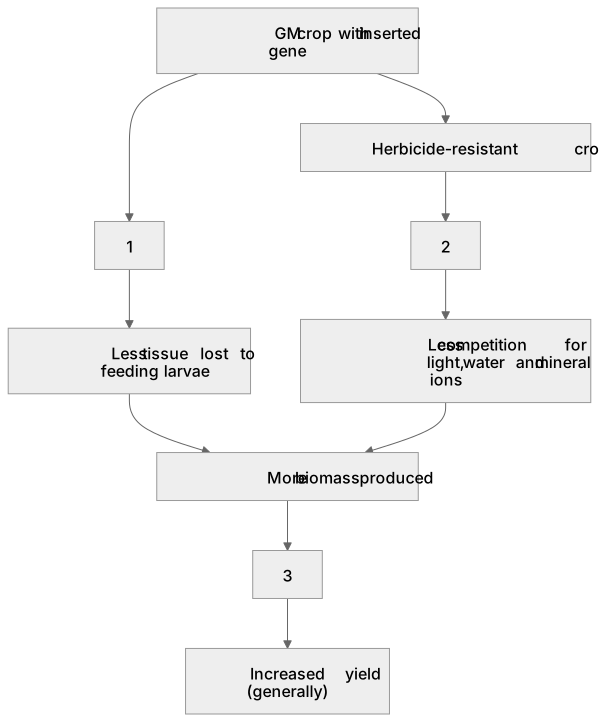
Label the diagram
Some boxes have lost their names. Pick the right name for each number.
1Box 1
2Box 2
3Box 3
There is more to this lesson
The full lesson goes on to check your understanding and help you earn the marks. Create a free account to carry on, with your progress saved.
A week of Premium from your first lesson · Then the free plan continues · No card, no charge
Test your understanding of Genetic engineering: GM crops generally show increased yields.
Active recall beats re-reading. Take an instant quiz now to test what you’ve learned and lock it into long-term memory.
A week of Premium from your first lesson · Then the free plan continues · No card, no charge