AQA · GCSE · Biology
Course version: 8461 · Version from Sept 2018
Defects in the immune system mean that an individual is more likely to…
Full specification wording
Health issues: Defects in the immune system mean that an individual is more likely to suffer from infectious diseases.
The immune system defends the body against pathogens such as bacteria, viruses, fungi and protists.
Checked against the AQA 8461 specification (opens in a new tab) on .
- Point 6 of 10
- 4 key terms
Study notes
From the checked teaching notes for this specification point.
The idea
The immune system defends the body against pathogens such as bacteria, viruses, fungi and protists. White blood cells engulf pathogens and produce antibodies or antitoxins. If any part of this defence is defective, pathogens are not destroyed efficiently, so they multiply and cause infectious disease more often and often more severely. Defects may be inherited, such as severe combined immunodeficiency, or acquired, for example through infection with HIV, which destroys helper T cells, or through drugs that suppress immunity after a transplant. A student can reason from cause to effect: fewer functional white blood cells means weaker phagocytosis and antibody production, so a common pathogen such as Mycobacterium tuberculosis is more likely to establish infection. This links immune function to health, disease transmission and vaccination.
What earns the marks
- The immune system uses white blood cells to engulf pathogens and to produce antibodies and antitoxins that destroy pathogens or neutralise their toxins.
- A defect means one or more of these defences work less effectively, for example too few functional white blood cells or reduced antibody production.
- Because pathogens are not destroyed efficiently, they reproduce inside the body and the individual develops an infectious disease more readily.
- Defects can be inherited, caused by a pathogen such as HIV, or caused by medical treatment that suppresses the immune system.
- The consequence is increased frequency and often increased severity of infections, not a direct cause of non-infectious diseases such as scurvy.
- A valid explanation links the defective defence mechanism to pathogen survival and multiplication, then to the symptoms of infectious disease.
Common mistakes and how to put them right
Saying a defective immune system directly causes infectious diseases.
Put it right by stating that pathogens cause the disease and the defect only increases susceptibility.
Confusing a weak immune system with an autoimmune reaction.
Put it right by distinguishing reduced defence against pathogens from the immune system attacking the body's own cells.
Claiming that all infections in an immunocompromised person are caused by a new mutation.
Put it right by explaining that ordinary environmental pathogens are simply not controlled.
Describing antibodies as cells.
Put it right by stating that antibodies are proteins produced by white blood cells.
Exam tips
- Use the chain 'defect → reduced phagocytosis or antibody production → pathogens survive and multiply → infectious disease' to structure an explanation.
- Name a specific defect or cause, such as HIV destroying helper T cells, to show understanding beyond a general statement.
- When asked to explain rather than state, include the mechanism of white blood cell action before linking it to increased infection risk.
- Check that every clause of the question is addressed, including both the defect and the increased likelihood of infectious disease.
Try the lesson
The start of the Health issues: Defects in the immune system mean that an individual is more likely to suffer from infectious diseases. lesson, made from checked teaching notes for this specification point.
Have a go first
A person has a defect in their immune system. What effect does this defect have on the person?
Listen
The immune system defends the body against pathogens such as bacteria, viruses, fungi and protists. White blood cells engulf pathogens and produce antibodies or antitoxins. If any part of this defence is defective, pathogens are not destroyed efficiently, so they multiply and cause infectious disease more often and often more severely. Defects may be inherited, such as severe combined immunodeficiency, or acquired, for example through infection with HIV, which destroys helper T cells, or through drugs that suppress immunity after a transplant. A student can reason from cause to effect: fewer functional white blood cells means weaker phagocytosis and antibody production, so a common pathogen such as Mycobacterium tuberculosis is more likely to establish infection. This links immune function to health, disease transmission and vaccination. A strong answer earns marks for these points. The immune system uses white blood cells to engulf pathogens and to produce antibodies and antitoxins that destroy pathogens or neutralise their toxins. A defect means one or more of these defences work less effectively, for example too few functional white blood cells or reduced antibody production. Because pathogens are not destroyed efficiently, they reproduce inside the body and the individual develops an infectious disease more readily. Defects can be inherited, caused by a pathogen such as HIV, or caused by medical treatment that suppresses the immune system. A common slip: Saying a defective immune system directly causes infectious diseases. Instead, stating that pathogens cause the disease and the defect only increases susceptibility. Exam tip: Use the chain 'defect → reduced phagocytosis or antibody production → pathogens survive and multiply → infectious disease' to structure an explanation.
See it
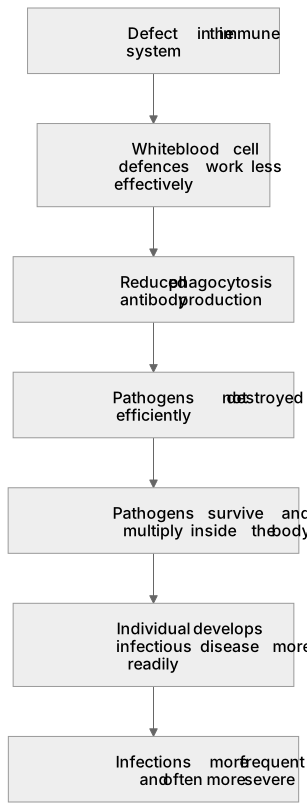
Put it in order
Put these steps in the order they happen.
- 1. Infections more frequent and often more severe
- 2. Individual develops infectious disease more readily
- 3. Reduced phagocytosis or antibody production
- 4. Pathogens survive and multiply inside the body
- 5. Defect in the immune system
- 6. White blood cell defences work less effectively
- 7. Pathogens not destroyed efficiently
Key words
Say what each word means before you turn the card.
Immune defence against pathogens
Try answering aloud or in your head before turning the card.
White blood cell function
Try answering aloud or in your head before turning the card.
Cause and effect in disease
Try answering aloud or in your head before turning the card.
Health and susceptibility to infection
Try answering aloud or in your head before turning the card.
See every definition
- Immune defence against pathogens
- The immune system defends the body against pathogens such as bacteria, viruses, fungi and protists, using white blood cells to engulf pathogens and produce antibodies or antitoxins.
- White blood cell function
- White blood cells engulf pathogens and produce antibodies or antitoxins that destroy pathogens or neutralise their toxins.
- Cause and effect in disease
- A defect means defences work less effectively, so pathogens are not destroyed efficiently, multiply and cause infectious disease more often and often more severely.
- Health and susceptibility to infection
- Defects in the immune system mean an individual is more likely to suffer from infectious diseases, with increased frequency and often increased severity of infections.
Label the diagram
Some boxes have lost their names. Pick the right name for each number.
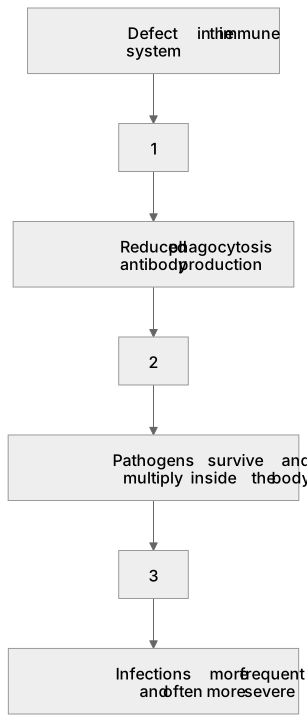
1Box 1
2Box 2
3Box 3
There is more to this lesson
The full lesson goes on to check your understanding and help you earn the marks. Create a free account to carry on, with your progress saved.
A week of Premium from your first lesson · Then the free plan continues · No card, no charge
Test your understanding of Health issues: Defects in the immune system mean that an individual is more likely to suffer from infectious diseases.
Active recall beats re-reading. Take an instant quiz now to test what you’ve learned and lock it into long-term memory.
A week of Premium from your first lesson · Then the free plan continues · No card, no charge