AQA · GCSE · Biology
Course version: 8461 · Version from Sept 2018
These hormones in turn act on other glands to stimulate other hormones to…
Full specification wording
Human endocrine system: These hormones in turn act on other glands to stimulate other hormones to be released to bring about effects.
The endocrine system works as a hierarchy of glands.
Checked against the AQA 8461 specification (opens in a new tab) on .
- Point 6 of 7
- 2 key terms
Study notes
From the checked teaching notes for this specification point.
The idea
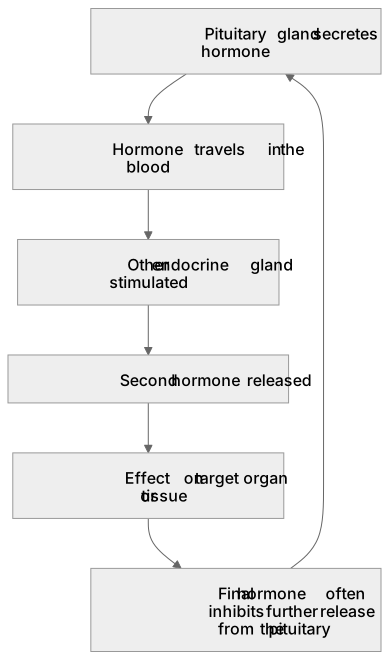
The endocrine system works as a hierarchy of glands. The pituitary gland secretes hormones that travel in the blood to other endocrine glands and stimulate them to release their own hormones. For example, thyroid-stimulating hormone (TSH) from the pituitary stimulates the thyroid gland to release thyroxine, which increases metabolic rate. Similarly, follicle-stimulating hormone (FSH) from the pituitary acts on the ovaries to stimulate egg maturation and oestrogen release. This chain of stimulation means one signal can amplify and coordinate a widespread response, and the final hormone usually feeds back to inhibit further release from the pituitary, keeping levels stable.
What earns the marks
- Hormones from the pituitary travel in the blood to other endocrine glands.
- The pituitary hormones stimulate those glands to secrete their own hormones.
- The second hormone brings about the specific effect on the target organ or tissue.
- An example is TSH from the pituitary stimulating the thyroid to release thyroxine.
- Another example is FSH from the pituitary stimulating the ovaries to release oestrogen.
- The final hormone often inhibits further secretion from the pituitary by negative feedback.
Common mistakes and how to put them right
Stating that the pituitary hormone itself produces the final effect.
Put it right: The pituitary hormone stimulates another gland, and that gland's hormone produces the effect.
Confusing which gland secretes which hormone, for example saying the thyroid secretes TSH.
Put it right: The pituitary secretes TSH and the thyroid secretes thyroxine.
Omitting the blood as the transport route.
Put it right: Hormones are carried in the blood plasma from the gland that secretes them to the target gland or organ.
Exam tips
- Use the sequence pituitary hormone, target gland, second hormone, effect to structure your answer.
- Give a named example with both hormones, such as TSH and thyroxine, to show the chain clearly.
- Mention negative feedback where the question asks how hormone levels are controlled.
Try the lesson
The start of the Human endocrine system: These hormones in turn act on other glands to stimulate other hormones to be released to bring about effects. lesson, made from checked teaching notes for this specification point.
Have a go first
Which gland in the human body releases a hormone that acts on the thyroid gland to stimulate it to release thyroxine?
Listen
The endocrine system works as a hierarchy of glands. The pituitary gland secretes hormones that travel in the blood to other endocrine glands and stimulate them to release their own hormones. For example, thyroid-stimulating hormone (TSH) from the pituitary stimulates the thyroid gland to release thyroxine, which increases metabolic rate. Similarly, follicle-stimulating hormone (FSH) from the pituitary acts on the ovaries to stimulate egg maturation and oestrogen release. This chain of stimulation means one signal can amplify and coordinate a widespread response, and the final hormone usually feeds back to inhibit further release from the pituitary, keeping levels stable. A strong answer earns marks for these points. Hormones from the pituitary travel in the blood to other endocrine glands. The pituitary hormones stimulate those glands to secrete their own hormones. The second hormone brings about the specific effect on the target organ or tissue. An example is TSH from the pituitary stimulating the thyroid to release thyroxine. A common slip: Stating that the pituitary hormone itself produces the final effect. Instead, the pituitary hormone stimulates another gland, and that gland's hormone produces the effect. Exam tip: Use the sequence pituitary hormone, target gland, second hormone, effect to structure your answer.
See it
Key words
Say what each word means before you turn the card.
Negative feedback
Try answering aloud or in your head before turning the card.
Endocrine cascades
Try answering aloud or in your head before turning the card.
See every definition
- Negative feedback
- The final hormone often inhibits further secretion from the pituitary, keeping levels stable.
- Endocrine cascades
- Hormones from the pituitary travel in the blood to other endocrine glands and stimulate those glands to secrete their own hormones.
Label the diagram
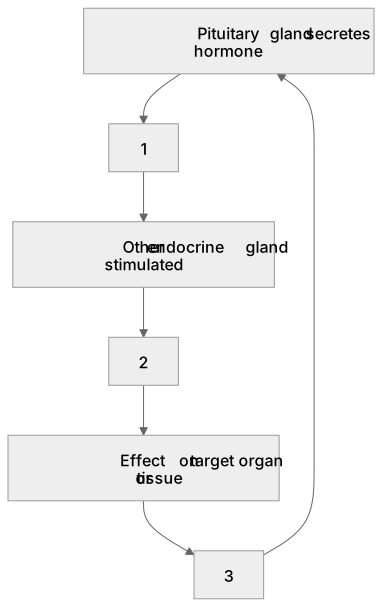
Some boxes have lost their names. Pick the right name for each number.
1Box 1
2Box 2
3Box 3
There is more to this lesson
The full lesson goes on to check your understanding and help you earn the marks. Create a free account to carry on, with your progress saved.
A week of Premium from your first lesson · Then the free plan continues · No card, no charge
Test your understanding of Human endocrine system: These hormones in turn act on other glands to stimulate other hormones to be released to bring about effects.
Active recall beats re-reading. Take an instant quiz now to test what you’ve learned and lock it into long-term memory.
A week of Premium from your first lesson · Then the free plan continues · No card, no charge