AQA · GCSE · Biology
Course version: 8461 · Version from Sept 2018
Students should be able to describe both positive and negative human…
Full specification wording
Maintaining biodiversity: Students should be able to describe both positive and negative human interactions in an ecosystem and explain their impact on biodiversity.
Humans interact with ecosystems in ways that can help or harm biodiversity.
Checked against the AQA 8461 specification (opens in a new tab) on .
- Point 1 of 3
- 3 key terms
Study notes
From the checked teaching notes for this specification point.
The idea
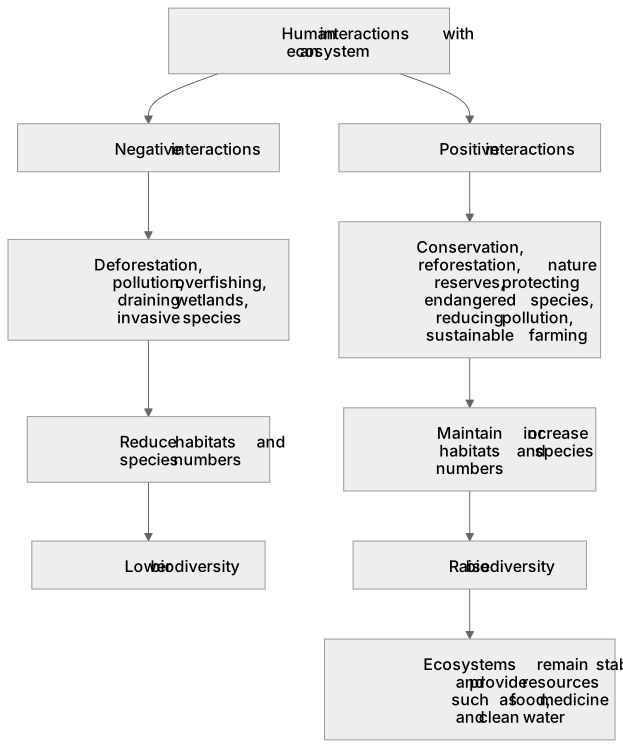
Humans interact with ecosystems in ways that can help or harm biodiversity. Negative interactions include deforestation, pollution, overfishing, draining wetlands and introducing invasive species, all of which reduce the variety of species and habitats. Positive interactions include conservation, reforestation, creating nature reserves, protecting endangered species, reducing pollution and sustainable farming. Biodiversity is the variety of different species and the range of habitats in an ecosystem. A healthy biodiversity helps ecosystems remain stable and provides resources such as food, medicine and clean water. Answers should describe both types of interaction and explain how each affects biodiversity.
What earns the marks
- Biodiversity is the variety of species and habitats in an ecosystem.
- Negative interactions include deforestation, pollution, overfishing and introducing invasive species.
- Positive interactions include conservation, reforestation, nature reserves and protecting endangered species.
- Sustainable farming and reducing pollution can also protect biodiversity.
- High biodiversity helps ecosystems remain stable and provides resources for humans.
Common mistakes and how to put them right
Giving only negative examples.
Put it right: The question requires both positive and negative interactions.
Describing an interaction without linking it to biodiversity.
Put it right: Explain how it changes the variety of species or habitats.
Confusing biodiversity with the total number of organisms.
Put it right: Biodiversity is the variety of species and habitats, not just population size.
Exam tips
- Structure your answer into positive and negative interactions so both are clearly covered.
- Use named examples such as deforestation or nature reserves to support each point.
- Finish each example by stating the effect on biodiversity, for example reduces or increases it.
Try the lesson
The start of the Maintaining biodiversity: Students should be able to describe both positive and negative human interactions in an ecosystem and explain their impact on biodiversity. lesson, made from checked teaching notes for this specification point.
Have a go first
Which of these is a positive human interaction that can help maintain biodiversity in an ecosystem?
Listen
Humans interact with ecosystems in ways that can help or harm biodiversity. Negative interactions include deforestation, pollution, overfishing, draining wetlands and introducing invasive species, all of which reduce the variety of species and habitats. Positive interactions include conservation, reforestation, creating nature reserves, protecting endangered species, reducing pollution and sustainable farming. Biodiversity is the variety of different species and the range of habitats in an ecosystem. A healthy biodiversity helps ecosystems remain stable and provides resources such as food, medicine and clean water. Answers should describe both types of interaction and explain how each affects biodiversity. A strong answer earns marks for these points. Biodiversity is the variety of species and habitats in an ecosystem. Negative interactions include deforestation, pollution, overfishing and introducing invasive species. Positive interactions include conservation, reforestation, nature reserves and protecting endangered species. Sustainable farming and reducing pollution can also protect biodiversity. A common slip: Giving only negative examples. Instead, the question requires both positive and negative interactions. Exam tip: Structure your answer into positive and negative interactions so both are clearly covered.
See it
Key words
Say what each word means before you turn the card.
Biodiversity
Try answering aloud or in your head before turning the card.
Conservation
Try answering aloud or in your head before turning the card.
Human impact on ecosystems
Try answering aloud or in your head before turning the card.
See every definition
- Biodiversity
- The variety of different species and the range of habitats in an ecosystem.
- Conservation
- A positive human interaction that maintains or increases habitats and species numbers, raising biodiversity.
- Human impact on ecosystems
- Positive and negative human interactions in an ecosystem, which can help or harm biodiversity.
Label the diagram
Some boxes have lost their names. Pick the right name for each number.
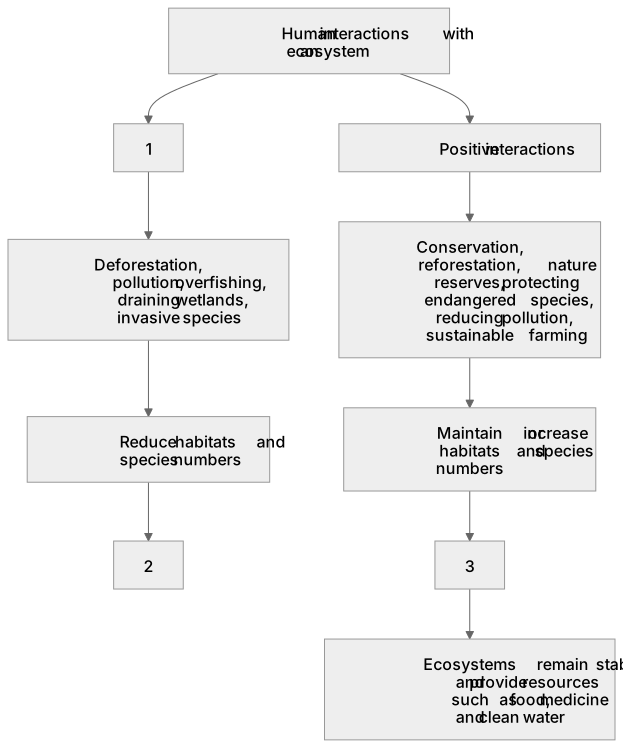
1Box 1
2Box 2
3Box 3
There is more to this lesson
The full lesson goes on to check your understanding and help you earn the marks. Create a free account to carry on, with your progress saved.
A week of Premium from your first lesson · Then the free plan continues · No card, no charge
Test your understanding of Maintaining biodiversity: Students should be able to describe both positive and negative human interactions in an ecosystem and explain their impact on biodiversity.
Active recall beats re-reading. Take an instant quiz now to test what you’ve learned and lock it into long-term memory.
A week of Premium from your first lesson · Then the free plan continues · No card, no charge