AQA · GCSE · Biology
Course version: 8461 · Version from Sept 2018
Scientists and concerned citizens have put in place programmes to reduce…
Full specification wording
Maintaining biodiversity: Scientists and concerned citizens have put in place programmes to reduce the negative effects of humans on ecosystems and biodiversity.
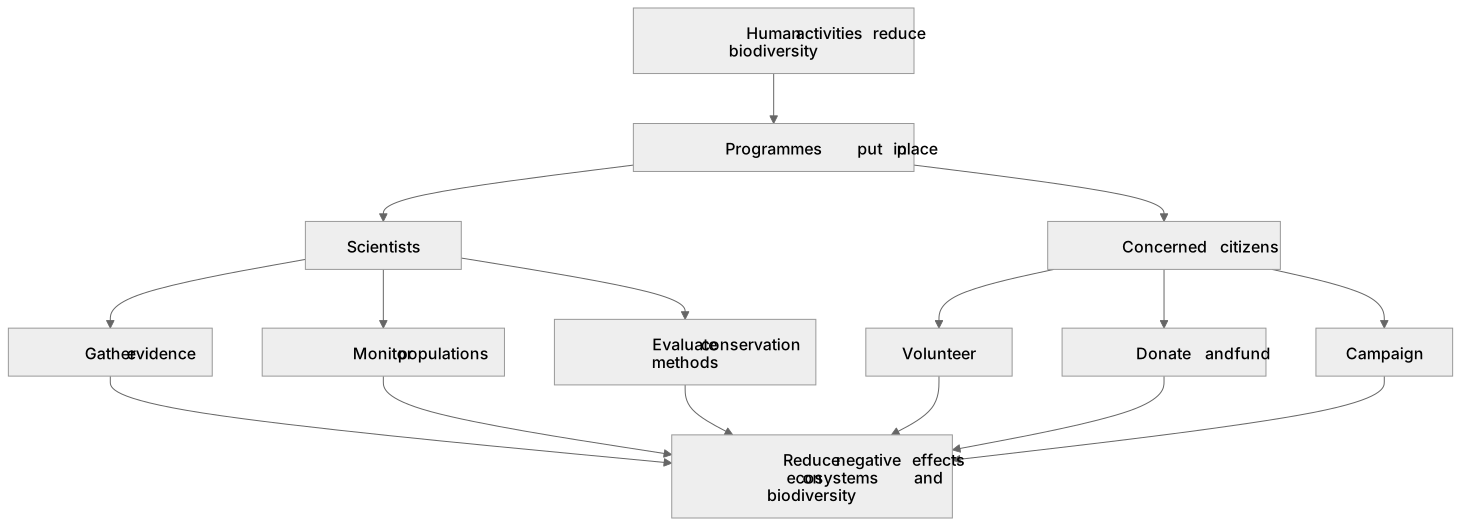
Human activities such as deforestation, pollution and overfishing reduce biodiversity, so scientists and concerned citizens design programmes to limit the damage.
Checked against the AQA 8461 specification (opens in a new tab) on .
- Point 2 of 3
Study notes
From the checked teaching notes for this specification point.
The idea
Human activities such as deforestation, pollution and overfishing reduce biodiversity, so scientists and concerned citizens design programmes to limit the damage. A programme is a planned set of actions with a clear aim, carried out by people such as ecologists, conservation charities, zoos and local volunteers. For example, a wildlife trust may survey a rare orchid, fence it from trampling and raise funds to buy the site. Scientists provide evidence: they count species, monitor populations and judge whether a method works. Concerned citizens provide money, time and political pressure. Together these programmes aim to protect species, habitats and genetic variation so ecosystems stay stable and useful to humans.
What earns the marks
- State that human activities reduce biodiversity and that programmes are deliberate responses to this.
- Identify scientists as the group that gathers evidence, monitors populations and evaluates conservation methods.
- Identify concerned citizens as volunteers, donors or campaigners who support and fund conservation work.
- Give a named example of a programme, such as a captive breeding scheme or a habitat protection project.
- Explain that the overall aim is to reduce negative effects on ecosystems and biodiversity.
Common mistakes and how to put them right
Writing that programmes stop all human impact.
Put it right: They reduce negative effects, they do not remove them completely.
Confusing a programme with a single one-off action.
Put it right: A programme is planned and sustained over time.
Naming only scientists and ignoring concerned citizens.
Put it right: The statement names both groups, so credit both.
Exam tips
- Use the words scientists and concerned citizens explicitly in your answer.
- Link each programme to a specific negative effect it reduces, such as habitat loss or overfishing.
- Give one concrete example rather than a long list of vague names.
Try the lesson
The start of the Maintaining biodiversity: Scientists and concerned citizens have put in place programmes to reduce the negative effects of humans on ecosystems and biodiversity. lesson, made from checked teaching notes for this specification point.
Have a go first
Which action is an example of a programme set up to reduce the negative effects of humans on ecosystems and biodiversity?
Listen
Human activities such as deforestation, pollution and overfishing reduce biodiversity, so scientists and concerned citizens design programmes to limit the damage. A programme is a planned set of actions with a clear aim, carried out by people such as ecologists, conservation charities, zoos and local volunteers. For example, a wildlife trust may survey a rare orchid, fence it from trampling and raise funds to buy the site. Scientists provide evidence: they count species, monitor populations and judge whether a method works. Concerned citizens provide money, time and political pressure. Together these programmes aim to protect species, habitats and genetic variation so ecosystems stay stable and useful to humans. A strong answer earns marks for these points. State that human activities reduce biodiversity and that programmes are deliberate responses to this. Identify scientists as the group that gathers evidence, monitors populations and evaluates conservation methods. Identify concerned citizens as volunteers, donors or campaigners who support and fund conservation work. Give a named example of a programme, such as a captive breeding scheme or a habitat protection project. A common slip: Writing that programmes stop all human impact. Instead, they reduce negative effects, they do not remove them completely. Exam tip: Use the words scientists and concerned citizens explicitly in your answer.
See it
Label the diagram
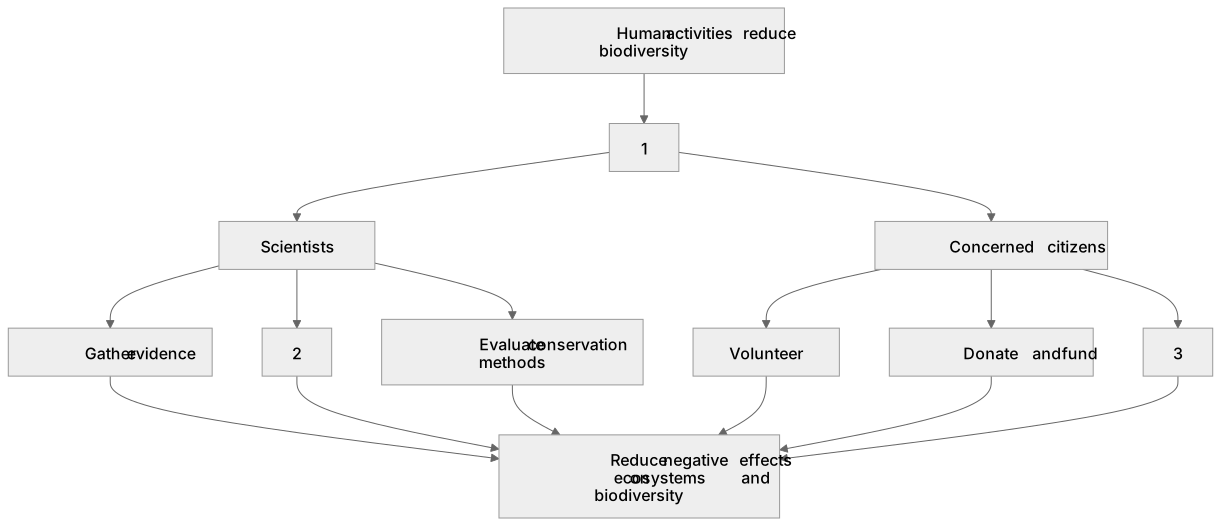
Some boxes have lost their names. Pick the right name for each number.
1Box 1
2Box 2
3Box 3
There is more to this lesson
The full lesson goes on to check your understanding and help you earn the marks. Create a free account to carry on, with your progress saved.
A week of Premium from your first lesson · Then the free plan continues · No card, no charge
Test your understanding of Maintaining biodiversity: Scientists and concerned citizens have put in place programmes to reduce the negative effects of humans on ecosystems and biodiversity.
Active recall beats re-reading. Take an instant quiz now to test what you’ve learned and lock it into long-term memory.
A week of Premium from your first lesson · Then the free plan continues · No card, no charge