AQA · GCSE · Biology
Course version: 8461 · Version from Sept 2018
These include: • breeding programmes for endangered species • protection…
Full specification wording
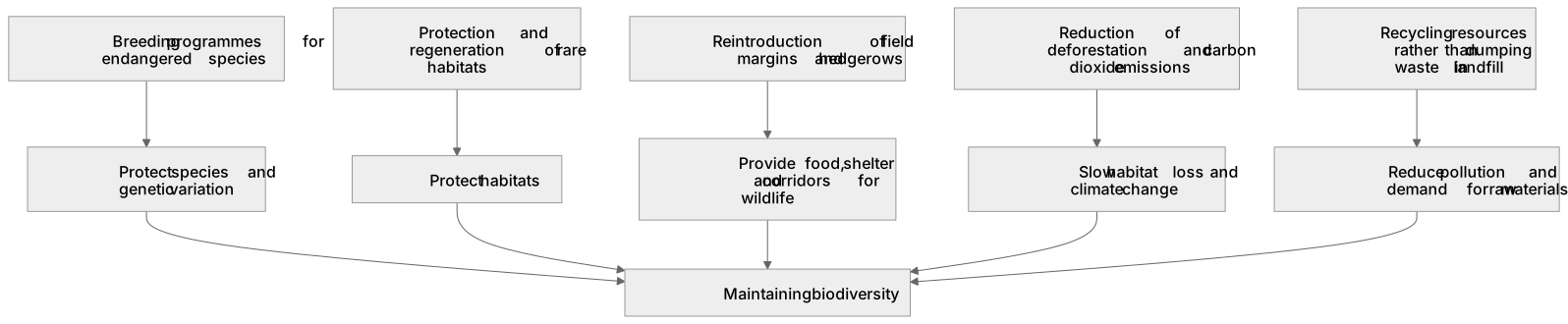
Maintaining biodiversity: These include: • breeding programmes for endangered species • protection and regeneration of rare habitats • reintroduction of field margins and hedgerows in agricultural areas where farmers grow only one type of crop • reduction of deforestation and carbon dioxide emissions by some governments • recycling resources rather than dumping waste in landfill.
Biodiversity is the variety of species and habitats in an ecosystem, and it can be maintained by several practical measures.
Checked against the AQA 8461 specification (opens in a new tab) on .
- Point 3 of 3
- 4 key terms
Study notes
From the checked teaching notes for this specification point.
The idea
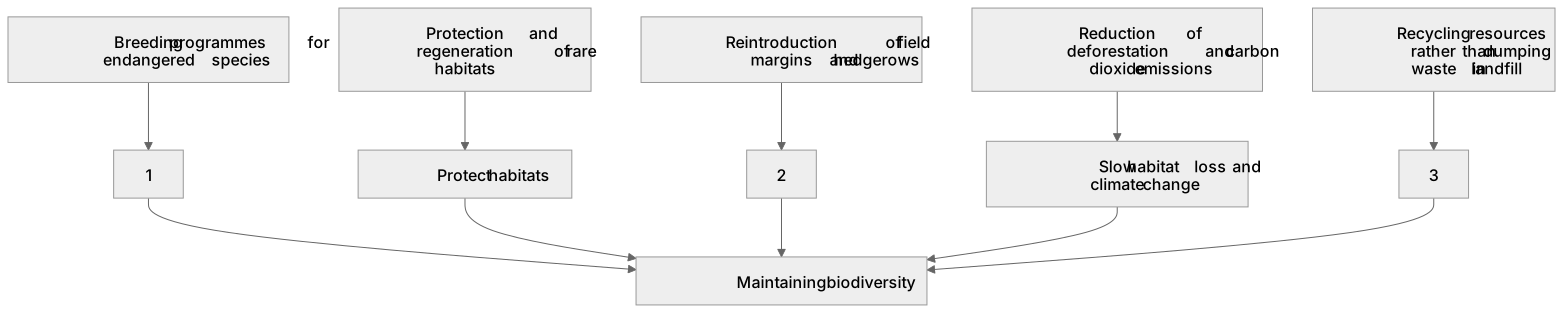
Biodiversity is the variety of species and habitats in an ecosystem, and it can be maintained by several practical measures. Breeding programmes in zoos and conservation centres keep endangered species alive and produce offspring for release. Rare habitats such as heathland or wetland are protected and regenerated by removing invasive species and replanting. In farmland growing only one crop, field margins and hedgerows are reintroduced to provide food, shelter and corridors for insects, birds and mammals. Governments can reduce deforestation and carbon dioxide emissions, slowing habitat loss and climate change. Recycling resources such as paper, glass and metals reduces waste sent to landfill, lowering pollution and demand for raw materials. Together these actions protect species, habitats and genetic variation.
What earns the marks
- Breeding programmes maintain endangered species by producing offspring in captivity, which can later be released into suitable wild habitats.
- Protection and regeneration of rare habitats involves conserving existing areas and restoring damaged ones, for example by replanting native vegetation or removing invasive species.
- Field margins and hedgerows are reintroduced in monoculture farmland to increase habitat variety, providing food and shelter for wildlife and connecting fragmented habitats.
- Reducing deforestation and carbon dioxide emissions by governments slows habitat destruction and climate change, both of which threaten biodiversity.
- Recycling resources instead of dumping waste in landfill reduces pollution and the extraction of raw materials, helping to preserve habitats and species.
- Each measure can be linked to a specific cause of biodiversity loss, such as habitat destruction, overexploitation or pollution.
Common mistakes and how to put them right
Describing breeding programmes as simply keeping animals in zoos.
Put it right: They aim to produce offspring for reintroduction to the wild.
Thinking hedgerows only make farmland look attractive.
Put it right: They provide food, shelter and wildlife corridors between habitats.
Confusing recycling with reducing energy use.
Put it right: Recycling reduces waste in landfill and demand for raw materials, which helps maintain biodiversity.
Exam tips
- Name the measure and then state exactly how it maintains biodiversity, linking to species, habitats or genetic variation.
- Use a named example, such as breeding programmes for endangered species or planting hedgerows between fields, to make your answer concrete.
- When asked to evaluate, compare measures by considering cost, scale and how directly they address the cause of biodiversity loss.
Try the lesson
The start of the Maintaining biodiversity: These include: • breeding programmes for endangered species • protection and regeneration of rare habitats • reintroduction of field margins and hedgerows in agricultural areas where farmers grow only one type of crop • reduction of deforestation and carbon dioxide emissions by some governments • recycling resources rather than dumping waste in landfill. lesson, made from checked teaching notes for this specification point.
Have a go first
Which method of maintaining biodiversity involves keeping animals in zoos and moving them between zoos to produce offspring?
Listen
Biodiversity is the variety of species and habitats in an ecosystem, and it can be maintained by several practical measures. Breeding programmes in zoos and conservation centres keep endangered species alive and produce offspring for release. Rare habitats such as heathland or wetland are protected and regenerated by removing invasive species and replanting. In farmland growing only one crop, field margins and hedgerows are reintroduced to provide food, shelter and corridors for insects, birds and mammals. Governments can reduce deforestation and carbon dioxide emissions, slowing habitat loss and climate change. Recycling resources such as paper, glass and metals reduces waste sent to landfill, lowering pollution and demand for raw materials. Together these actions protect species, habitats and genetic variation. A strong answer earns marks for these points. Breeding programmes maintain endangered species by producing offspring in captivity, which can later be released into suitable wild habitats. Protection and regeneration of rare habitats involves conserving existing areas and restoring damaged ones, for example by replanting native vegetation or removing invasive species. Field margins and hedgerows are reintroduced in monoculture farmland to increase habitat variety, providing food and shelter for wildlife and connecting fragmented habitats. Reducing deforestation and carbon dioxide emissions by governments slows habitat destruction and climate change, both of which threaten biodiversity. A common slip: Describing breeding programmes as simply keeping animals in zoos. Instead, they aim to produce offspring for reintroduction to the wild. Exam tip: Name the measure and then state exactly how it maintains biodiversity, linking to species, habitats or genetic variation.
See it
Key words
Say what each word means before you turn the card.
Breeding programmes
Try answering aloud or in your head before turning the card.
Protection and regeneration of rare habitats
Try answering aloud or in your head before turning the card.
Field margins and hedgerows
Try answering aloud or in your head before turning the card.
Recycling resources
Try answering aloud or in your head before turning the card.
See every definition
- Breeding programmes
- These keep endangered species alive and produce offspring for release into suitable wild habitats.
- Protection and regeneration of rare habitats
- Conserving existing areas and restoring damaged ones, for example by replanting native vegetation or removing invasive species.
- Field margins and hedgerows
- Reintroduced in monoculture farmland to increase habitat variety, providing food and shelter for wildlife and connecting fragmented habitats.
- Recycling resources
- Using resources again rather than dumping waste in landfill, which reduces pollution and the extraction of raw materials.
Label the diagram
Some boxes have lost their names. Pick the right name for each number.
1Box 1
2Box 2
3Box 3
There is more to this lesson
The full lesson goes on to check your understanding and help you earn the marks. Create a free account to carry on, with your progress saved.
A week of Premium from your first lesson · Then the free plan continues · No card, no charge
Test your understanding of Maintaining biodiversity: These include: • breeding programmes for endangered species • protection and regeneration of rare habitats • reintroduction of field margins and hedgerows in agricultural areas where farmers grow only one type of crop • reduction of deforestation and carbon dioxide emissions by some governments • recycling resources rather than dumping waste in landfill.
Active recall beats re-reading. Take an instant quiz now to test what you’ve learned and lock it into long-term memory.
A week of Premium from your first lesson · Then the free plan continues · No card, no charge