AQA · GCSE · Biology
Course version: 8461 · Version from Sept 2018
Cells are the basic building blocks of all living organisms.
Full specification wording
Principles of organisation: Cells are the basic building blocks of all living organisms.
All living organisms are made of cells, and the cell is the smallest unit that can carry out all the processes we associate with life.
Checked against the AQA 8461 specification (opens in a new tab) on .
- Point 1 of 4
- 4 key terms
Study notes
From the checked teaching notes for this specification point.
The idea
All living organisms are made of cells, and the cell is the smallest unit that can carry out all the processes we associate with life. Some organisms, such as bacteria and amoeba, are unicellular and consist of one cell that performs every life process. Most plants and animals are multicellular, and their cells become specialised so that different jobs are shared between different cell types. For example, a red blood cell has no nucleus and is packed with haemoglobin to carry oxygen, while a root hair cell has a long extension to increase surface area for water and mineral uptake. Understanding that cells are the basic building blocks allows you to explain how larger structures such as tissues, organs and organ systems are organised, and why cell specialisation is important in multicellular organisms.
What earns the marks
- State that all living organisms are composed of cells and that the cell is the basic unit of life.
- Recognise that some organisms are unicellular while others are multicellular.
- Explain that multicellular organisms contain many cells that may be specialised for particular functions.
- Link cell specialisation to the efficient functioning of the whole organism, for example exchange surfaces or transport.
- Use examples of specialised cells, such as red blood cells, nerve cells, root hair cells or sperm cells, and relate structure to function.
- Recognise the hierarchy from cells to tissues, organs and organ systems in multicellular organisms.
Common mistakes and how to put them right
Thinking that cells are only found in animals.
Put it right: All living organisms, including plants, fungi and bacteria, are made of cells.
Assuming every cell in a multicellular organism is identical.
Put it right: Many cells are specialised in structure and function.
Confusing the cell with a tissue or organ.
Put it right: A cell is the smallest living unit, while tissues and organs are groups of cells working together.
Exam tips
- Use the phrase basic building blocks of all living organisms when defining a cell, then add a specific example to show understanding.
- When describing a specialised cell, always link one structural feature to one function, such as many mitochondria in a muscle cell for energy release.
- If asked about organisation, work upwards in order: cell, tissue, organ, organ system, organism.
Try the lesson
The start of the Principles of organisation: Cells are the basic building blocks of all living organisms. lesson, made from checked teaching notes for this specification point.
Have a go first
Which of these is the basic building block of all living organisms?
Listen
All living organisms are made of cells, and the cell is the smallest unit that can carry out all the processes we associate with life. Some organisms, such as bacteria and amoeba, are unicellular and consist of one cell that performs every life process. Most plants and animals are multicellular, and their cells become specialised so that different jobs are shared between different cell types. For example, a red blood cell has no nucleus and is packed with haemoglobin to carry oxygen, while a root hair cell has a long extension to increase surface area for water and mineral uptake. Understanding that cells are the basic building blocks allows you to explain how larger structures such as tissues, organs and organ systems are organised, and why cell specialisation is important in multicellular organisms. A strong answer earns marks for these points. State that all living organisms are composed of cells and that the cell is the basic unit of life. Recognise that some organisms are unicellular while others are multicellular. Explain that multicellular organisms contain many cells that may be specialised for particular functions. Link cell specialisation to the efficient functioning of the whole organism, for example exchange surfaces or transport. A common slip: Thinking that cells are only found in animals. Instead, all living organisms, including plants, fungi and bacteria, are made of cells. Exam tip: Use the phrase basic building blocks of all living organisms when defining a cell, then add a specific example to show understanding.
See it
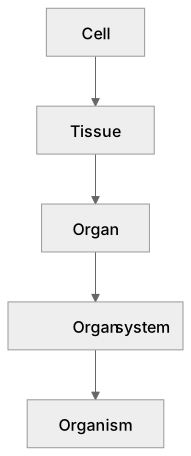
Put it in order
Put these steps in the order they happen.
- 1. Tissue
- 2. Organ
- 3. Cell
- 4. Organism
- 5. Organ system
Watch it explained
What is the one idea the video explains? Say it in a sentence.
Read the described scene instead
All living organisms are made of cells. The cell is the smallest unit that can carry out all the processes we associate with life. That includes animals, plants, fungi and bacteria. Some organisms are unicellular, such as bacteria and amoeba. One cell performs every life process. Most plants and animals are multicellular, so different jobs can be shared between different cell types. In multicellular organisms, many cells are specialised. A red blood cell has no nucleus and is packed with haemoglobin to carry oxygen. A root hair cell has a long extension to increase surface area for water and mineral uptake. Specialised cells have structures linked to their functions. A root hair cell has a long extension. Pause to think: how does that structure help the plant? The extension increases surface area, so more water and minerals can be taken up. Organisation works upwards. Cells are grouped into tissues. Tissues form organs. Organs work together in organ systems, and organ systems make up the organism. This hierarchy helps explain how specialised cells contribute to the whole organism. Avoid thinking cells are only found in animals; all living organisms, including plants, fungi and bacteria, are made of cells. Also, cells in a multicellular organism are not all identical. And a cell is not the same as a tissue or organ: it is the smallest living unit. So, cells are the basic building blocks of all living organisms. Unicellular organisms use one cell for every life process. Multicellular organisms have specialised cells, and these are organised into tissues, organs and organ systems.
Key words
Say what each word means before you turn the card.
Cell
Try answering aloud or in your head before turning the card.
Unicellular
Try answering aloud or in your head before turning the card.
Multicellular
Try answering aloud or in your head before turning the card.
Cell specialisation
Try answering aloud or in your head before turning the card.
See every definition
- Cell
- The basic building blocks of all living organisms, and the smallest unit that can carry out all the processes we associate with life.
- Unicellular
- Organisms, such as bacteria and amoeba, that consist of one cell which performs every life process.
- Multicellular
- Organisms, such as most plants and animals, that contain many cells which may be specialised for particular functions.
- Cell specialisation
- When cells become specialised so that different jobs are shared between different cell types, which is important in multicellular organisms.
Label the diagram
Some boxes have lost their names. Pick the right name for each number.
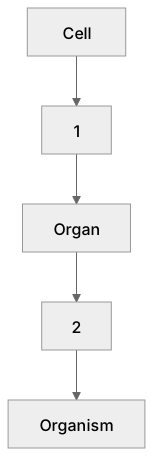
1Box 1
2Box 2
There is more to this lesson
The full lesson goes on to check your understanding and help you earn the marks. Create a free account to carry on, with your progress saved.
A week of Premium from your first lesson · Then the free plan continues · No card, no charge
Test your understanding of Principles of organisation: Cells are the basic building blocks of all living organisms.
Active recall beats re-reading. Take an instant quiz now to test what you’ve learned and lock it into long-term memory.
A week of Premium from your first lesson · Then the free plan continues · No card, no charge