AQA · GCSE · Biology
Course version: 8461 · Version from Sept 2018
Some strains might be resistant to antibiotics, and so are not killed.
Full specification wording
Resistant bacteria: Some strains might be resistant to antibiotics, and so are not killed.
Antibiotics are medicines that kill bacteria or stop their growth.
Checked against the AQA 8461 specification (opens in a new tab) on .
- Point 3 of 10
Study notes
From the checked teaching notes for this specification point.
The idea
Antibiotics are medicines that kill bacteria or stop their growth. Within a bacterial population, random mutations can give some cells resistance, meaning the antibiotic no longer harms them. When a patient takes an antibiotic, susceptible bacteria die, but resistant cells survive and reproduce. Their offspring inherit the resistance, so the resistant strain becomes more common. For example, a mutation may change the bacterial protein that the antibiotic targets, so the drug cannot bind. This is natural selection in action. Resistance is a serious problem because infections caused by resistant strains are harder to treat, and resistant bacteria can spread between people. Completing prescribed courses and avoiding unnecessary antibiotic use help limit the spread of resistant strains.
What earns the marks
- States that some bacterial strains carry mutations giving resistance to an antibiotic.
- Explains that the antibiotic kills susceptible bacteria but not resistant ones.
- Describes how surviving resistant bacteria reproduce and pass resistance to their offspring.
- Links the process to natural selection, where the antibiotic acts as the selection pressure.
- Explains a consequence, such as infections becoming harder to treat or resistant strains spreading.
Common mistakes and how to put them right
Saying the antibiotic makes bacteria resistant.
Put it right: Resistance arises from random mutation and the antibiotic selects resistant cells.
Believing resistance develops in an individual bacterium during treatment.
Put it right: The population changes over generations.
Thinking antibiotics work against viruses.
Put it right: Antibiotics act on bacteria, not viruses.
Exam tips
- Use the sequence: variation, antibiotic selection pressure, survival, reproduction, increased frequency of resistance.
- State clearly that resistant bacteria are not killed by the antibiotic.
- Mention a practical consequence, such as difficulty treating infections, to show wider understanding.
Try the lesson
The start of the Resistant bacteria: Some strains might be resistant to antibiotics, and so are not killed. lesson, made from checked teaching notes for this specification point.
Have a go first
What does it mean if a strain of bacteria is resistant to an antibiotic?
Listen
Antibiotics are medicines that kill bacteria or stop their growth. Within a bacterial population, random mutations can give some cells resistance, meaning the antibiotic no longer harms them. When a patient takes an antibiotic, susceptible bacteria die, but resistant cells survive and reproduce. Their offspring inherit the resistance, so the resistant strain becomes more common. For example, a mutation may change the bacterial protein that the antibiotic targets, so the drug cannot bind. This is natural selection in action. Resistance is a serious problem because infections caused by resistant strains are harder to treat, and resistant bacteria can spread between people. Completing prescribed courses and avoiding unnecessary antibiotic use help limit the spread of resistant strains. A strong answer earns marks for these points. States that some bacterial strains carry mutations giving resistance to an antibiotic. Explains that the antibiotic kills susceptible bacteria but not resistant ones. Describes how surviving resistant bacteria reproduce and pass resistance to their offspring. Links the process to natural selection, where the antibiotic acts as the selection pressure. A common slip: Saying the antibiotic makes bacteria resistant. Instead, resistance arises from random mutation and the antibiotic selects resistant cells. Exam tip: Use the sequence: variation, antibiotic selection pressure, survival, reproduction, increased frequency of resistance.
See it
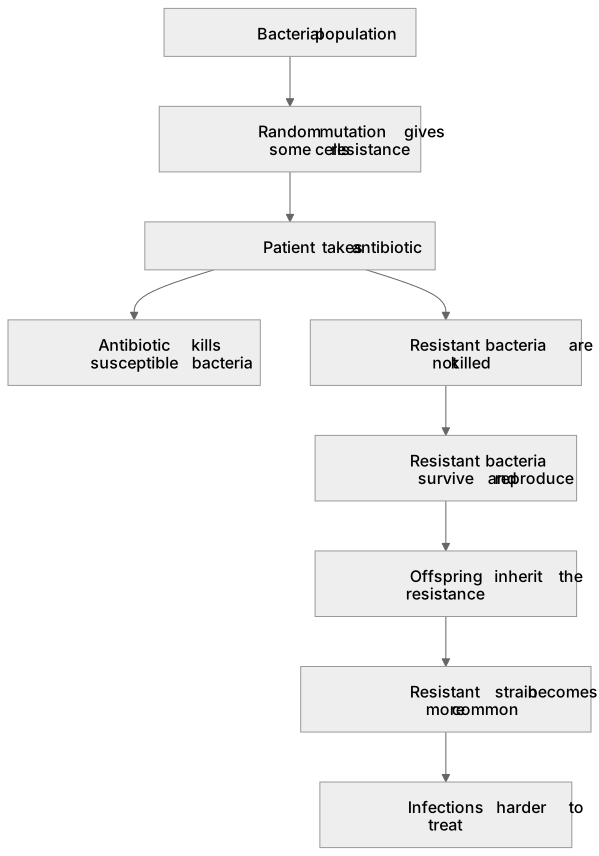
Label the diagram
Some boxes have lost their names. Pick the right name for each number.
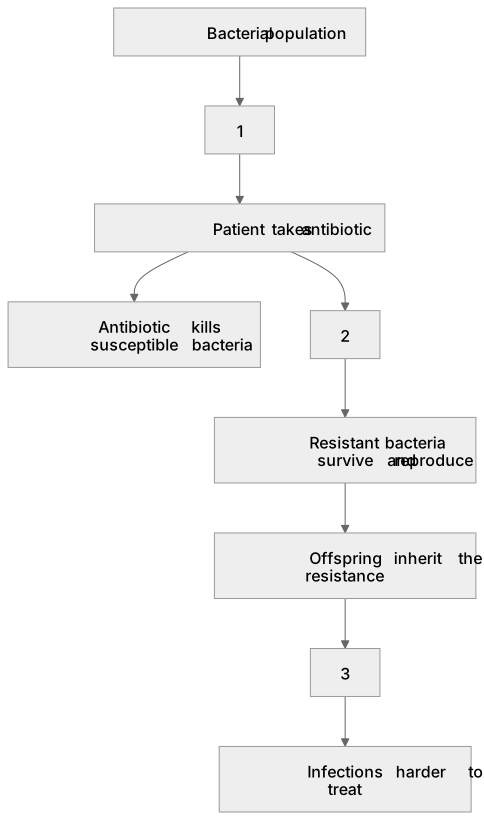
1Box 1
2Box 2
3Box 3
There is more to this lesson
The full lesson goes on to check your understanding and help you earn the marks. Create a free account to carry on, with your progress saved.
A week of Premium from your first lesson · Then the free plan continues · No card, no charge
Test your understanding of Resistant bacteria: Some strains might be resistant to antibiotics, and so are not killed.
Active recall beats re-reading. Take an instant quiz now to test what you’ve learned and lock it into long-term memory.
A week of Premium from your first lesson · Then the free plan continues · No card, no charge