AQA · GCSE · Biology
Course version: 8461 · Version from Sept 2018
Resistant bacteria: Mutations of bacterial pathogens produce new strains.
A mutation is a random change in the genetic material of a bacterium.
Checked against the AQA 8461 specification (opens in a new tab) on .
- Point 2 of 10
- 3 key terms
Study notes
From the checked teaching notes for this specification point.
The idea
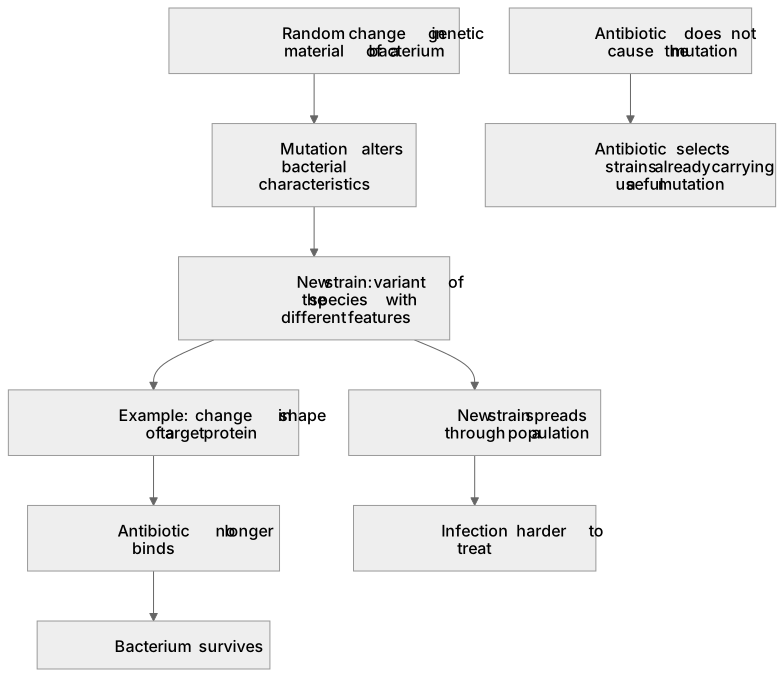
A mutation is a random change in the genetic material of a bacterium. When a bacterial pathogen reproduces, most offspring are identical, but occasional mutations alter their characteristics. These changes can produce a new strain, which is a variant of the species with different features, such as the ability to resist an antibiotic or to produce a different toxin. For example, a mutation might change the shape of a protein that an antibiotic normally targets, so the drug no longer binds and the bacterium survives. Mutations occur at random and are not caused by the antibiotic itself; the antibiotic merely selects the strains that already carry a useful mutation. New strains can therefore spread through a population and make an infection harder to treat.
What earns the marks
- Defines a mutation as a random change in the genetic material of a bacterium.
- Explains that mutations can alter bacterial characteristics, such as resistance or toxin production.
- Defines a strain as a variant of a species with different inherited features.
- Links mutation to the formation of new strains that can spread through a population.
- States that mutations arise at random and are not directed by the environment or by antibiotics.
Common mistakes and how to put them right
Saying antibiotics cause the mutation.
Put it right: Mutations occur at random and antibiotics select resistant strains.
Treating a strain as a different species.
Put it right: A strain is a variant within a species.
Believing all mutations are harmful.
Put it right: Some are neutral or beneficial to the bacterium.
Exam tips
- Use the term random when describing mutation.
- Distinguish clearly between mutation, which creates variation, and selection, which favours it.
- Give a named example, such as a change in a target protein, to show how a new strain arises.
Try the lesson
The start of the Resistant bacteria: Mutations of bacterial pathogens produce new strains. lesson, made from checked teaching notes for this specification point.
Have a go first
What name is given to a change in the genetic material of a bacterium that can produce a new strain?
Listen
A mutation is a random change in the genetic material of a bacterium. When a bacterial pathogen reproduces, most offspring are identical, but occasional mutations alter their characteristics. These changes can produce a new strain, which is a variant of the species with different features, such as the ability to resist an antibiotic or to produce a different toxin. For example, a mutation might change the shape of a protein that an antibiotic normally targets, so the drug no longer binds and the bacterium survives. Mutations occur at random and are not caused by the antibiotic itself; the antibiotic merely selects the strains that already carry a useful mutation. New strains can therefore spread through a population and make an infection harder to treat. A strong answer earns marks for these points. Defines a mutation as a random change in the genetic material of a bacterium. Explains that mutations can alter bacterial characteristics, such as resistance or toxin production. Defines a strain as a variant of a species with different inherited features. Links mutation to the formation of new strains that can spread through a population. A common slip: Saying antibiotics cause the mutation. Instead, mutations occur at random and antibiotics select resistant strains. Exam tip: Use the term random when describing mutation.
See it
Key words
Say what each word means before you turn the card.
Mutation
Try answering aloud or in your head before turning the card.
Strain
Try answering aloud or in your head before turning the card.
Antibiotic resistance
Try answering aloud or in your head before turning the card.
See every definition
- Mutation
- A random change in the genetic material of a bacterium.
- Strain
- A variant of the species with different features, such as the ability to resist an antibiotic or to produce a different toxin.
- Antibiotic resistance
- The ability of a new strain to resist an antibiotic, which can make an infection harder to treat.
Label the diagram
Some boxes have lost their names. Pick the right name for each number.
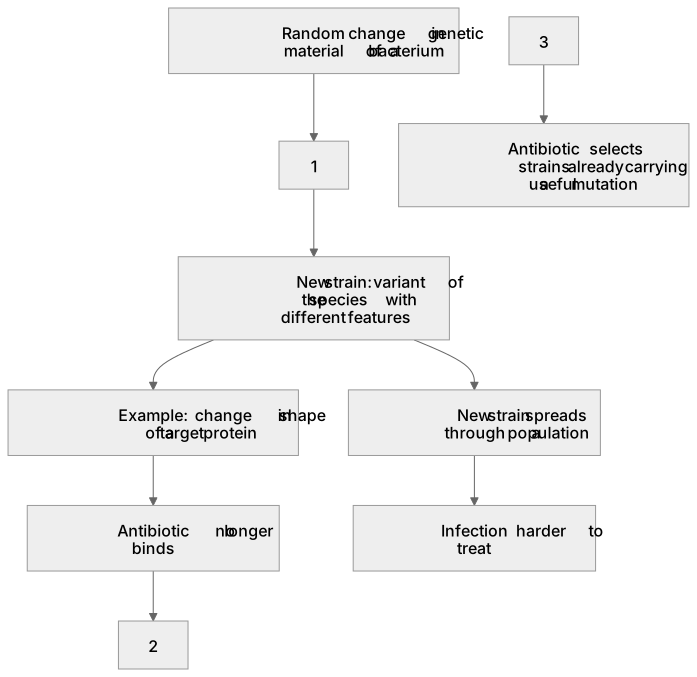
1Box 1
2Box 2
3Box 3
There is more to this lesson
The full lesson goes on to check your understanding and help you earn the marks. Create a free account to carry on, with your progress saved.
A week of Premium from your first lesson · Then the free plan continues · No card, no charge
Test your understanding of Resistant bacteria: Mutations of bacterial pathogens produce new strains.
Active recall beats re-reading. Take an instant quiz now to test what you’ve learned and lock it into long-term memory.
A week of Premium from your first lesson · Then the free plan continues · No card, no charge