AQA · GCSE · Biology
Course version: 8461 · Version from Sept 2018
During long periods of vigorous activity muscles become fatigued and stop…
Full specification wording
Response to exercise: During long periods of vigorous activity muscles become fatigued and stop contracting efficiently.
Muscles contract using energy from respiration.
Checked against the AQA 8461 specification (opens in a new tab) on .
- Point 5 of 7
Study notes
From the checked teaching notes for this specification point.
The idea
Muscles contract using energy from respiration. During long periods of vigorous activity, oxygen and glucose delivery cannot keep pace with demand, so anaerobic respiration supplements aerobic respiration and lactic acid accumulates. Rising lactic acid concentration lowers pH in muscle cells, interfering with enzyme action and with the proteins that enable contraction. The muscles therefore become fatigued and contract less efficiently, reducing performance. For example, a cyclist climbing a long hill may find the leg muscles weaken and the pedalling action becomes less forceful. Fatigue is a signal to reduce intensity or stop, allowing oxygen uptake to repay the oxygen debt and lactic acid to be removed.
What earns the marks
- State that long periods of vigorous activity cause muscle fatigue.
- Explain that fatigue results from accumulation of lactic acid and reduced pH in muscle cells.
- Link fatigue to less efficient muscle contraction and reduced performance.
- Explain that rest or reduced activity allows oxygen uptake to remove lactic acid and restore efficient contraction.
Common mistakes and how to put them right
Saying muscles run out of glucose immediately.
Put it right: Fatigue is mainly linked to lactic acid accumulation and insufficient oxygen.
Saying fatigued muscles stop contracting completely.
Put it right: They continue to contract but less efficiently.
Saying fatigue is caused by too much oxygen in muscles.
Put it right: Insufficient oxygen leads to anaerobic respiration and lactic acid build-up.
Exam tips
- Use the phrase contract less efficiently rather than stop working, because muscles do not cease contraction completely.
- Link fatigue to lactic acid, lowered pH and disrupted enzyme activity in muscle cells.
- Explain recovery by referring to rest, continued oxygen uptake and removal of lactic acid.
Try the lesson
The start of the Response to exercise: During long periods of vigorous activity muscles become fatigued and stop contracting efficiently. lesson, made from checked teaching notes for this specification point.
Have a go first
What happens to muscles during long periods of vigorous activity?
Listen
Muscles contract using energy from respiration. During long periods of vigorous activity, oxygen and glucose delivery cannot keep pace with demand, so anaerobic respiration supplements aerobic respiration and lactic acid accumulates. Rising lactic acid concentration lowers pH in muscle cells, interfering with enzyme action and with the proteins that enable contraction. The muscles therefore become fatigued and contract less efficiently, reducing performance. For example, a cyclist climbing a long hill may find the leg muscles weaken and the pedalling action becomes less forceful. Fatigue is a signal to reduce intensity or stop, allowing oxygen uptake to repay the oxygen debt and lactic acid to be removed. A strong answer earns marks for these points. State that long periods of vigorous activity cause muscle fatigue. Explain that fatigue results from accumulation of lactic acid and reduced pH in muscle cells. Link fatigue to less efficient muscle contraction and reduced performance. Explain that rest or reduced activity allows oxygen uptake to remove lactic acid and restore efficient contraction. A common slip: Saying muscles run out of glucose immediately: the error is ignoring the role of lactic acid and oxygen supply. Instead, fatigue is mainly linked to lactic acid accumulation and insufficient oxygen. Exam tip: Use the phrase contract less efficiently rather than stop working, because muscles do not cease contraction completely.
See it
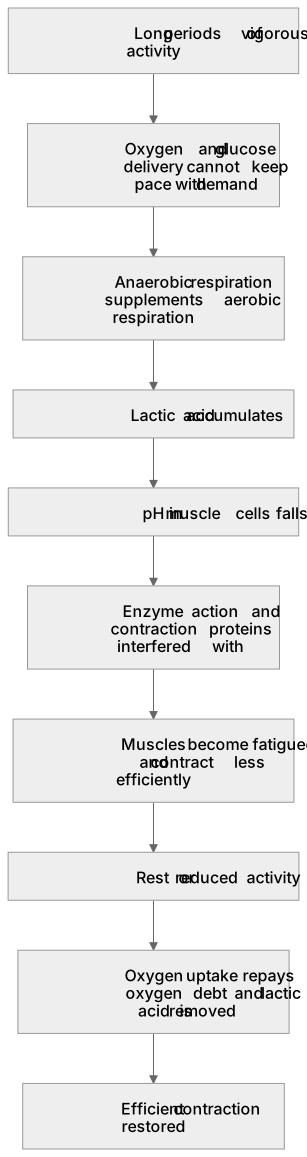
Label the diagram
Some boxes have lost their names. Pick the right name for each number.
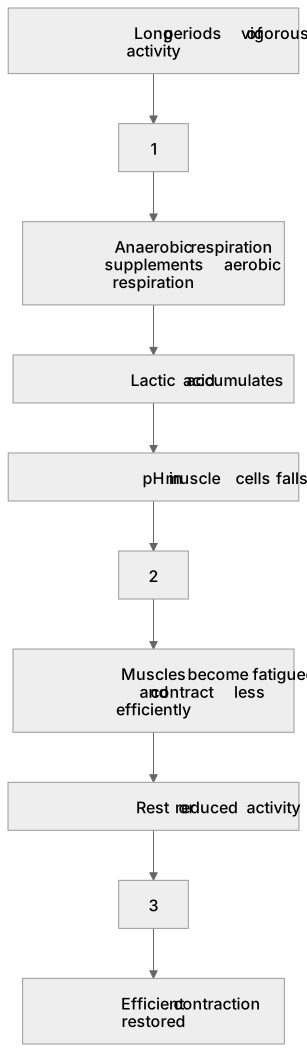
1Box 1
2Box 2
3Box 3
There is more to this lesson
The full lesson goes on to check your understanding and help you earn the marks. Create a free account to carry on, with your progress saved.
A week of Premium from your first lesson · Then the free plan continues · No card, no charge
Test your understanding of Response to exercise: During long periods of vigorous activity muscles become fatigued and stop contracting efficiently.
Active recall beats re-reading. Take an instant quiz now to test what you’ve learned and lock it into long-term memory.
A week of Premium from your first lesson · Then the free plan continues · No card, no charge