AQA · GCSE · Biology
Course version: 8461 · Version from Sept 2018
(HT only) Blood flowing through the muscles transports the lactic acid to…
Full specification wording
Response to exercise: (HT only) Blood flowing through the muscles transports the lactic acid to the liver where it is converted back into glucose.
During vigorous exercise, muscle cells may respire anaerobically when oxygen supply cannot keep pace with demand.
Checked against the AQA 8461 specification (opens in a new tab) on .
- Point 6 of 7
- 4 key terms
Study notes
From the checked teaching notes for this specification point.
The idea
During vigorous exercise, muscle cells may respire anaerobically when oxygen supply cannot keep pace with demand. This produces lactic acid, which accumulates and contributes to fatigue. The lactic acid does not stay in the muscle: it diffuses into the bloodstream, and plasma carries it through the circulatory system to the liver. There, hepatocytes use oxygen in reactions that convert lactic acid back into glucose. This glucose can then be released into the blood and used by muscles, completing a recycling loop. The process links several ideas: diffusion, the circulatory system, liver function, aerobic respiration and the concept of an oxygen debt. It also explains why breathing and heart rate stay elevated after exercise stops.
What earns the marks
- Lactic acid produced in muscles during anaerobic respiration diffuses into the blood.
- Blood plasma transports lactic acid away from the muscles to the liver.
- The liver is the organ where lactic acid is converted back into glucose.
- The conversion requires oxygen, linking this process to the oxygen debt.
- The glucose formed can be released into the blood and respired by cells, including muscle cells.
Common mistakes and how to put them right
Saying lactic acid is converted into glucose in the muscles.
Put it right by stating that transport in the blood carries it to the liver, where the conversion happens.
Confusing lactic acid with carbon dioxide.
Put it right by noting that carbon dioxide is a product of aerobic respiration, while lactic acid is produced when muscles respire without enough oxygen.
Writing that lactic acid is broken down into glucose without mentioning oxygen.
Put it right by stating that oxygen is needed for the conversion, which is why extra oxygen is consumed after exercise.
Exam tips
- Use a flow diagram or annotated body outline to show muscle → blood → liver → glucose, then write one sentence for each arrow.
- When asked why breathing rate stays high after exercise, link the extra oxygen to the liver converting lactic acid back into glucose.
- Use the words transport and converted accurately; avoid saying the blood 'turns' lactic acid into glucose.
Try the lesson
The start of the Response to exercise: (HT only) Blood flowing through the muscles transports the lactic acid to the liver where it is converted back into glucose. lesson, made from checked teaching notes for this specification point.
Have a go first
A runner has just finished a sprint and has a high concentration of lactic acid in her leg muscles. Describe the sequence of events that removes this lactic acid from the muscles.
Listen
During vigorous exercise, muscle cells may respire anaerobically when oxygen supply cannot keep pace with demand. This produces lactic acid, which accumulates and contributes to fatigue. The lactic acid does not stay in the muscle: it diffuses into the bloodstream, and plasma carries it through the circulatory system to the liver. There, hepatocytes use oxygen in reactions that convert lactic acid back into glucose. This glucose can then be released into the blood and used by muscles, completing a recycling loop. The process links several ideas: diffusion, the circulatory system, liver function, aerobic respiration and the concept of an oxygen debt. It also explains why breathing and heart rate stay elevated after exercise stops. A strong answer earns marks for these points. Lactic acid produced in muscles during anaerobic respiration diffuses into the blood. Blood plasma transports lactic acid away from the muscles to the liver. The liver is the organ where lactic acid is converted back into glucose. The conversion requires oxygen, linking this process to the oxygen debt. A common slip: Saying lactic acid is converted into glucose in the muscles. Instead, stating that transport in the blood carries it to the liver, where the conversion happens. Exam tip: Use a flow diagram or annotated body outline to show muscle → blood → liver → glucose, then write one sentence for each arrow.
See it
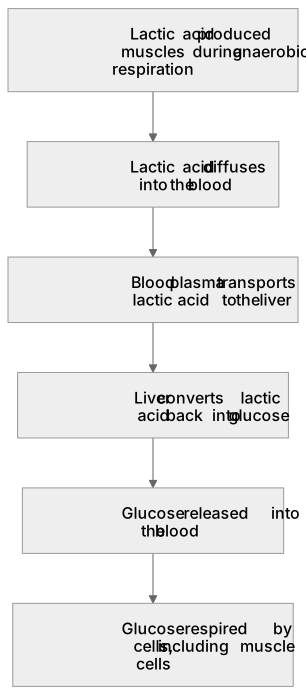
Put it in order
Put these steps in the order they happen.
- 1. Blood plasma transports lactic acid to the liver
- 2. Lactic acid diffuses into the blood
- 3. Lactic acid produced in muscles during anaerobic respiration
- 4. Glucose respired by cells, including muscle cells
- 5. Glucose released into the blood
- 6. Liver converts lactic acid back into glucose
Key words
Say what each word means before you turn the card.
Anaerobic respiration and lactic acid production
Try answering aloud or in your head before turning the card.
Transport of substances by the circulatory system
Try answering aloud or in your head before turning the card.
Liver function and glucose recycling
Try answering aloud or in your head before turning the card.
Oxygen debt and recovery after exercise
Try answering aloud or in your head before turning the card.
See every definition
- Anaerobic respiration and lactic acid production
- Muscle cells may respire anaerobically when oxygen supply cannot keep pace with demand, producing lactic acid which accumulates and contributes to fatigue.
- Transport of substances by the circulatory system
- Lactic acid diffuses into the bloodstream and plasma carries it through the circulatory system to the liver.
- Liver function and glucose recycling
- In the liver, hepatocytes use oxygen in reactions that convert lactic acid back into glucose, which can be released into the blood and used by muscles, completing a recycling loop.
- Oxygen debt and recovery after exercise
- The conversion requires oxygen, linking this process to the oxygen debt and explaining why breathing and heart rate stay elevated after exercise stops.
Label the diagram
Some boxes have lost their names. Pick the right name for each number.
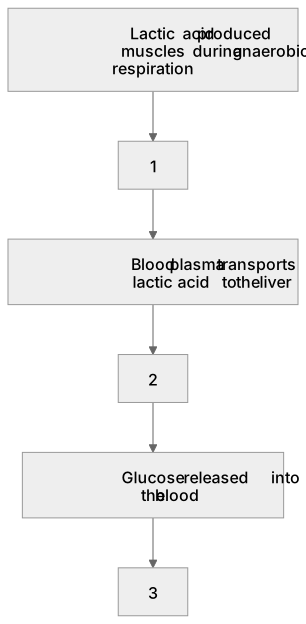
1Box 1
2Box 2
3Box 3
There is more to this lesson
The full lesson goes on to check your understanding and help you earn the marks. Create a free account to carry on, with your progress saved.
A week of Premium from your first lesson · Then the free plan continues · No card, no charge
Test your understanding of Response to exercise: (HT only) Blood flowing through the muscles transports the lactic acid to the liver where it is converted back into glucose.
Active recall beats re-reading. Take an instant quiz now to test what you’ve learned and lock it into long-term memory.
A week of Premium from your first lesson · Then the free plan continues · No card, no charge