AQA · GCSE · Biology
Course version: 8461 · Version from Sept 2018
If insufficient oxygen is supplied anaerobic respiration takes place in…
Full specification wording
Response to exercise: If insufficient oxygen is supplied anaerobic respiration takes place in muscles.
Aerobic respiration needs oxygen and releases energy steadily from glucose.
Checked against the AQA 8461 specification (opens in a new tab) on .
- Point 3 of 7
- 4 key terms
Study notes
From the checked teaching notes for this specification point.
The idea
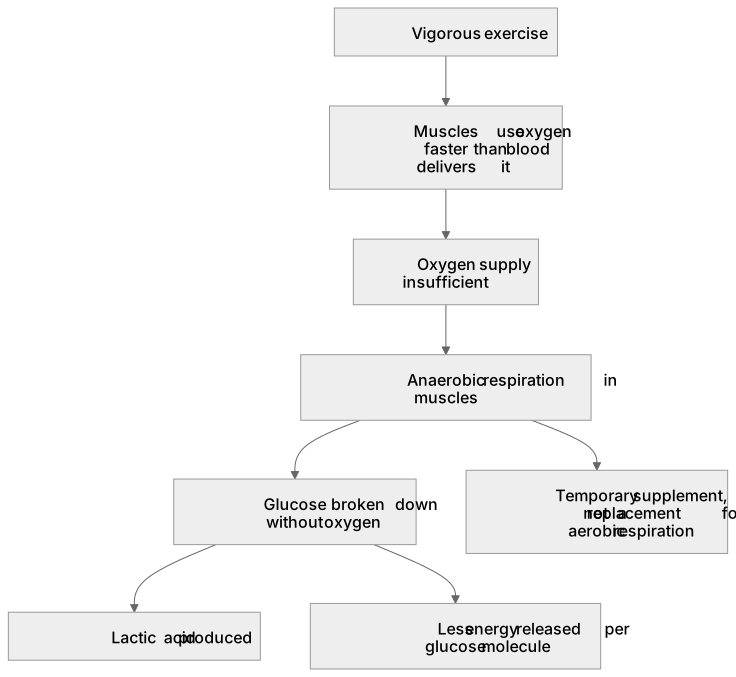
Aerobic respiration needs oxygen and releases energy steadily from glucose. During vigorous exercise muscles may use oxygen faster than the blood can deliver it, so oxygen supply becomes insufficient. Muscle cells then respire anaerobically: glucose is broken down without oxygen, releasing less energy per glucose molecule and producing lactic acid. Anaerobic respiration is a temporary supplement, not a replacement for aerobic respiration. For example, a sprinter's leg muscles may rely on anaerobic respiration during the first seconds of a race until breathing and heart rate increase enough to restore oxygen supply. The word equation is glucose → lactic acid, and the process occurs in the cytoplasm of muscle cells.
What earns the marks
- State that anaerobic respiration occurs when oxygen supply to muscles is insufficient.
- Identify glucose as the reactant broken down without oxygen in muscle cells.
- State that anaerobic respiration releases less energy per glucose molecule than aerobic respiration.
- Name lactic acid as the product of anaerobic respiration in muscles and link its formation to vigorous exercise.
Common mistakes and how to put them right
Saying anaerobic respiration produces carbon dioxide and water in muscles.
Put it right: Muscle anaerobic respiration produces lactic acid.
Saying anaerobic respiration releases more energy than aerobic respiration.
Put it right: Anaerobic respiration releases less energy per glucose molecule.
Saying anaerobic respiration happens only when breathing stops.
Put it right: Breathing continues but oxygen delivery cannot keep pace with muscle demand.
Exam tips
- Use the phrase insufficient oxygen supply rather than no oxygen, because breathing and blood flow continue during vigorous exercise.
- Write the word equation glucose → lactic acid to show the reactant and product clearly.
- Compare aerobic and anaerobic respiration directly, stating that anaerobic releases less energy per glucose molecule.
Try the lesson
The start of the Response to exercise: If insufficient oxygen is supplied anaerobic respiration takes place in muscles. lesson, made from checked teaching notes for this specification point.
Have a go first
Which type of respiration takes place in muscles when insufficient oxygen is supplied?
Listen
Aerobic respiration needs oxygen and releases energy steadily from glucose. During vigorous exercise muscles may use oxygen faster than the blood can deliver it, so oxygen supply becomes insufficient. Muscle cells then respire anaerobically: glucose is broken down without oxygen, releasing less energy per glucose molecule and producing lactic acid. Anaerobic respiration is a temporary supplement, not a replacement for aerobic respiration. For example, a sprinter's leg muscles may rely on anaerobic respiration during the first seconds of a race until breathing and heart rate increase enough to restore oxygen supply. The word equation is glucose → lactic acid, and the process occurs in the cytoplasm of muscle cells. A strong answer earns marks for these points. State that anaerobic respiration occurs when oxygen supply to muscles is insufficient. Identify glucose as the reactant broken down without oxygen in muscle cells. State that anaerobic respiration releases less energy per glucose molecule than aerobic respiration. Name lactic acid as the product of anaerobic respiration in muscles and link its formation to vigorous exercise. A common slip: Saying anaerobic respiration produces carbon dioxide and water in muscles: the error is applying the aerobic products to an anaerobic context. Instead, muscle anaerobic respiration produces lactic acid. Exam tip: Use the phrase insufficient oxygen supply rather than no oxygen, because breathing and blood flow continue during vigorous exercise.
See it
Key words
Say what each word means before you turn the card.
Anaerobic respiration
Try answering aloud or in your head before turning the card.
Lactic acid
Try answering aloud or in your head before turning the card.
Aerobic respiration
Try answering aloud or in your head before turning the card.
Insufficient oxygen supply
Try answering aloud or in your head before turning the card.
See every definition
- Anaerobic respiration
- Respiration that takes place in muscles when insufficient oxygen is supplied, breaking down glucose without oxygen and releasing less energy per glucose molecule.
- Lactic acid
- The product of anaerobic respiration in muscles, formed when glucose is broken down without oxygen during vigorous exercise.
- Aerobic respiration
- Respiration that needs oxygen and releases energy steadily from glucose.
- Insufficient oxygen supply
- The condition during vigorous exercise when muscles use oxygen faster than the blood can deliver it, so anaerobic respiration takes place.
Label the diagram
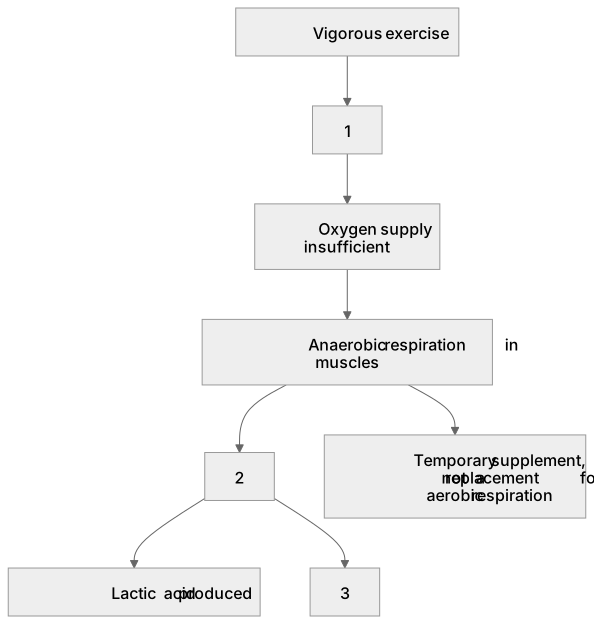
Some boxes have lost their names. Pick the right name for each number.
1Box 1
2Box 2
3Box 3
There is more to this lesson
The full lesson goes on to check your understanding and help you earn the marks. Create a free account to carry on, with your progress saved.
A week of Premium from your first lesson · Then the free plan continues · No card, no charge
Test your understanding of Response to exercise: If insufficient oxygen is supplied anaerobic respiration takes place in muscles.
Active recall beats re-reading. Take an instant quiz now to test what you’ve learned and lock it into long-term memory.
A week of Premium from your first lesson · Then the free plan continues · No card, no charge