AQA · GCSE · Biology
Course version: 8461 · Version from Sept 2018
The heart rate, breathing rate and breath volume increase during exercise…
Full specification wording
Response to exercise: The heart rate, breathing rate and breath volume increase during exercise to supply the muscles with more oxygenated blood.
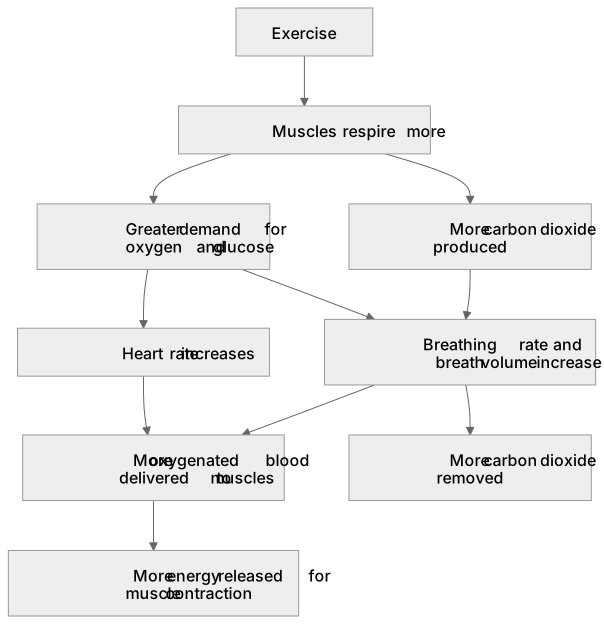
Exercise makes muscles respire faster, so they need more oxygen and glucose and produce more carbon dioxide.
Checked against the AQA 8461 specification (opens in a new tab) on .
- Point 2 of 7
- 4 key terms
Study notes
From the checked teaching notes for this specification point.
The idea
Exercise makes muscles respire faster, so they need more oxygen and glucose and produce more carbon dioxide. To meet this demand, heart rate, breathing rate, and breath volume increase. For example, a runner's heart rate may rise from about 70 to 150 beats per minute, while breathing becomes deeper and faster. Together these changes increase the delivery of oxygenated blood to muscle cells and speed up the removal of carbon dioxide. If insufficient oxygen is supplied, anaerobic respiration takes place, leading to lactic acid build-up. These physiological responses ensure that the increased energy demand for muscle contraction is met efficiently during physical activity.
What earns the marks
- State that muscles respire more during exercise, increasing the demand for oxygen and glucose.
- Explain that heart rate increases to pump more oxygenated blood to the respiring muscles.
- Explain that breathing rate and breath volume increase to take in more oxygen and remove more carbon dioxide.
- Link the increased supply of oxygen and glucose to the increased rate of aerobic respiration to release more energy for muscle contraction.
Common mistakes and how to put them right
Saying the heart releases oxygen into the blood.
Put it right: The heart pumps oxygenated blood that has been loaded with oxygen in the lungs.
Saying breathing rate increases only to take in oxygen.
Put it right: Ventilation also removes the extra carbon dioxide produced by respiring muscles.
Confusing heart rate with breath volume.
Put it right: Heart rate is beats per minute, whereas breath volume is the volume of air moved per breath.
Exam tips
- Link each change to a cause and an effect, for example increased exercise, then increased heart rate, then faster oxygen delivery.
- Use correct terms such as oxygenated blood and ventilation rather than vague phrases like more blood flow.
- When describing data, quote the starting and finishing values and calculate the increase rather than saying the rate went up.
Try the lesson
The start of the Response to exercise: The heart rate, breathing rate and breath volume increase during exercise to supply the muscles with more oxygenated blood. lesson, made from checked teaching notes for this specification point.
Have a go first
During exercise, a person's heart rate, breathing rate, and breath volume all increase. What is the main purpose of these changes?
Listen
Exercise makes muscles respire faster, so they need more oxygen and glucose and produce more carbon dioxide. To meet this demand, heart rate, breathing rate, and breath volume increase. For example, a runner's heart rate may rise from about 70 to 150 beats per minute, while breathing becomes deeper and faster. Together these changes increase the delivery of oxygenated blood to muscle cells and speed up the removal of carbon dioxide. If insufficient oxygen is supplied, anaerobic respiration takes place, leading to lactic acid build-up. These physiological responses ensure that the increased energy demand for muscle contraction is met efficiently during physical activity. A strong answer earns marks for these points. State that muscles respire more during exercise, increasing the demand for oxygen and glucose. Explain that heart rate increases to pump more oxygenated blood to the respiring muscles. Explain that breathing rate and breath volume increase to take in more oxygen and remove more carbon dioxide. Link the increased supply of oxygen and glucose to the increased rate of aerobic respiration to release more energy for muscle contraction. A common slip: Saying the heart releases oxygen into the blood: the error is treating the heart as a source of oxygen. Instead, the heart pumps oxygenated blood that has been loaded with oxygen in the lungs. Exam tip: Link each change to a cause and an effect, for example increased exercise, then increased heart rate, then faster oxygen delivery.
See it
Key words
Say what each word means before you turn the card.
Heart rate
Try answering aloud or in your head before turning the card.
Breathing rate
Try answering aloud or in your head before turning the card.
Breath volume
Try answering aloud or in your head before turning the card.
Ventilation
Try answering aloud or in your head before turning the card.
See every definition
- Heart rate
- The number of beats per minute, which increases during exercise to pump more oxygenated blood to the respiring muscles.
- Breathing rate
- How often breaths are taken, which increases during exercise to take in more oxygen and remove more carbon dioxide.
- Breath volume
- The volume of air moved per breath, which increases during exercise to take in more oxygen and remove more carbon dioxide.
- Ventilation
- The process that increases during exercise to take in more oxygen and remove the extra carbon dioxide produced by respiring muscles.
Label the diagram
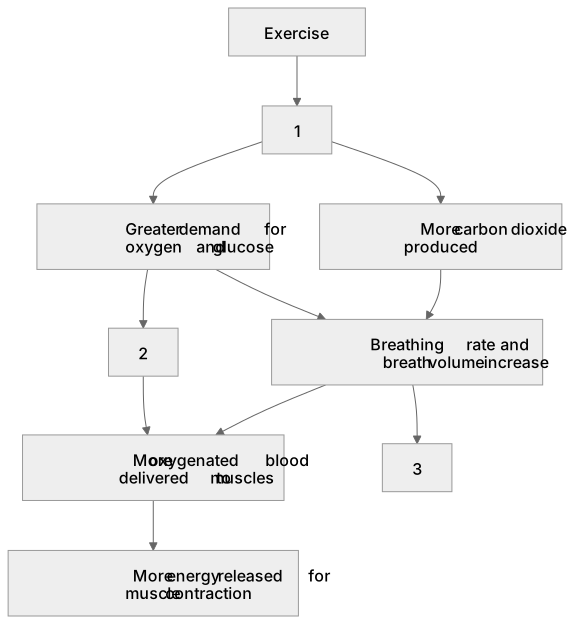
Some boxes have lost their names. Pick the right name for each number.
1Box 1
2Box 2
3Box 3
There is more to this lesson
The full lesson goes on to check your understanding and help you earn the marks. Create a free account to carry on, with your progress saved.
A week of Premium from your first lesson · Then the free plan continues · No card, no charge
Test your understanding of Response to exercise: The heart rate, breathing rate and breath volume increase during exercise to supply the muscles with more oxygenated blood.
Active recall beats re-reading. Take an instant quiz now to test what you’ve learned and lock it into long-term memory.
A week of Premium from your first lesson · Then the free plan continues · No card, no charge