AQA · GCSE · Biology
Course version: 8461 · Version from Sept 2018
Modern biotechnology techniques enable large quantities of microorganisms…
Full specification wording
Role of biotechnology: Modern biotechnology techniques enable large quantities of microorganisms to be cultured for food.
Biotechnology uses living organisms, often microorganisms, to make useful products.
Checked against the AQA 8461 specification (opens in a new tab) on .
- Point 2 of 6
- 3 key terms
Study notes
From the checked teaching notes for this specification point.
The idea
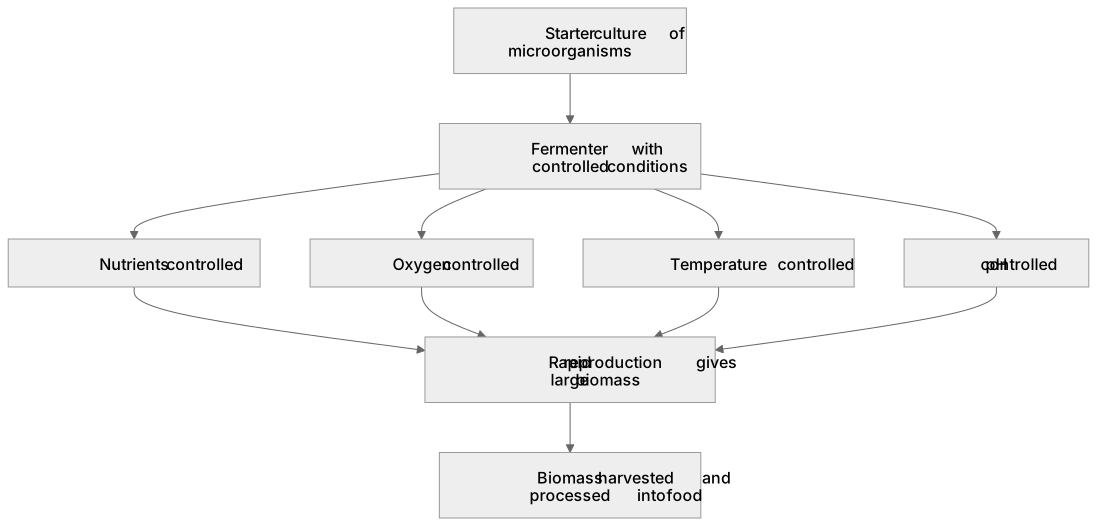
Biotechnology uses living organisms, often microorganisms, to make useful products. Bacteria and fungi can be grown quickly in controlled conditions because they reproduce rapidly and can be supplied with nutrients in a fermenter. A fermenter maintains optimum temperature, pH, oxygen and nutrient levels so that a single starter culture multiplies into a very large population. The resulting cells, or biomass, can be harvested and processed into food. For example, Fusarium is grown in industrial fermenters to make mycoprotein, a protein-rich food. This is efficient because microorganisms have a large surface area to volume ratio, grow on cheap substrates and can be grown regardless of weather or season. The skill is to explain how controlled culturing allows food production on a large scale.
What earns the marks
- Microorganisms can be cultured in large numbers in fermenters under controlled conditions.
- Bacteria and fungi reproduce rapidly, so a small starter culture can produce a large biomass.
- Nutrients, oxygen, temperature and pH are controlled to keep growth at an optimum.
- The biomass produced can be harvested and processed into food such as mycoprotein.
- Large-scale culturing is reliable because it does not depend on weather or season.
Common mistakes and how to put them right
Thinking microorganisms only cause disease.
Put it right: Many are useful and are cultured industrially for food and other products.
Assuming the microorganisms themselves are always the food.
Put it right: The biomass may be harvested and processed, as in mycoprotein production.
Believing fermentation requires no oxygen.
Put it right: Aerobic conditions are needed for Fusarium growth in this process.
Exam tips
- Link each controlled condition to a reason, such as temperature for enzyme activity and oxygen for aerobic respiration.
- Use the term biomass when describing the harvested microbial cells.
- Compare industrial culturing with farming to explain why it can produce food continuously and on a large scale.
Try the lesson
The start of the Role of biotechnology: Modern biotechnology techniques enable large quantities of microorganisms to be cultured for food. lesson, made from checked teaching notes for this specification point.
Have a go first
Which of these is a food produced by culturing large quantities of microorganisms using modern biotechnology?
Listen
Biotechnology uses living organisms, often microorganisms, to make useful products. Bacteria and fungi can be grown quickly in controlled conditions because they reproduce rapidly and can be supplied with nutrients in a fermenter. A fermenter maintains optimum temperature, pH, oxygen and nutrient levels so that a single starter culture multiplies into a very large population. The resulting cells, or biomass, can be harvested and processed into food. For example, Fusarium is grown in industrial fermenters to make mycoprotein, a protein-rich food. This is efficient because microorganisms have a large surface area to volume ratio, grow on cheap substrates and can be grown regardless of weather or season. The skill is to explain how controlled culturing allows food production on a large scale. A strong answer earns marks for these points. Microorganisms can be cultured in large numbers in fermenters under controlled conditions. Bacteria and fungi reproduce rapidly, so a small starter culture can produce a large biomass. Nutrients, oxygen, temperature and pH are controlled to keep growth at an optimum. The biomass produced can be harvested and processed into food such as mycoprotein. A common slip: Thinking microorganisms only cause disease. Instead, many are useful and are cultured industrially for food and other products. Exam tip: Link each controlled condition to a reason, such as temperature for enzyme activity and oxygen for aerobic respiration.
See it
Key words
Say what each word means before you turn the card.
Industrial fermentation
Try answering aloud or in your head before turning the card.
Controlled conditions and optimum growth
Try answering aloud or in your head before turning the card.
Microorganisms as useful organisms
Try answering aloud or in your head before turning the card.
See every definition
- Industrial fermentation
- Growing microorganisms in large quantities in fermenters under controlled conditions to make useful products.
- Controlled conditions and optimum growth
- A fermenter maintains optimum temperature, pH, oxygen and nutrient levels so that a single starter culture multiplies into a very large population.
- Microorganisms as useful organisms
- Many microorganisms are useful and are cultured industrially for food and other products, rather than only causing disease.
Label the diagram
Some boxes have lost their names. Pick the right name for each number.
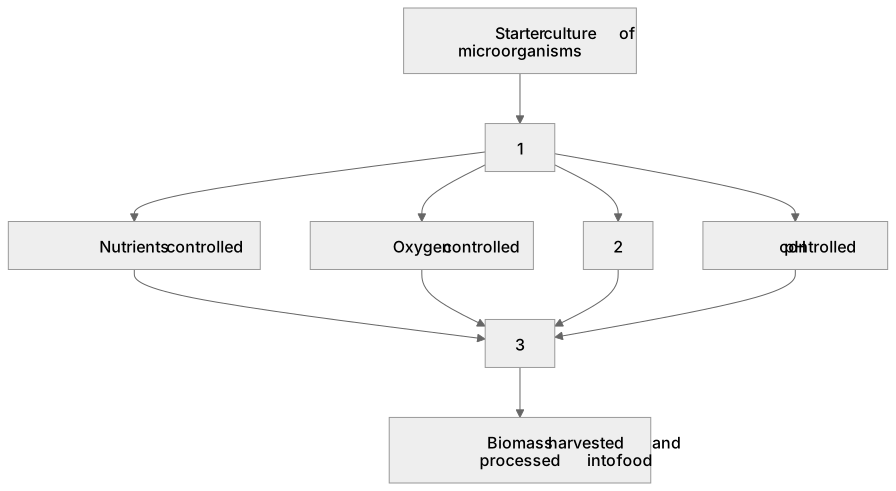
1Box 1
2Box 2
3Box 3
There is more to this lesson
The full lesson goes on to check your understanding and help you earn the marks. Create a free account to carry on, with your progress saved.
A week of Premium from your first lesson · Then the free plan continues · No card, no charge
Test your understanding of Role of biotechnology: Modern biotechnology techniques enable large quantities of microorganisms to be cultured for food.
Active recall beats re-reading. Take an instant quiz now to test what you’ve learned and lock it into long-term memory.
A week of Premium from your first lesson · Then the free plan continues · No card, no charge