AQA · GCSE · Biology
Course version: 8461 · Version from Sept 2018
There is no mixing of genetic information. This leads to genetically…
Full specification wording
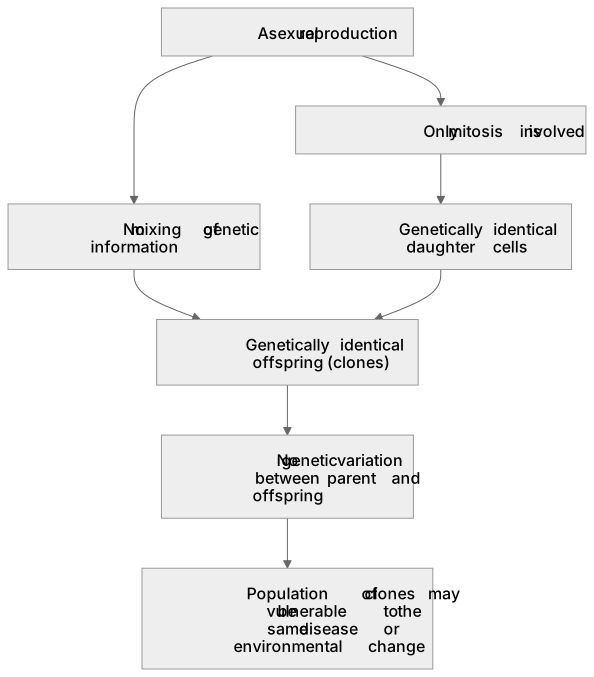
Sexual and asexual reproduction: There is no mixing of genetic information. This leads to genetically identical offspring (clones). Only mitosis is involved.
In asexual reproduction, genetic information is not mixed because there is no fusion of gametes from two parents.
Checked against the AQA 8461 specification (opens in a new tab) on .
- Point 5 of 5
Study notes
From the checked teaching notes for this specification point.
The idea
In asexual reproduction, genetic information is not mixed because there is no fusion of gametes from two parents. The single parent's cells divide by mitosis, which produces two genetically identical daughter cells. Each new cell receives an exact copy of the parent's chromosomes, so the offspring are genetically identical to the parent and to each other. These offspring are called clones. Mitosis is the only type of cell division involved: meiosis does not occur because gametes are not formed. For example, when a strawberry plant produces a runner, the new individual has the same alleles as the parent. This lack of genetic variation means a population of clones may all be vulnerable to the same disease or environmental change.
What earns the marks
- No mixing of genetic information occurs because there is no fusion of gametes from two parents.
- Mitosis is the only cell division involved in asexual reproduction in eukaryotes.
- Mitosis produces genetically identical daughter cells, so the offspring are clones of the parent.
- The offspring inherit the same alleles as the parent, so there is no genetic variation between parent and offspring.
- A lack of genetic variation can make a population of clones vulnerable to the same environmental change or disease.
Common mistakes and how to put them right
Saying that meiosis is involved in asexual reproduction.
Put it right: Only mitosis is involved.
Describing offspring as similar rather than genetically identical.
Put it right: They are clones with identical genetic information.
Thinking that genetic information is mixed during mitosis.
Put it right: Mitosis copies genetic information exactly, with no mixing.
Exam tips
- Use the term clone when describing offspring produced asexually, and explain that they are genetically identical.
- Contrast mitosis with meiosis by stating that meiosis is not involved in asexual reproduction.
- If asked about variation, explain that asexual reproduction produces little or no genetic variation because there is no mixing of genetic information.
Try the lesson
The start of the Sexual and asexual reproduction: There is no mixing of genetic information. This leads to genetically identical offspring (clones). Only mitosis is involved. lesson, made from checked teaching notes for this specification point.
Have a go first
In eukaryotic organisms, asexual reproduction leads to offspring that are genetically identical to the parent (clones). Which cellular process is responsible for this?
Listen
In asexual reproduction, genetic information is not mixed because there is no fusion of gametes from two parents. The single parent's cells divide by mitosis, which produces two genetically identical daughter cells. Each new cell receives an exact copy of the parent's chromosomes, so the offspring are genetically identical to the parent and to each other. These offspring are called clones. Mitosis is the only type of cell division involved: meiosis does not occur because gametes are not formed. For example, when a strawberry plant produces a runner, the new individual has the same alleles as the parent. This lack of genetic variation means a population of clones may all be vulnerable to the same disease or environmental change. A strong answer earns marks for these points. No mixing of genetic information occurs because there is no fusion of gametes from two parents. Mitosis is the only cell division involved in asexual reproduction in eukaryotes. Mitosis produces genetically identical daughter cells, so the offspring are clones of the parent. The offspring inherit the same alleles as the parent, so there is no genetic variation between parent and offspring. A common slip: Saying that meiosis is involved in asexual reproduction. Instead, only mitosis is involved. Exam tip: Use the term clone when describing offspring produced asexually, and explain that they are genetically identical.
See it
Label the diagram
Some boxes have lost their names. Pick the right name for each number.
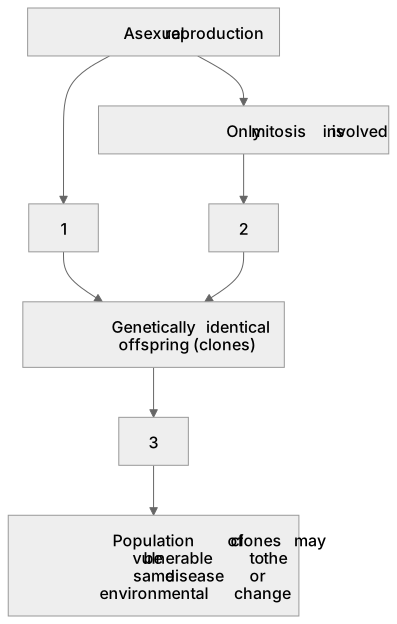
1Box 1
2Box 2
3Box 3
There is more to this lesson
The full lesson goes on to check your understanding and help you earn the marks. Create a free account to carry on, with your progress saved.
A week of Premium from your first lesson · Then the free plan continues · No card, no charge
Test your understanding of Sexual and asexual reproduction: There is no mixing of genetic information. This leads to genetically identical offspring (clones). Only mitosis is involved.
Active recall beats re-reading. Take an instant quiz now to test what you’ve learned and lock it into long-term memory.
A week of Premium from your first lesson · Then the free plan continues · No card, no charge