AQA · GCSE · Biology
Course version: 8461 · Version from Sept 2018
Stem cells from human embryos can be cloned and made to differentiate into…
Full specification wording
Stem cells: Stem cells from human embryos can be cloned and made to differentiate into most different types of human cells.
Human embryonic stem cells are pluripotent, so they can be grown in the laboratory and stimulated to differentiate into most human cell types, such as nerve cells, muscle cells or…
Checked against the AQA 8461 specification (opens in a new tab) on .
- Point 3 of 11
- 4 key terms
Study notes
From the checked teaching notes for this specification point.
The idea
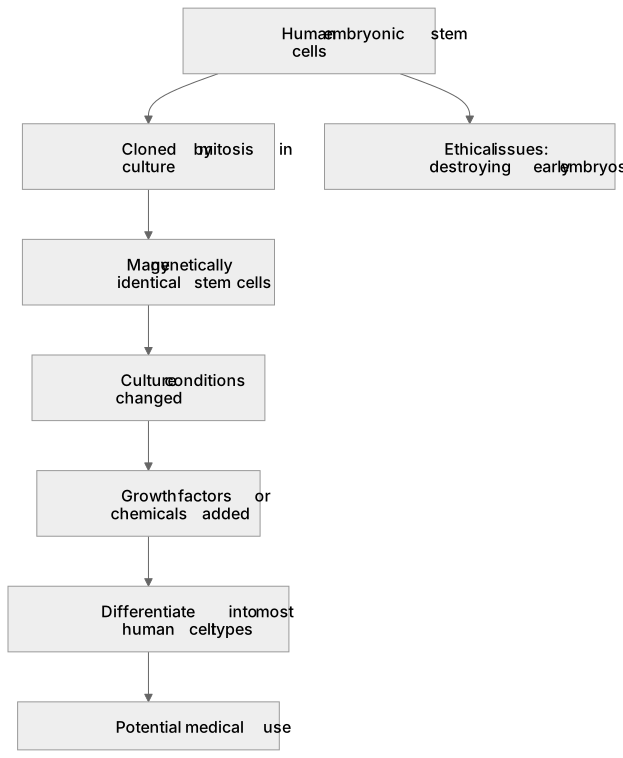
Human embryonic stem cells are pluripotent, so they can be grown in the laboratory and stimulated to differentiate into most human cell types, such as nerve cells, muscle cells or insulin-producing cells. Cloning here means producing many genetically identical copies of these cells by mitosis in culture, giving a large supply for research or potential medical use. Scientists control differentiation by changing the culture conditions, for example adding specific growth factors or chemicals. This makes embryonic stem cells valuable for treating conditions such as diabetes or paralysis, but their use raises ethical issues because obtaining them involves destroying early embryos. You should be able to explain both the scientific potential and the ethical concerns, and to describe how cloning and differentiation are achieved in principle.
What earns the marks
- States that human embryonic stem cells are pluripotent and can differentiate into most human cell types.
- Explains that cloning produces many genetically identical stem cells by mitosis in culture.
- Describes how differentiation is controlled by culture conditions such as growth factors or chemicals.
- Gives a named potential use, such as making insulin-producing cells or nerve cells for treatment.
- Discusses ethical issues arising from the use of human embryos as a source of stem cells.
Common mistakes and how to put them right
Saying embryonic stem cells can become every cell type without exception.
Put it right by stating that they can become most, not all, cell types.
Confusing cloning with sexual reproduction.
Put it right by stating that cloning here means producing identical cells by mitosis.
Ignoring ethical issues; correct this by including a balanced comment on the source of embryonic stem cells.
Exam tips
- Use the term pluripotent accurately and contrast it with adult stem cells.
- When discussing ethics, give both a benefit and a concern rather than only one side.
- Link differentiation to a specific control method such as growth factors in the culture medium.
Try the lesson
The start of the Stem cells: Stem cells from human embryos can be cloned and made to differentiate into most different types of human cells. lesson, made from checked teaching notes for this specification point.
Have a go first
What can be done to human embryonic stem cells so that they can be used to treat patients?
Listen
Human embryonic stem cells are pluripotent, so they can be grown in the laboratory and stimulated to differentiate into most human cell types, such as nerve cells, muscle cells or insulin-producing cells. Cloning here means producing many genetically identical copies of these cells by mitosis in culture, giving a large supply for research or potential medical use. Scientists control differentiation by changing the culture conditions, for example adding specific growth factors or chemicals. This makes embryonic stem cells valuable for treating conditions such as diabetes or paralysis, but their use raises ethical issues because obtaining them involves destroying early embryos. You should be able to explain both the scientific potential and the ethical concerns, and to describe how cloning and differentiation are achieved in principle. A strong answer earns marks for these points. States that human embryonic stem cells are pluripotent and can differentiate into most human cell types. Explains that cloning produces many genetically identical stem cells by mitosis in culture. Describes how differentiation is controlled by culture conditions such as growth factors or chemicals. Gives a named potential use, such as making insulin-producing cells or nerve cells for treatment. A common slip: Saying embryonic stem cells can become every cell type without exception. Instead, stating that they can become most, not all, cell types. Exam tip: Use the term pluripotent accurately and contrast it with adult stem cells.
See it
Key words
Say what each word means before you turn the card.
Pluripotency
Try answering aloud or in your head before turning the card.
Cell culture
Try answering aloud or in your head before turning the card.
Medical applications
Try answering aloud or in your head before turning the card.
Ethics
Try answering aloud or in your head before turning the card.
See every definition
- Pluripotency
- The property of human embryonic stem cells that means they can differentiate into most different types of human cells.
- Cell culture
- Growing cells in the laboratory, where cloning produces many genetically identical stem cells by mitosis.
- Medical applications
- Potential uses such as treating conditions including diabetes or paralysis, for example by making insulin-producing cells or nerve cells.
- Ethics
- Concerns raised because obtaining embryonic stem cells involves destroying early embryos.
Label the diagram
Some boxes have lost their names. Pick the right name for each number.
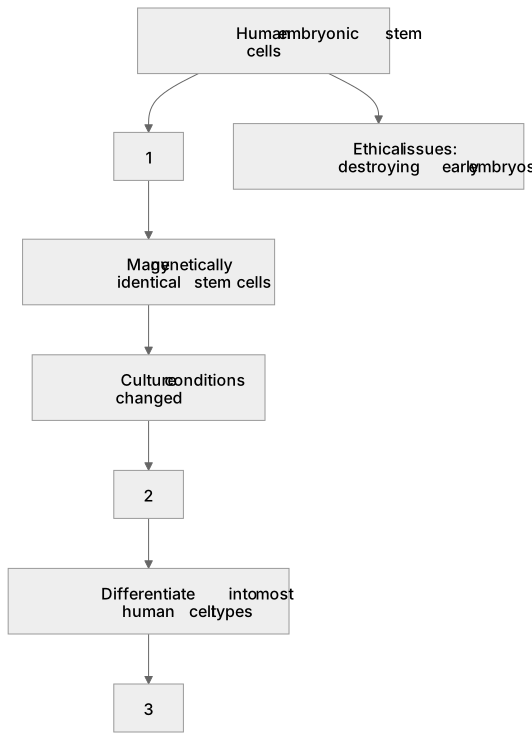
1Box 1
2Box 2
3Box 3
There is more to this lesson
The full lesson goes on to check your understanding and help you earn the marks. Create a free account to carry on, with your progress saved.
A week of Premium from your first lesson · Then the free plan continues · No card, no charge
Test your understanding of Stem cells: Stem cells from human embryos can be cloned and made to differentiate into most different types of human cells.
Active recall beats re-reading. Take an instant quiz now to test what you’ve learned and lock it into long-term memory.
A week of Premium from your first lesson · Then the free plan continues · No card, no charge