AQA · GCSE · Biology
Course version: 8461 · Version from Sept 2018
The effects of diet, smoking and exercise on cardiovascular disease. •…
Full specification wording
The effect of lifestyle on some non-communicable diseases: The effects of diet, smoking and exercise on cardiovascular disease. • Obesity as a risk factor for Type 2 diabetes. • The effect of alcohol on the liver and brain function. • The effect of smoking on lung disease and lung cancer. • The effects of smoking and alcohol on unborn babies. • Carcinogens, including ionising radiation, as risk factors in cancer.
This statement links risk factors to non-communicable diseases.
Checked against the AQA 8461 specification (opens in a new tab) on .
- Point 5 of 9
- 4 key terms
Study notes
From the checked teaching notes for this specification point.
The idea
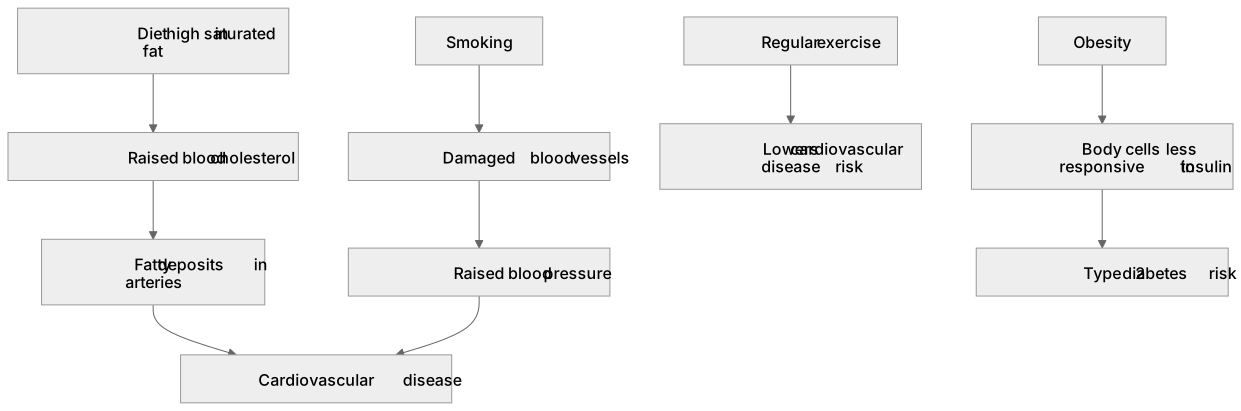
This statement links risk factors to non-communicable diseases. A diet high in saturated fat raises blood cholesterol, leading to fatty deposits in arteries and cardiovascular disease; smoking damages blood vessels and raises blood pressure; regular exercise lowers cardiovascular disease risk. Obesity increases the risk of Type 2 diabetes because body cells become less responsive to insulin. Alcohol damages liver cells, causing cirrhosis, and impairs brain function. Smoking damages lung tissue, causing chronic obstructive pulmonary disease, and contains carcinogens that cause lung cancer. Chemicals in tobacco smoke (such as carbon monoxide) and alcohol can harm an unborn baby by crossing the placenta. Carcinogens, including ionising radiation, can mutate DNA and cause cancer.
What earns the marks
- Link a diet high in saturated fat to raised cholesterol, artery narrowing and cardiovascular disease.
- Explain that smoking damages blood vessels and increases blood pressure, contributing to cardiovascular disease.
- Explain that obesity makes body cells less responsive to insulin, increasing Type 2 diabetes risk.
- Describe how alcohol damages liver cells and impairs brain function.
- Describe how smoking damages lung tissue and how carcinogens in smoke cause lung cancer.
- Explain that chemicals in tobacco smoke (such as carbon monoxide) and alcohol can cross the placenta and harm an unborn baby.
- State that carcinogens, including ionising radiation, can mutate DNA and cause cancer.
Common mistakes and how to put them right
Saying that obesity directly causes Type 2 diabetes.
Put it right by explaining that it increases the risk by reducing insulin sensitivity.
Stating that 'smoking' crosses the placenta.
Put it right by specifying that chemicals in tobacco smoke, such as carbon monoxide, cross the placenta.
Stating that alcohol only affects the liver.
Put it right by including its effects on brain function and on unborn babies.
Exam tips
- For each factor, name the disease and describe the biological effect in one clear sentence.
- Use comparative language such as 'increases the risk of' rather than 'causes'.
- When discussing unborn babies, mention that specific chemicals cross the placenta and can affect development.
Try the lesson
The start of the The effect of lifestyle on some non-communicable diseases: The effects of diet, smoking and exercise on cardiovascular disease. • Obesity as a risk factor for Type 2 diabetes. • The effect of alcohol on the liver and brain function. • The effect of smoking on lung disease and lung cancer. • The effects of smoking and alcohol on unborn babies. • Carcinogens, including ionising radiation, as risk factors in cancer. lesson, made from checked teaching notes for this specification point.
Have a go first
Which of the following lifestyle factors is a recognised risk factor for developing Type 2 diabetes?
Listen
This statement links risk factors to non-communicable diseases. A diet high in saturated fat raises blood cholesterol, leading to fatty deposits in arteries and cardiovascular disease; smoking damages blood vessels and raises blood pressure; regular exercise lowers cardiovascular disease risk. Obesity increases the risk of Type 2 diabetes because body cells become less responsive to insulin. Alcohol damages liver cells, causing cirrhosis, and impairs brain function. Smoking damages lung tissue, causing chronic obstructive pulmonary disease, and contains carcinogens that cause lung cancer. Chemicals in tobacco smoke (such as carbon monoxide) and alcohol can harm an unborn baby by crossing the placenta. Carcinogens, including ionising radiation, can mutate DNA and cause cancer. A strong answer earns marks for these points. Link a diet high in saturated fat to raised cholesterol, artery narrowing and cardiovascular disease. Explain that smoking damages blood vessels and increases blood pressure, contributing to cardiovascular disease. Explain that obesity makes body cells less responsive to insulin, increasing Type 2 diabetes risk. Describe how alcohol damages liver cells and impairs brain function. A common slip: Saying that obesity directly causes Type 2 diabetes. Instead, explaining that it increases the risk by reducing insulin sensitivity. Exam tip: For each factor, name the disease and describe the biological effect in one clear sentence.
See it
Key words
Say what each word means before you turn the card.
Cardiovascular health
Try answering aloud or in your head before turning the card.
Metabolic disease and obesity
Try answering aloud or in your head before turning the card.
Organ damage and cancer
Try answering aloud or in your head before turning the card.
Maternal and fetal health
Try answering aloud or in your head before turning the card.
See every definition
- Cardiovascular health
- A diet high in saturated fat raises blood cholesterol, leading to fatty deposits in arteries and cardiovascular disease, while smoking damages blood vessels and raises blood pressure and regular exercise lowers cardiovascular disease risk.
- Metabolic disease and obesity
- Obesity increases the risk of Type 2 diabetes because body cells become less responsive to insulin.
- Organ damage and cancer
- Alcohol damages liver cells, causing cirrhosis, and impairs brain function, while smoking damages lung tissue, causing chronic obstructive pulmonary disease, and contains carcinogens that cause lung cancer.
- Maternal and fetal health
- Chemicals in tobacco smoke, such as carbon monoxide, and alcohol can harm an unborn baby by crossing the placenta.
Label the diagram
Some boxes have lost their names. Pick the right name for each number.
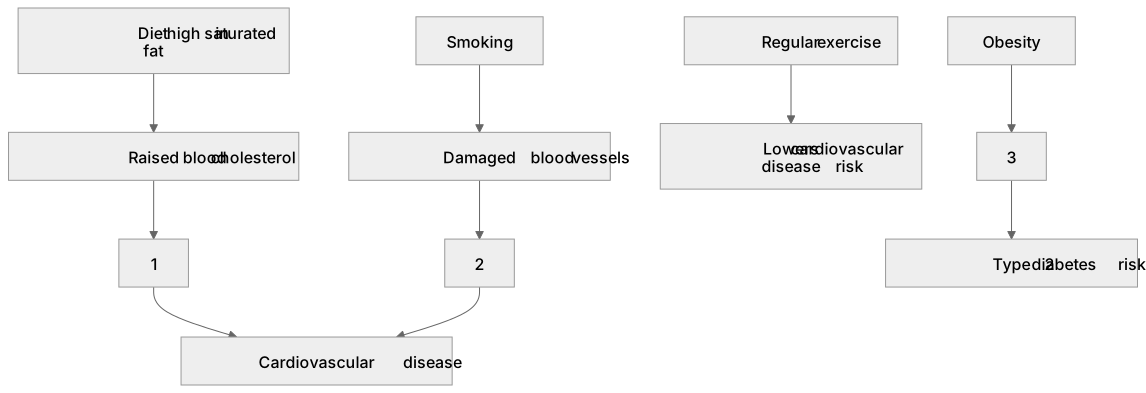
1Box 1
2Box 2
3Box 3
There is more to this lesson
The full lesson goes on to check your understanding and help you earn the marks. Create a free account to carry on, with your progress saved.
A week of Premium from your first lesson · Then the free plan continues · No card, no charge
Test your understanding of The effect of lifestyle on some non-communicable diseases: The effects of diet, smoking and exercise on cardiovascular disease. • Obesity as a risk factor for Type 2 diabetes. • The effect of alcohol on the liver and brain function. • The effect of smoking on lung disease and lung cancer. • The effects of smoking and alcohol on unborn babies. • Carcinogens, including ionising radiation, as risk factors in cancer.
Active recall beats re-reading. Take an instant quiz now to test what you’ve learned and lock it into long-term memory.
A week of Premium from your first lesson · Then the free plan continues · No card, no charge