AQA · GCSE · Biology
Course version: 8461 · Version from Sept 2018
Artificial pacemakers are electrical devices used to correct irregularities…
Full specification wording
The heart and blood vessels: Artificial pacemakers are electrical devices used to correct irregularities in the heart rate.
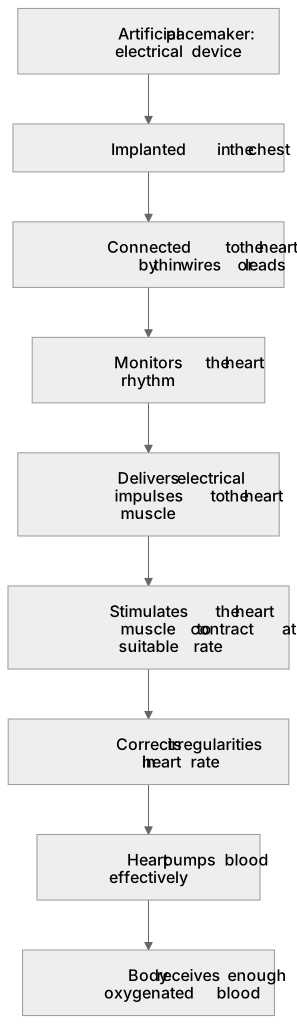
An artificial pacemaker is a small electrical device implanted in the chest and connected to the heart by thin wires or leads.
Checked against the AQA 8461 specification (opens in a new tab) on .
- Point 8 of 11
- 2 key terms
Study notes
From the checked teaching notes for this specification point.
The idea
An artificial pacemaker is a small electrical device implanted in the chest and connected to the heart by thin wires or leads. It monitors the heart rhythm and delivers electrical impulses to the heart muscle when the natural rhythm is too slow, too fast or irregular. This corrects irregularities in heart rate so that the heart pumps blood effectively and the body receives enough oxygenated blood. A concrete example is a person whose natural pacemaker cells do not fire reliably and whose heart rate becomes dangerously slow; an artificial pacemaker restores a regular rate. The device does not replace the heart's own muscle or valves, and it does not pump blood itself; it only provides the electrical stimulation that triggers contraction.
What earns the marks
- States that an artificial pacemaker is an electrical device used to correct irregular heart rates.
- Describes the device as implanted and connected to the heart to deliver electrical impulses.
- Explains that the impulses stimulate the heart muscle to contract at a suitable rate.
- Links correction of an irregular heart rate to improved pumping of blood around the body.
- Distinguishes the artificial pacemaker from the natural pacemaker cells in the right atrium.
Common mistakes and how to put them right
Describing the artificial pacemaker as a pump that moves blood.
Put it right: It delivers electrical impulses that stimulate the heart muscle to contract.
Confusing an artificial pacemaker with a defibrillator or with medication.
Put it right: An artificial pacemaker is an implanted electrical device that regulates heart rate.
Stating that the device cures all heart disease.
Put it right: It corrects irregularities in heart rate, while other heart conditions may need different treatments.
Exam tips
- Use the wording 'electrical device' and 'corrects irregularities in heart rate' when defining an artificial pacemaker.
- If asked to compare natural and artificial pacemakers, state that both provide electrical impulses but the natural one is a group of cells in the right atrium and the artificial one is an implanted device.
- Link the corrected heart rate to a benefit, such as maintaining an adequate supply of oxygenated blood to the body.
Try the lesson
The start of the The heart and blood vessels: Artificial pacemakers are electrical devices used to correct irregularities in the heart rate. lesson, made from checked teaching notes for this specification point.
Have a go first
What is an artificial pacemaker used for?
Listen
An artificial pacemaker is a small electrical device implanted in the chest and connected to the heart by thin wires or leads. It monitors the heart rhythm and delivers electrical impulses to the heart muscle when the natural rhythm is too slow, too fast or irregular. This corrects irregularities in heart rate so that the heart pumps blood effectively and the body receives enough oxygenated blood. A concrete example is a person whose natural pacemaker cells do not fire reliably and whose heart rate becomes dangerously slow; an artificial pacemaker restores a regular rate. The device does not replace the heart's own muscle or valves, and it does not pump blood itself; it only provides the electrical stimulation that triggers contraction. A strong answer earns marks for these points. States that an artificial pacemaker is an electrical device used to correct irregular heart rates. Describes the device as implanted and connected to the heart to deliver electrical impulses. Explains that the impulses stimulate the heart muscle to contract at a suitable rate. Links correction of an irregular heart rate to improved pumping of blood around the body. A common slip: Describing the artificial pacemaker as a pump that moves blood. Instead, it delivers electrical impulses that stimulate the heart muscle to contract. Exam tip: Use the wording 'electrical device' and 'corrects irregularities in heart rate' when defining an artificial pacemaker.
See it
Key words
Say what each word means before you turn the card.
Artificial pacemaker
Try answering aloud or in your head before turning the card.
Electrical stimulation
Try answering aloud or in your head before turning the card.
See every definition
- Artificial pacemaker
- An electrical device used to correct irregularities in the heart rate.
- Electrical stimulation
- Electrical impulses delivered to the heart muscle that trigger contraction.
Label the diagram
Some boxes have lost their names. Pick the right name for each number.
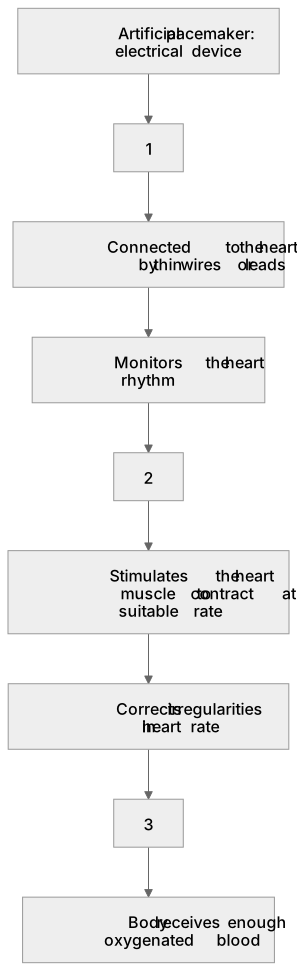
1Box 1
2Box 2
3Box 3
There is more to this lesson
The full lesson goes on to check your understanding and help you earn the marks. Create a free account to carry on, with your progress saved.
A week of Premium from your first lesson · Then the free plan continues · No card, no charge
Test your understanding of The heart and blood vessels: Artificial pacemakers are electrical devices used to correct irregularities in the heart rate.
Active recall beats re-reading. Take an instant quiz now to test what you’ve learned and lock it into long-term memory.
A week of Premium from your first lesson · Then the free plan continues · No card, no charge